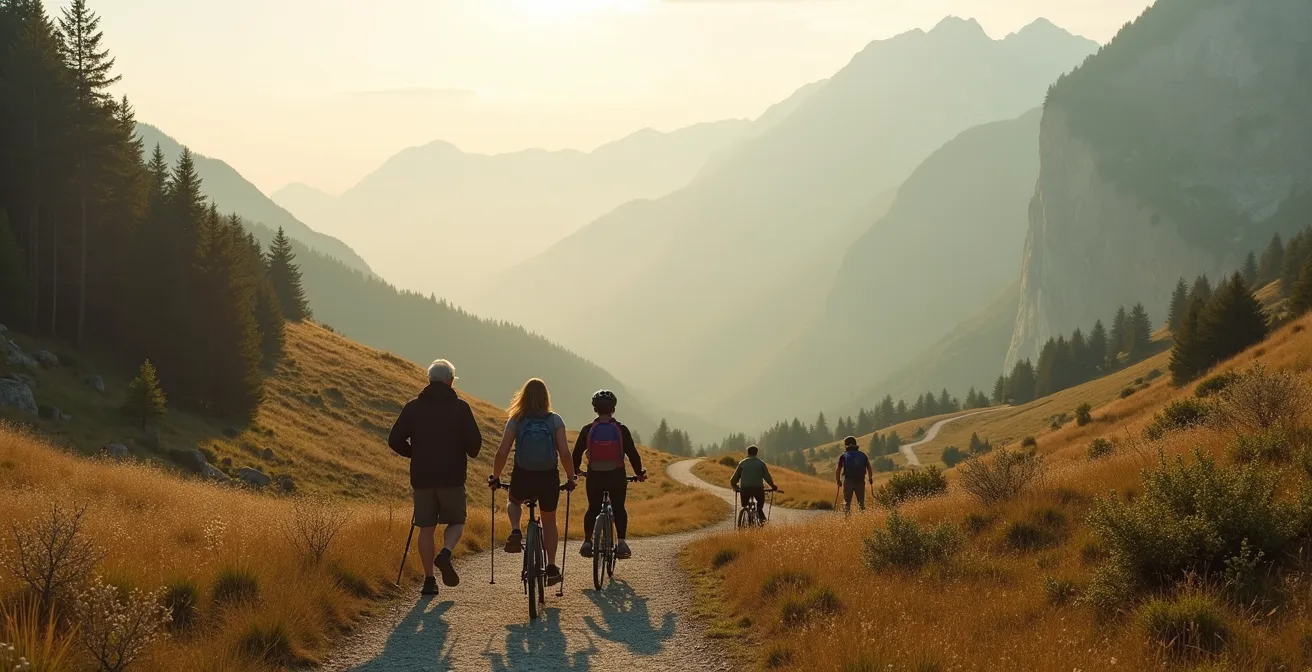
In summary:
- Stop planning separate activities. Instead, design shared experiences with built-in, scalable challenges that cater to everyone.
- Leverage nature not just as a backdrop, but as a tool to reduce stress and make physical effort feel easier.
- Structure your week with alternating intensity and plan “performance rest days” focused on active recovery, not inactivity.
- Use “fitness equalizers” like e-bikes to bridge ability gaps, but balance them with inclusive activities like hiking for social connection.
- Adopt a mindset of low-impact, high-thrill adventure to protect the ecosystems you explore, creating a shared purpose for the group.
Planning an active vacation for a family or group with varying fitness levels often feels like an impossible puzzle. The common advice is to compromise: choose destinations with myriad options so everyone can split up, or dial down the intensity so much that no one feels truly challenged. This approach treats different abilities as a problem to be managed, often leading to separate holidays experienced in the same location, rather than a shared adventure.
You might schedule rest days, but they become days of boredom for the fit and days of guilt for those needing a break. You might try to set expectations, but a gap in physical capacity remains a tangible barrier. But what if the entire framework is flawed? What if, instead of managing differences by creating distance, the key was to find activities that are inherently scalable and use the power of nature to bring everyone’s performance up?
The secret to a successful group active holiday lies not in separation, but in strategic unification. It’s about shifting the focus from individual workouts to shared, memorable challenges. It involves understanding the science of how nature impacts our stress and performance, how to structure a week for peak energy, and how to use tools and techniques to make adventure accessible without sacrificing the thrill.
This guide will walk you through a new philosophy for planning active trips. We’ll explore how to structure your week to prevent burnout, choose the right activities for group cohesion, and leverage principles from elite athletes to create an adrenaline-packed yet sustainable journey that leaves everyone feeling accomplished, connected, and rejuvenated.
Summary: How to Plan a Unifying Active Vacation
- Why Does Exercise in Nature Burn More Stress Than the Gym?
- How to Structure a Week of Activity to Avoid Injury by Day 3?
- E-Biking or Hiking: Which Is Better for Multi-Generational Groups?
- The Hydration Error That Ruins Active Holidays in Cool Weather
- How to Plan Rest Days to Maximize Performance on Active Trips?
- Why Extreme Sports Athletes Are Often the Best Nature Defenders?
- Hot Sun or Cool Breeze: How to Change Your Asanas for Temperature?
- How to Plan an Adrenaline-Packed Trip Without Damaging Fragile Ecosystems?
Why Does Exercise in Nature Burn More Stress Than the Gym?
The profound calming effect of a walk in the woods is not just a feeling; it’s a measurable neurological phenomenon. As Dr. Andrew Freeman, a cardiologist, notes, “Human beings were designed to move and move a lot, and when we do — particularly when we are outside and amongst trees — there’s been data to suggest these all have very significant stress-relieving effects.” This concept, which can be termed biophilic resilience, is the foundation for a successful active vacation. An environment rich in natural stimuli actively works to lower the mental burden of physical exertion, making challenges feel more manageable for everyone.
The difference between a treadmill and a forest trail lies in how they engage the brain. A gym provides a sterile, predictable environment. Nature, however, offers “soft fascination”—the gentle, undemanding attention required to watch moving clouds or listen to a stream. This restores our capacity for directed attention, which is often depleted by stress and work. This mental restoration is backed by science. A landmark study from Harvard-affiliated Massachusetts General Hospital analyzed the brain activity of over 50,000 individuals. It found that physical activity directly lowers stress-related signals in the brain, with these benefits being particularly pronounced for those with pre-existing stress or depression. The study revealed that exercise boosts function in the prefrontal cortex, the area responsible for executive functions and for restraining the brain’s stress centers like the amygdala.
By taking your activity outdoors, you are essentially giving every member of your group a neurological advantage. The varied terrain of a trail requires more mental engagement than a flat surface, shifting focus away from internal anxieties and onto the immediate environment. This shared sensory experience creates a collective baseline of calm, making it easier to tackle physical goals together.
How to Structure a Week of Activity to Avoid Injury by Day 3?
The most common failure point of an ambitious active vacation is the “Day 3 Crash.” The initial excitement leads to overexertion on days one and two, resulting in exhaustion, muscle soreness, and a high risk of injury by the third day. This is especially true for groups with mixed fitness levels, where some may be pushing far beyond their normal limits. The solution is not to lower the overall ambition but to structure the week intelligently, borrowing principles from athletic training like progressive overload and planned recovery.
A successful week is built on variation. Instead of stringing together several high-intensity days, you should alternate the physical demand. Plan a challenging, long hike on day one, followed by a low-intensity activity like kayaking or a skills-based workshop (e.g., rock climbing basics) on day two. This allows different muscle groups to recover while still keeping the group engaged and active. The goal is to finish each day feeling pleasantly tired, not utterly depleted.

To facilitate this planning, it’s crucial to have a shared understanding of what different activity levels mean. A “moderate” day for a seasoned hiker might be an “active” or even “extreme” day for a novice. Creating a simple framework for your group can prevent misunderstandings and help align expectations before the trip even begins.
This table offers a starting point for discussion, allowing your group to categorize potential activities and build a balanced weekly schedule. It transforms planning from a guessing game into a collaborative strategy.
| Activity Level | Daily Distance | Terrain Type | Recovery Needs | Suitable For |
|---|---|---|---|---|
| Relaxed | Up to 2 miles | Flat, paved surfaces | Minimal – normal rest | All ages, mobility aids OK |
| Moderate | 2-5 miles | Some hills, mixed surfaces | 30-min stretching daily | Active adults, teens |
| Active | 5+ miles | Hills, uneven terrain | Full rest day needed | Fit individuals only |
E-Biking or Hiking: Which Is Better for Multi-Generational Groups?
When planning for a group with diverse abilities, the choice of activity is paramount. Two popular options, e-biking and hiking, offer distinct advantages and disadvantages. The key is to select the one that best aligns with the primary goal of your day: covering distance and equalizing effort, or fostering social connection and shared discovery. E-bikes have emerged as a powerful fitness equalizer. The motor assistance allows individuals to choose their level of effort, enabling a grandparent and a teenager to tackle the same steep hill at a similar pace. This can be incredibly empowering, opening up longer routes and more ambitious destinations that would be impossible on foot or with standard bikes.
However, this equalization can come at the cost of social interaction. E-biking often forces a group into a single-file formation, making conversation difficult. The focus shifts to the trail ahead and personal pace management. Hiking, on the other hand, is inherently social. Its slower pace allows for fluid groupings, natural conversation, and shared moments of discovery, whether it’s spotting wildlife or pausing to admire a view. It has a minimal skill barrier—if you can walk, you can hike—making it instantly accessible to nearly everyone.
The best choice depends on your group’s dynamic and the day’s objective. A multi-generational group might use e-bikes to cover 20 miles to a stunning, remote lunch spot, a feat that would be impossible otherwise. On another day, they might choose a 4-mile hike through a lush forest to prioritize conversation and connection. As travel experts from AFAR wisely state:
The goal is sweet memories, not traumatic ones. It’s OK to sit things out.
– AFAR Travel Experts, 9 Tips for Planning a Great Multigenerational Trip
Ultimately, a successful active vacation might include both. The following table breaks down the key factors to help your group decide which activity best suits its goals for any given day.
| Factor | E-Biking | Hiking |
|---|---|---|
| Fitness Equalizer | Motor assistance levels the playing field | Natural pace differences remain |
| Social Interaction | Single-file formation limits conversation | Fluid groupings allow natural conversation |
| Skill Requirement | Balance and bike handling needed | Minimal skill barrier |
| Distance Coverage | 10-30 miles possible | 3-8 miles typical |
| Equipment Cost | $50-100/day rental per person | Minimal (good shoes) |
The Hydration Error That Ruins Active Holidays in Cool Weather
When planning an active trip, everyone remembers to pack water for a hot, sunny day. But one of the most common and disruptive mistakes is underestimating hydration needs in cool or even cold weather. The physiological signals our bodies send are fundamentally different in the cold, leading to a dangerous and performance-killing error: we don’t feel as thirsty, even when we are becoming dehydrated. This isn’t just a feeling; it’s a documented biological response. During exercise, this effect is amplified, with research from the Froedtert & MCW health network revealing a 40% reduction in thirst sensation, making it easy to become dehydrated without realizing it.
Several factors contribute to this. In cold air, our bodies work harder to warm and humidify the air we breathe, causing significant respiratory fluid loss—visible as steam with every exhale. Additionally, the body’s response to cold (vasoconstriction) can increase urine output, further depleting fluid levels. The result is a silent form of dehydration that leads to fatigue, headaches, decreased performance, and an increased risk of injury—symptoms that can easily derail an active vacation.

The solution is to move from a reactive hydration strategy (drinking when thirsty) to a proactive, scheduled hydration plan. This means drinking fluids on a set schedule, regardless of perceived thirst. Carrying insulated bottles with warm beverages like herbal tea or broth is not only more appealing in the cold but also helps maintain core body temperature. Elite organizations like USA Triathlon have developed specific protocols to combat this issue, which can be adapted for any recreational active trip.
Your Action Plan: Cold Weather Hydration Protocol
- Pre-hydrate with 16-24 oz of warm fluids 2 hours before activity.
- Set 30-minute hydration alarms on a watch or phone as a reminder to drink, regardless of thirst.
- Carry insulated bottles to keep drinks like herbal tea or broth warm and more appealing.
- After activity, replace every pound of body weight lost with 16-24 oz of fluid.
- Monitor urine color—it should be a light straw color—as this is a more reliable indicator of hydration status than thirst in the cold.
How to Plan Rest Days to Maximize Performance on Active Trips?
On an active vacation, the concept of a “rest day” is often misunderstood. It’s not about doing nothing; it’s about active recovery. For a group with mixed fitness levels, this is a golden opportunity to connect, reset, and prepare the body for the next challenge. Shifting the mindset from “days off” to “performance-based rest” transforms these periods from potential boredom into a strategic part of the trip’s success. Active recovery involves light, gentle movement that stimulates blood flow, helps clear metabolic waste from muscles, and reduces stiffness without adding significant strain.
The ideal active recovery day serves multiple purposes: physical restoration, mental reset, and social connection. The activities should be low-intensity and focused on different goals. For example, a gentle walk or a swim can aid muscle recovery. A session dedicated to photography or sketching in nature provides a powerful mental break. A group yoga or stretching class improves flexibility and can be a fun, shared experience. Even collaborative, non-physical activities like cooking a meal together can strengthen group bonds, which is a key component of overall trip enjoyment.
The key is to offer a menu of restorative options that cater to different needs and energy levels. While one person might benefit most from a solo hour of reading, another might find a light group game more refreshing. By planning these days with the same intentionality as the high-adventure days, you ensure everyone—from the most athletic to the most leisurely member of the group—gets what they need to recharge and feel ready for the next activity. As a guide on travel workouts explains, the goal of rest is to improve future performance, not just cease activity.
The following table provides a framework for planning purposeful rest days by matching activities to specific recovery goals, ensuring that your time off is as productive as your time on the trail.
| Recovery Goal | Activity Type | Duration | Intensity |
|---|---|---|---|
| Muscle Recovery | Gentle swimming or walking | 20-30 min | 40-50% max HR |
| Mental Reset | Nature observation, photography | 60-90 min | Passive |
| Flexibility | Yoga or stretching session | 30-45 min | Low |
| Social Connection | Group games, cooking together | Variable | Minimal physical |
Why Extreme Sports Athletes Are Often the Best Nature Defenders?
Extreme sports athletes—the climbers, kayakers, and backcountry skiers who push the limits of human endurance—may seem to be from a different world than a family on a walking holiday. However, their relationship with nature holds a powerful lesson for any group wanting a deeper connection with the outdoors. These athletes are often the most passionate environmental advocates not just because they see nature’s beauty, but because their survival and success depend on an intimate, almost microscopic, understanding of it. This deep engagement fosters a powerful sense of stewardship, a concept we can call ecosystem connection.
A professional climber doesn’t just see a rock face; she reads its cracks, understands its geology, and knows how sun and ice will affect its integrity. A whitewater kayaker doesn’t just see a river; they read its currents, eddies, and flow patterns with a level of detail that is incomprehensible to a casual observer. This intense, focused interaction builds a profound respect for these fragile environments. They are not just a playground; they are a partner, a teacher, and a living system that demands respect. This is the mindset that can be cultivated in any active group, regardless of the intensity level.
Instead of just passing through a landscape, the goal should be to engage with it. By transforming a simple hike into a mission of discovery, you can foster this same connection. The focus shifts from simply covering miles to actively observing and understanding the environment. Learning to identify five local bird species, documenting a unique geological formation, or participating in a 30-minute trail cleanup creates a sense of ownership and responsibility. It builds a shared purpose that transcends individual fitness levels and unites the group in a common goal: to appreciate and protect the place they are exploring.
- Focus on learning 5 local plant or animal species during each trip to build intimate ecosystem knowledge.
- Document one natural feature in detail through sketching, photography, or journaling.
- Participate in a brief trail maintenance or litter cleanup effort for 30 minutes during one of your outings.
- Share observations and discoveries with the group at the end of the day to create collective environmental awareness.
- Use citizen science apps like iNaturalist or eBird to contribute data while you explore, giving your observations a greater purpose.
Hot Sun or Cool Breeze: How to Change Your Asanas for Temperature?
For those who incorporate practices like yoga or tai chi into their active holidays, adapting movement to the ambient temperature is key to maximizing benefits and preventing injury. The body’s response to heat versus cold is dramatically different, and your practice should reflect that. A “one-size-fits-all” flow can be inefficient in the heat and downright dangerous in the cold. The guiding principle is simple: cool down in the heat, and warm up in the cold. It’s also worth noting that exercising in cooler temperatures has unique metabolic advantages; as Harvard Medical School research indicates, cold weather transforms white fat into a metabolically active, calorie-burning type known as brown fat.
In hot weather, the goal is to build heat slowly and dissipate it effectively. A hot-weather flow should begin with static stretches to gently open the muscles, which are already pliable from the heat. Incorporating forward folds and cooling breathing techniques, like Sitali (curling the tongue and inhaling through it), can help regulate body temperature. The intensity should be steady and mindful to avoid overheating.

Conversely, a cool-weather practice must prioritize generating internal heat. It should start with dynamic movements—like cat-cow, gentle spinal twists, and sun salutations (Surya Namaskar)—to increase blood flow and warm the muscles and joints. Using a warming breath like Ujjayi (the “ocean breath”) helps to build and retain heat. Poses should be approached more gradually, as muscles are tighter and more prone to injury in the cold. A dedicated 5-10 minute temperature-appropriate warm-up is non-negotiable, acting as a crucial bridge that prepares the body for deeper movement and prevents strains.
Regardless of the temperature, monitoring your heart rate and perceived exertion is essential. Heat can elevate heart rate for the same level of effort, while cold can sometimes mask exertion. By tailoring your movements and breathing, you turn your practice into an intelligent dialogue with the environment, ensuring it remains a source of rejuvenation, not stress.
Key takeaways
- Shift your mindset from managing differences to creating unifying, scalable experiences.
- Use nature as an active tool for stress reduction and performance enhancement, not just a scenic backdrop.
- Structure your week with varied intensity and embrace “performance rest” to keep energy levels high for the entire group.
How to Plan an Adrenaline-Packed Trip Without Damaging Fragile Ecosystems?
The desire for an adrenaline rush and the principle of environmental stewardship can—and should—coexist. A thrilling, memorable adventure doesn’t require high-impact, motorized activities. The key to planning a “low-impact, high-thrill” trip is to focus on human-powered adventures and adopt a framework of scalable challenges. This approach allows every member of a mixed-fitness group to find their own edge within the same shared activity, all while minimizing the collective footprint on the environment.
The “scalable challenge” concept is best illustrated through a real-world example. In a case study of multi-generational travel in Glacier National Park, a family group of 11 people, with ages ranging from 6 to 67, wanted to experience the park’s rugged beauty. By hiring certified guides, they were able to embark on an 8-mile hike. During the hike, the guides provided scalable options: the fittest members could tackle a steeper, more challenging fork in the trail and rejoin the group later, while others took a gentler path. At a climbing spot, some might tackle a 50-foot pitch while others practice on a 5-foot boulder. The activity is shared, but the intensity is individual. This is made possible by expert guidance that ensures both safety and environmental protection.
The “thrill” doesn’t have to come from speed or danger; it can come from discovery. A guided night hike listening for owls, a kayaking trip to a hidden waterfall, or a rock-climbing session that focuses on technique and overcoming personal fears can provide just as much adrenaline as a jet ski. Choosing certified local guides is one of the most effective strategies. They know the ecosystem’s limits, can take you to sustainable and less-crowded spots, and are experts at tailoring an experience to a group’s specific needs.
Your Checklist: Low-Impact Adventure Planning
- Points of Contact: Prioritize human-powered adventures (kayaking, climbing, biking) over motorized options (ATVs, jet skis) to reduce noise and pollution.
- Collecte: Inventory your group’s interests and fears to choose an activity where the “thrill” can be scaled (e.g., height in climbing, distance in hiking, speed in biking).
- Cohérence: Book certified local guides who are trained in Leave No Trace principles and know the fragile spots to avoid in the local ecosystem.
- Mémorabilité/émotion: Reframe “thrill” to include discovery. Plan activities like night hikes, wildlife tracking, or exploring hidden waterfalls that create unique memories.
- Plan d’intégration: Implement a “Choose Your Challenge” framework. At a single location, create options for different intensity levels to ensure everyone feels engaged and successful.
Now you have the tools and the mindset to design an active vacation that doesn’t just accommodate different fitness levels but celebrates them. Begin by discussing these principles with your group and start building a trip that is not only a physical journey but a shared story of connection and accomplishment.