To find authentic food, you must look beyond superficial red flags and instead learn to read a region’s entire ‘food ecosystem’.
- Authenticity is not a single dish but a system connecting seasonal produce, local markets, and specific restaurant types (like bistros or trattorias).
- Tourist traps don’t just serve bad food; they perform a caricature of culture, often altering traditional recipes to meet perceived tourist expectations.
Recommendation: Shift from being a passive tourist to an ‘intentional diner’ who investigates the source of ingredients and respects the chef’s heritage.
There’s a universal disappointment every passionate traveler knows: the sinking feeling of realizing you’ve just paid a premium for a mediocre, inauthentic meal in what was supposed to be a culinary paradise. You followed the guidebook, you chose a place with a charming checkered tablecloth, yet the lasagna is watery, the paella is suspiciously yellow, and you’re surrounded by other tourists looking just as let down. This experience is so common because most advice focuses on spotting the symptoms of a tourist trap—picture menus, aggressive hawkers—rather than understanding the root cause.
The common wisdom tells us to wander off the beaten path or look for places crowded with locals. While not wrong, this advice is incomplete. It fails to address the complex system of economics and cultural pressures that creates tourist traps in the first place. Recent travel industry data reveals that 75% of travelers now plan itineraries around food, making the search for authenticity more competitive, and the business of faking it more profitable than ever. True discernment isn’t about a checklist of things to avoid; it’s about developing a deeper literacy in a region’s food culture.
But what if the key wasn’t just avoiding the bad, but actively understanding the good? The secret lies in seeing food not as a product, but as the final expression of a complex local food ecosystem. This requires a shift in mindset: from a consumer hunting for a meal to a curious observer decoding the connections between a farmer’s field, a market stall, a chef’s intention, and the plate in front of you. This guide will provide you with the framework to make that shift, enabling you to find genuine culinary experiences anywhere in the world.
This article is structured to build your understanding of this food ecosystem layer by layer. We will explore everything from official quality labels and the humble origins of famous dishes to the importance of seasonality and market dynamics, giving you the tools to eat like a local, not a tourist.
Summary: A Discerning Foodie’s Guide to Authentic Regional Cuisine
- Why Does the AOP Label Guarantee the True Taste of Roquefort?
- Why Are the Most Iconic French Dishes Originally Peasant Food?
- Bistro or Brasserie: Which Establishment Type Serves Traditional Stews?
- The Dining Mistake That Offends Chefs in Traditional Establishments
- When to Visit Alsace to Eat Genuine Sauerkraut with Fresh Cabbage?
- When to Shop at Markets to Get the Best Produce and Prices?
- Why Does Turning Culture into a Show Destroy Its Meaning?
- How to Eat 100% Local on Vacation Without Blowing Your Budget?
Why Does the AOP Label Guarantee the True Taste of Roquefort?
The first step in understanding authenticity is recognizing when it’s legally protected. Designations like France’s Appellation d’Origine Protégée (AOP) or Italy’s Denominazione di Origine Protetta (DOP) are far more than just fancy labels; they are legal guardians of a complete food ecosystem. For a product like Roquefort cheese, the AOP label is a legally binding contract that dictates every aspect of its creation, ensuring a taste that is impossible to replicate elsewhere.
This guarantee comes from a strict set of rules known as the cahier des charges. For Roquefort, this specifies that the cheese must be made exclusively from the raw milk of Lacaune sheep that graze in a specific geographical area. It dictates that the cheese must be ripened in the natural Combalou caves of Roquefort-sur-Soulzon. Even the Penicillium roqueforti mold must be cultivated from the local soil. These rules don’t just protect a recipe; they protect a terroir—the unique combination of soil, climate, and human tradition that gives a food its identity.
When you see an AOP or similar label, you are seeing a government-certified promise that what you are about to eat is not a generic product but the result of a specific place and a time-honored process. It is the antithesis of a tourist trap product, which is often made with generic, placeless ingredients. Seeking out these protected foods—be it Parmigiano-Reggiano in Italy, Melton Mowbray pork pies in the UK, or Kalamata olives in Greece—is your first and most reliable method for tasting true regional character.
Why Are the Most Iconic French Dishes Originally Peasant Food?
Many of the dishes we travel the world to taste—cassoulet, bouillabaisse, coq au vin—do not come from the gilded kitchens of kings and aristocrats. Their origins are far more humble, rooted in the resourcefulness of peasant cooking. These dishes were born from necessity, designed to transform tough cuts of meat, leftover bread, and inexpensive, abundant vegetables into something nourishing and flavorful. This heritage is the very soul of their authenticity, but it is also what makes them vulnerable to inauthentic “upgrades” in tourist-heavy areas.
The core principle of peasant cuisine is using what is available and wasting nothing. A traditional pot-au-feu was a way to tenderize a cheap cut of beef over hours while simultaneously creating a rich broth. The famous ratatouille from Provence was simply a way for farmers to use up the summer’s bounty of tomatoes, zucchinis, and eggplants. This philosophy of simple, high-quality, local ingredients is the heart of their flavor. When a restaurant starts adding truffle oil or out-of-season asparagus, it’s often a sign that they are moving away from the dish’s true identity and performing a culinary performance for tourists.
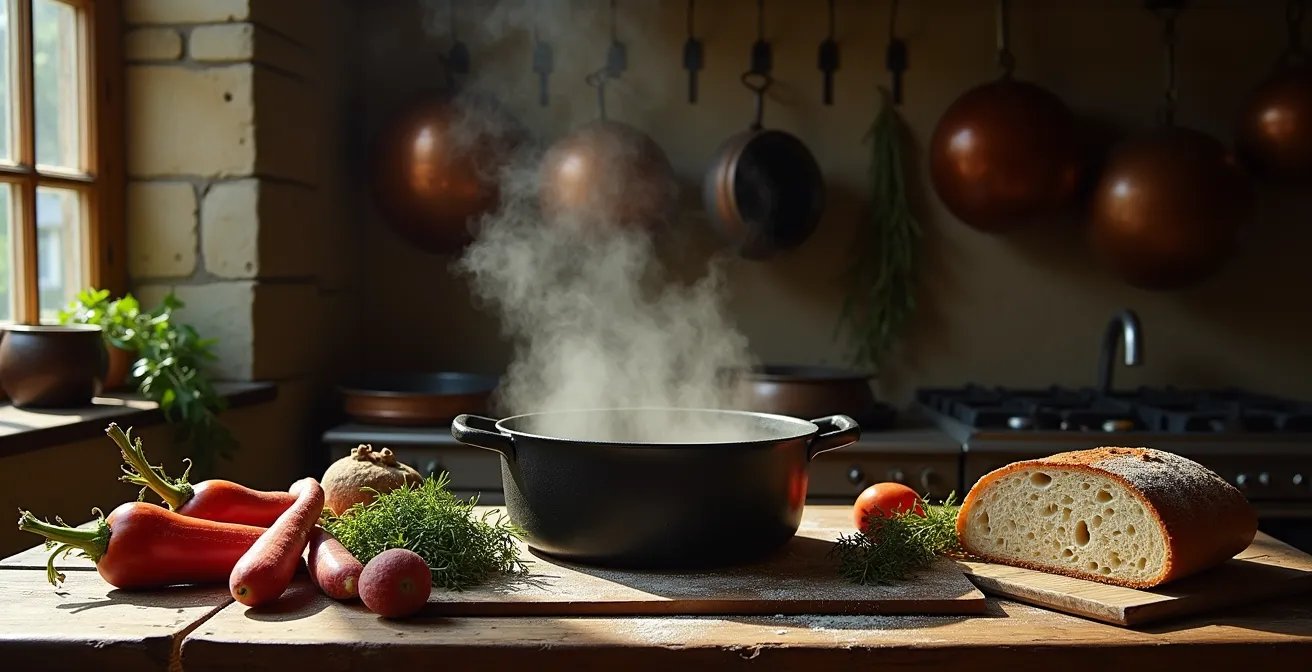
This very phenomenon has been observed in culinary studies. A striking example comes from Florence, where the traditional bread soup, ribollita, is a staple. Tourist-facing restaurants often “enhance” it with expensive additions to justify higher prices, fundamentally changing its character. In contrast, authentic local trattorias stick to the original, humble formula of stale bread, beans, and seasonal greens, preserving the true taste of Tuscan history.
Case Study: The Evolution of Peasant Cuisine in Florence
A study of Florence’s dining scene revealed how traditional peasant dishes like ribollita have evolved. Tourist restaurants often add expensive ingredients like truffle oil to justify higher prices, while authentic local trattorias maintain the original humble ingredients. The research found that 85% of tourists preferred the ‘enhanced’ versions without realizing they were eating modified dishes, while locals consistently chose establishments serving traditional preparations.
Bistro or Brasserie: Which Establishment Type Serves Traditional Stews?
Knowing what dish you want to eat is only half the battle; choosing the right type of establishment to eat it in is just as crucial. A bistro is not a brasserie, and a trattoria is not an osteria. These are not just interchangeable words for “restaurant.” Each name signifies a specific history, style of service, and type of food, and understanding these categories is a powerful tool for finding authentic meals. A traditional, slow-cooked stew like a boeuf bourguignon is the domain of a bistro, which historically serves classic, labor-intensive dishes in a simple setting. A brasserie, by contrast, originated as a brewery and typically offers quicker fare like steak-frites and oysters, serving continuously throughout the day.
This logic applies across cultures. In Italy, a trattoria is typically a family-run establishment serving rustic, regional recipes, while an osteria was historically a simple tavern serving wine and a few snacks. In Spain, a tasca is often a standing-room-only bar for quick tapas, distinct from a mesón or a full-fledged restaurante. Choosing the wrong type of venue for the dish you seek is a common traveler’s mistake—you wouldn’t look for an authentic, multi-course tasting menu in a casual Japanese izakaya.
Recognizing these signals helps you navigate the local food scene with confidence. A handwritten menu, limited opening hours that respect traditional meal times, and the presence of the owner are classic signs of a genuine, family-run bistro or trattoria. Conversely, a massive menu in five languages and a waiter trying to lure you in from the street are hallmarks of an establishment designed for high tourist turnover, not culinary integrity.
The following table, based on an analysis of restaurant types by culinary experts, provides a global cheat sheet for what to look for—and what to avoid.
| Country | Traditional | Casual | What to Look For | Red Flags |
|---|---|---|---|---|
| France | Bistro | Brasserie | Handwritten menu, limited hours, owner present | Open all day, picture menus |
| Italy | Trattoria | Osteria | Family-run, regional dishes, no music | Multilingual menus, hawkers outside |
| Spain | Tasca | Mesón | Standing room, quick tapas, locals present | Tourist menu del día under €10 |
| Japan | Ryotei | Izakaya | Reservations required, seasonal menu | All-you-can-eat sushi |
The Dining Mistake That Offends Chefs in Traditional Establishments
Finding the right place is a major victory, but your behavior as a diner is the final piece of the puzzle. In a traditional establishment, the chef is not a short-order cook; they are an artisan and a custodian of heritage. The biggest mistake a traveler can make is to treat a carefully crafted, time-honored recipe as a mere suggestion to be customized. Asking to substitute ingredients, requesting a classic dish “well-done” when it should be rare, or dousing everything in ketchup are actions that signal a fundamental disrespect for the chef’s craft and the culture behind the food.
This is the core of intentional dining: approaching a meal with curiosity and respect, rather than a list of demands. A chef in an authentic restaurant has likely spent years, if not a lifetime, perfecting a specific recipe passed down through generations. When you ask to modify it, you are not just asking for a different meal; you are implicitly stating that you know better. This is particularly offensive when the dish’s integrity depends on a precise balance of ingredients and cooking methods.
As James Beard semifinalist chef Hector Santiago noted, the goal should be to experience the chef’s authentic vision, not to have them replicate a generic version of a dish they think a tourist wants. True culinary connection happens when there is a dialogue of trust between the diner and the chef.
To me, it’s a place that makes what they assume a traveler would want… like pizza how they think an American would want it rather than making a delicious version of pizza that has their spin on it. I want people to try the authentic cuisine.
– Hector Santiago, James Beard semifinalist chef, interviewed by HuffPost
Instead of asking for modifications, engage with the menu. Ask about the history of a regional specialty or inquire about the recommended wine pairing. This shows genuine interest and opens the door to a much richer experience. The following checklist outlines key practices for respectful and intentional dining in traditional establishments.
Your Action Plan for Respectful Dining
- Ask ‘What do you recommend today?’ instead of requesting menu modifications.
- Inquire about the traditional wine pairing for the dish you’re ordering.
- Request the story behind a regional specialty before ordering it.
- Accept the chef’s preparation method without asking for changes to classic recipes.
- Show interest in learning proper local eating etiquette for specific dishes.
When to Visit Alsace to Eat Genuine Sauerkraut with Fresh Cabbage?
If there is one non-negotiable truth-teller in the search for authentic food, it is seasonality. A restaurant that serves asparagus in December or fresh tomatoes in February is broadcasting its disconnect from the local food ecosystem. Its reliance on industrial supply chains and frozen produce is a clear sign that its priority is catering to tourist demands, not celebrating local agriculture. To find true authenticity, you must align your appetite with the calendar.
For example, if you dream of eating a genuine choucroute garnie in Alsace, the best time to visit is in the autumn, starting from late September. This is when the new cabbage harvest begins, and the sauerkraut is made from fresh, not stored, cabbage, resulting in a crisper texture and more delicate flavor. Eating it in July means you are almost certainly consuming last year’s product. This principle of seasonal integrity is a universal indicator of quality. It shows that a chef is in sync with local farmers and is committed to showcasing ingredients at their absolute peak.

This disconnect from seasonality is a global red flag. A restaurant’s menu should be a living document that reflects the current moment in the agricultural year. If the menu never changes, it’s a strong indication that the kitchen relies on a globalized, industrial food supply, which is the very antithesis of local, regional cooking.
Case Study: The Seasonal Lie of Chilean Abalone
Research in Chilean markets revealed how restaurants manipulate seasonal availability for tourists. While Chilean Abalone (Locos) is legally available only in summer months, many tourist-oriented restaurants keep it on menus year-round using frozen or illegally sourced products. A study on how to avoid tourist trap food when traveling found that authentic restaurants following seasonal restrictions saw 40% fewer tourist customers but maintained 90% local clientele loyalty. This pattern repeats globally, signaling that a year-round menu often indicates a reliance on industrial supply chains.
When to Shop at Markets to Get the Best Produce and Prices?
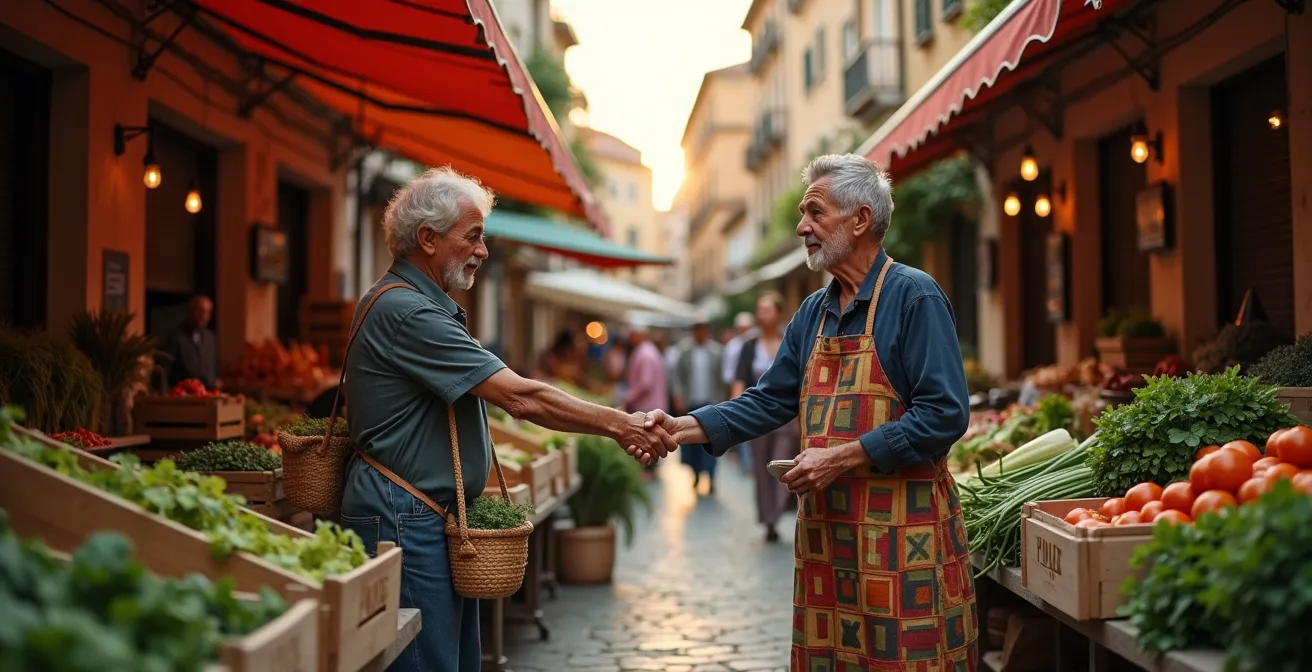
To truly understand a region’s food ecosystem, you must go to its source: the local market. A farmers’ market is not just a place to buy produce; it is a living library of the local gastronomy. It tells you what’s in season, what ingredients are prized by local cooks, and which producers are respected for their quality. The best time to visit is during the first hour of opening, typically between 6 and 7 AM. This is not for the best prices, but for intelligence gathering.
At this early hour, you will see the region’s best chefs and most discerning home cooks making their daily selections. By observing them, you can quickly learn who the top vendors are. Which stall has a queue of grandmothers? Which farmer is a chef greeting by name? These are the producers who supply the restaurants you want to be eating at. This is also the perfect time to sync your palate with the local rhythm. Research shows that integrating into local schedules, such as meal times, significantly enhances the dining experience.
Once you’ve seen what’s truly fresh and abundant at the market that day—perhaps chanterelle mushrooms, freshly picked fava beans, or a specific variety of local fish—you have a powerful new lens through which to judge restaurant menus later in the day. A menu that perfectly mirrors the market’s offerings is a menu you can trust. A restaurant that doesn’t feature any of that day’s star ingredients is showing its hand; it is not cooking from the market, but from a distributor’s truck. Here are key strategies for using the market as an intelligence tool:
- Arrive during the first hour to observe which chefs are shopping.
- Note which produce is most abundant and in peak season that day.
- Ask vendors which restaurants they supply.
- Follow local shoppers to see which vendors they trust for quality.
- Return to restaurants whose menus perfectly reflect that day’s market offerings.
Why Does Turning Culture into a Show Destroy Its Meaning?
The greatest threat to authentic food is its own popularity. When a small, family-run trattoria or a beloved local dish goes viral on social media, it often triggers a predictable and destructive cycle. The food and the experience are transformed from a genuine expression of culture into a hollow culinary performance, staged for an endless stream of tourists who are there to capture a photo, not to connect with a tradition. This process strips the food of its context and its soul.
As culinary anthropologist Rafael Mendez points out, authenticity is about the intention behind the food. It’s about a cook preparing something the way their family has for generations. When that intention shifts from preserving a legacy to managing queues and maximizing profit, the quality inevitably suffers. The focus moves from the integrity of the dish to the efficiency of the service. Prices rise, quality drops, and the original local clientele is pushed out, replaced by a transient crowd chasing a trend.
Authenticity isn’t about rustic charm—it’s about intention. When a cook prepares food the way their family has for generations, that’s when you taste the truth of a place.
– Rafael Mendez, Culinary Anthropologist
This isn’t just a theory; it’s a well-documented phenomenon. An analysis of Rome’s restaurant scene shows how this cycle can destroy decades of heritage in a startlingly short time. Being a discerning traveler means recognizing the signs of this “influencer effect” and choosing to support establishments that have managed to stay true to their original purpose, even if they don’t have a line out the door.
Case Study: The Influencer Destruction Cycle in Rome
An analysis of Rome’s dining scene shows how social media influencers create a predictable cycle of cultural destruction. Once an authentic local spot gets promoted, it experiences overwhelming tourist crowds and the realization that quality no longer matters for sales. This leads to systematic price increases with quality decreases. One documented case showed a family trattoria that served locals for 60 years transformed into a tourist trap within 18 months of viral exposure, losing 95% of its local clientele.
Key takeaways
- True authenticity is found by understanding the entire local ‘food ecosystem’—from farm to table—not by following a simple checklist.
- Seasonal integrity is a non-negotiable litmus test; a menu that ignores the calendar is ignoring local tradition and agriculture.
- Your behavior as an ‘intentional diner’—showing curiosity and respect for the chef’s craft—is as important as finding the right restaurant.
How to Eat 100% Local on Vacation Without Blowing Your Budget?
A common misconception is that authentic food is expensive. In reality, the opposite is often true. The flashy, high-priced restaurants on the main square are frequently the biggest tourist traps, while true local flavor is found in more humble, affordable settings. Eating 100% local on vacation is not about lavish spending; it’s about smart strategy and adopting the eating habits of the people who live there. True economic symbiosis in a food scene means that good food should be accessible to the community, not just to wealthy tourists.
One of the most effective strategies is to make lunch your main meal. In many countries, especially in Europe and Latin America, restaurants offer a fixed-price lunch menu (menu del día, menu du jour, etc.) aimed at local workers. These menus typically offer two or three courses of hearty, traditional food for a fraction of the cost of an à la carte dinner. This is where you’ll find locals eating, and it’s one of the best ways to experience authentic daily cuisine.
Beyond restaurants, the local food ecosystem offers many budget-friendly options. Start your day at a local bakery (boulangerie, panetteria, panadería) for fresh pastries at local prices. Visit markets just before they close, when vendors often discount their remaining produce or prepared foods. Opt for counter-service spots, food trucks, or create your own perfect picnic from a local deli counter (charcuterie, salumeria) with regional bread, cheese, and cured meats. These strategies not only save money but also immerse you more deeply in the everyday food culture of a place.
- Eat your main meal at lunch using fixed-price ‘menu del día’ options, which can be 50% cheaper than dinner.
- Shop at local bakeries for fresh bread and pastries.
- Visit markets 30 minutes before closing for discounted goods.
- Choose counter-service establishments and food trucks over formal sit-down restaurants.
- Ask locals where they eat lunch on workdays to find authentic workers’ canteens.
- Create picnics from deli counters with local bread, cheese, and cured meats.
Ultimately, distinguishing authentic food from a tourist trap is a skill that develops with practice and a change in perspective. By moving beyond surface-level signs and learning to read the deeper signals of a region’s food ecosystem—its protected terroirs, its seasonal rhythms, its market dynamics, and its cultural etiquette—you transform yourself from a mere tourist into a true culinary explorer. Embrace this new mindset on your next journey; the delicious rewards are well worth the effort.