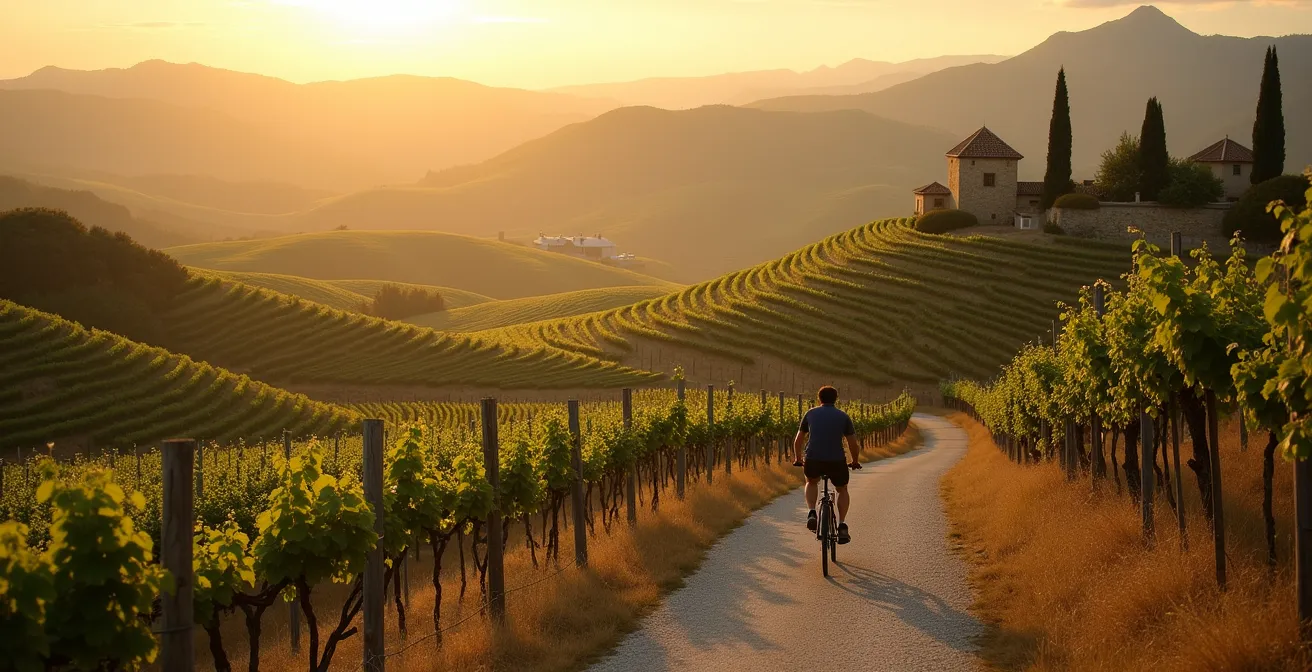
The key to an unforgettable Burgundy bike tour is not physical endurance, but intelligent pacing and sensory logistics.
- Plan your daily routes based on slope exposure and your personal energy levels, tackling steep climbs in the morning.
- Master the art of the spittoon and strategic hydration to stay safe, sharp, and able to appreciate every tasting.
- Use a hybrid transport strategy for your wine treasures: carry one special bottle with you and have the rest shipped by the winery.
Recommendation: Adopt a ‘less is more’ philosophy. Fewer, higher-quality tastings on well-planned routes will yield a far richer and more enjoyable experience than a rushed, exhausting itinerary.
The vision is intoxicating: gliding on two wheels through a sun-drenched sea of vines, the names of legendary Burgundy villages like Pommard and Meursault rolling off the tongue, a glass of sublime Pinot Noir waiting at the end of the day. This is the dream of a cycling wine tour. The reality, however, can often involve burning thighs, logistical headaches, and the clumsy fatigue that comes from mixing strenuous exercise with wine tasting. Many guides will simply point you toward the Voie des Vignes and wish you “bon courage.”
But what if the goal wasn’t just to survive the ride, but to savor it? What if the secret to the perfect tour wasn’t about pedaling harder, but planning smarter? The real challenge isn’t the distance, but the details: the timing of your tastings, the logistics of transporting your liquid souvenirs, and the crucial understanding of the landscape itself. It’s about creating a symphony of sensory experiences, not an endurance test.
This is where an organized approach meets the spirit of a bon vivant. This guide moves beyond the basics to reveal the strategies for a truly seamless and pleasurable journey. We’ll delve into the art of strategic pacing, turning the region’s daunting hills into a tactical advantage. We will transform the challenge of bringing wine home into a simple logistical puzzle. Forget exhaustion; the true key to unlocking Burgundy on a bike is mastering the art of the pause—knowing when to climb, when to taste, when to rest, and how to do it all with effortless style.
To help you craft this perfect balance of indulgence and activity, this article is structured to answer the most critical questions a cyclist-connoisseur might have. From understanding the very ground beneath your wheels to the etiquette of the tasting room, each section provides the practical wisdom needed to transform your trip from a simple holiday into a masterpiece of planning.
Summary: A Strategic Guide to Cycling and Tasting in Burgundy
- Why Do the Best Vineyards Often Have the Steepest Hills?
- How to Transport Wine Bottles Safely on a Bike Tour?
- Guided Tour or GPS App: Which Offers More Freedom in the Vineyards?
- The Tasting Mistake That Leads to Accidents on Country Roads
- When to Arrive at Wineries to Ensure a Personal Tasting Session?
- When to Book Your Bike Slot on the Train to Guarantee Space?
- How to Sync Your Trip with the Distillation Process for a Sensory Experience?
- How to Identify Organic and Biodynamic Wines on a Menu?
Why Do the Best Vineyards Often Have the Steepest Hills?
The first rule of a Burgundy bike tour is that the best wine and the hardest climbs are inseparable. This isn’t a coincidence; it’s the very essence of terroir. The most celebrated vineyards are planted on the mid-slopes of the Côte d’Or (“Golden Slope”) for very specific reasons. These inclines provide optimal sun exposure and superior drainage, two critical factors that stress the vines just enough to produce grapes with concentrated flavor and complexity. The geology beneath these slopes is a complex mosaic of limestone and marl, which changes subtly every few meters. This is the secret behind the 1,247 distinct vineyard parcels, or ‘Climats,’ recognized by UNESCO as a World Heritage site.
For the cyclist, this means your itinerary is dictated by geology. Instead of fighting the hills, you must learn to work with them. A strategic approach to your daily ride can make all the difference. Think about the sun’s path: start with east-facing slopes in the morning to enjoy cooler temperatures and tackle the steepest sections before noon when your energy is at its peak. The formidable Hill of Corton, with its dramatic elevation changes, serves as a perfect real-world example of this principle. Save the iconic, gentle south-facing slopes for the afternoon, when the “golden hour” light makes for breathtaking photography and a more leisurely pedal.
Understanding this connection between topography and wine quality transforms your ride from a simple physical challenge into a rolling lesson in viticulture. Every climb becomes an appreciation for the difficult conditions that create exceptional wine. You’re not just conquering a hill; you’re experiencing the terroir in the most intimate way possible.
How to Transport Wine Bottles Safely on a Bike Tour?
You’ve just tasted a life-changing Volnay, and the winemaker agrees to sell you a few precious bottles. Now comes the cyclist’s dilemma: how do you get these glass treasures home without them rattling into a tragic, purple-stained mess in your pannier? This is a core challenge of “sensory logistics,” and it requires a sommelier’s care. The answer lies in creating a purpose-built, cushioned cocoon for your wine. Don’t just toss them in; proper padding and weight distribution are paramount.
The DIY “Sommelier’s Pannier Kit” is a proven method. Your first line of defense is a neoprene wine sleeve for each bottle. Then, layer bubble wrap between bottles to eliminate any glass-on-glass contact. For a pro-level shock absorber, place a partially-inflated bicycle inner tube at the bottom of your pannier. When loading, always place bottles low and centered, distributing the weight evenly between both rear panniers to maintain your bike’s stability. A crucial rule is to limit yourself to a maximum of two or three bottles per pannier; any more and you risk compromising your balance on descents.
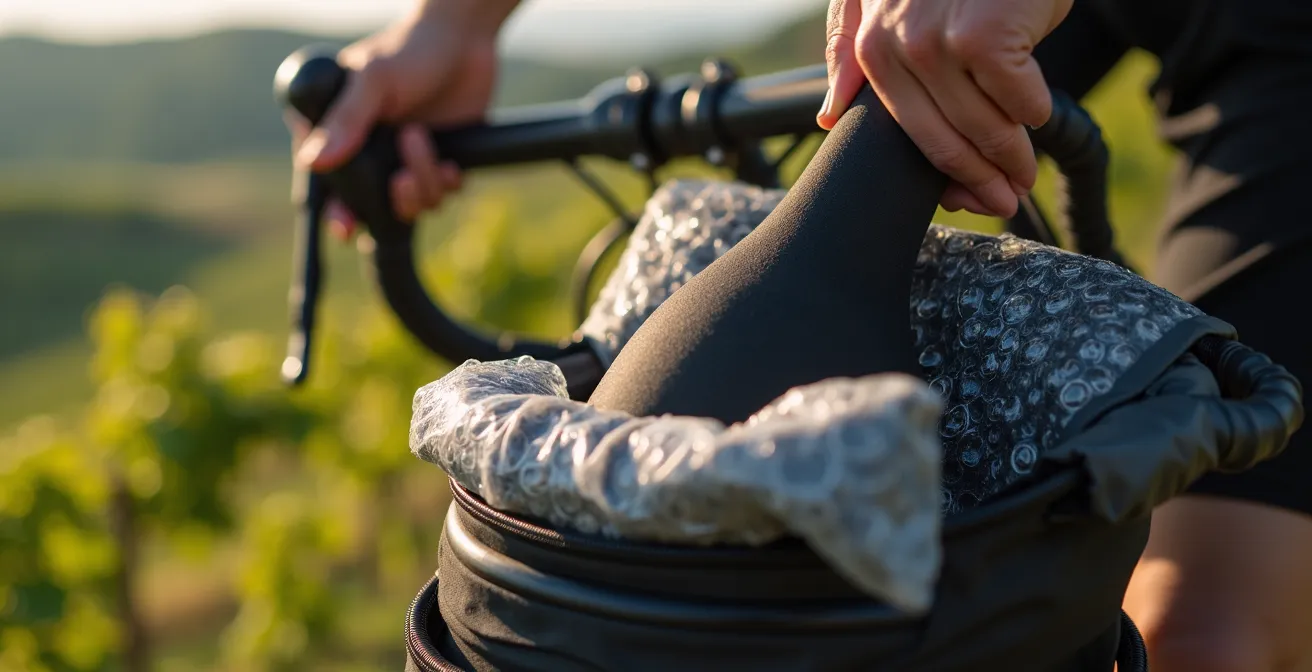
However, the most strategic choice is often a hybrid approach. For a larger haul, it’s wise to carry only one or two special bottles for that evening’s enjoyment and let the experts handle the rest. Wineries and local consolidation services offer surprisingly affordable shipping options, ensuring your collection arrives home safely without you having to haul it over another hill. This frees you to ride with a lighter bike and a lighter heart.
To help you decide the best method for your needs, this table breaks down the most common options:
| Method | Capacity | Safety Rating | Cost | Convenience |
|---|---|---|---|---|
| Rear Panniers | 4-6 bottles | High with padding | One-time equipment cost | Immediate access |
| Frame Bag | 1-2 bottles | Medium | Low | Quick access |
| Winery Shipping | Unlimited | Highest | €15-30 per case | No carrying required |
| Local Consolidation Service | Unlimited | Highest | €20-40 total | Pick up at tour end |
Guided Tour or GPS App: Which Offers More Freedom in the Vineyards?
The modern cyclist in Burgundy faces a classic choice: place your trust in a fully guided tour with a local expert, or embrace the spirit of adventure with a GPS app and a pre-loaded route? This decision fundamentally shapes your experience, balancing convenience against spontaneity. A fully guided tour removes all logistical burdens—routes are planned, and winery appointments are secured. This is an excellent option for those who want to immerse themselves completely in the experience without worrying about a single detail. The downside is a rigid schedule and higher cost.
On the other end of the spectrum, a self-guided tour using an app like Komoot or Ride with GPS offers maximum freedom. You ride at your own pace, lingering where you wish and making spontaneous detours. This is the purist’s choice, but it places the responsibility of booking tastings and navigating squarely on your shoulders. In a region with thousands of wineries, this can be overwhelming.
Increasingly, a third option is proving to be the sweet spot: the hybrid self-guided tour. Companies like Bourgogne Evasion have perfected this model. They handle the heavy lifting—booking your accommodations and a few key winery visits, transferring your luggage, and providing a GPS with proven routes. You, however, are free to ride on your own schedule each day. This approach offers the perfect blend of structure and freedom, ensuring you see the highlights without being locked into a group’s pace. It gives you the confidence of a planned trip with the soul of an independent adventure.
The best choice depends entirely on your travel style and budget. Here is a comparison to help you decide:
| Aspect | Fully Guided | Self-Guided with GPS | Hybrid Approach |
|---|---|---|---|
| Daily Cost | €200-400 | €80-150 | €120-200 |
| Flexibility | Low – fixed schedule | High – your pace | Medium – flexible core |
| Local Insights | Excellent | Limited | Good for key sites |
| Route Planning | Done for you | Pre-loaded routes | Mix of both |
| Winery Access | Pre-arranged | Self-booking needed | Key visits arranged |
The Tasting Mistake That Leads to Accidents on Country Roads
The single biggest mistake a cycling wine taster can make is swallowing. It seems simple, yet it’s the root of almost every preventable accident on Burgundy’s quiet country roads. Your palate can distinguish the nuances of a fine Chambolle-Musigny, but as one wise Burgundian vintner quoted by Rick Steves famously noted, “the stomach does not taste.” Alcohol absorption impairs balance, judgment, and reaction time—three things you cannot afford to lose on a bicycle. The key to intelligent indulgence is to embrace the spittoon, or *crachoir*. It is not an insult to the winemaker; on the contrary, it’s the mark of a serious, respectful taster who is there to appreciate the craft, not to get intoxicated.
Beyond the spittoon, a strict post-tasting safety protocol is essential. This is the “art of the pause” in its most critical form. The most important rule is the ‘One-for-One’: for every sample of wine you taste (even if you spit), you must drink a full glass of water. Hydration is non-negotiable. After your final tasting of the day, a mandatory 30 to 60-minute break is crucial before getting back on the bike. Use this time to have a high-protein snack like local cheese or nuts, which helps slow any alcohol absorption. This pause allows your body to process the small amount of alcohol you’ve inevitably consumed and lets your head clear.
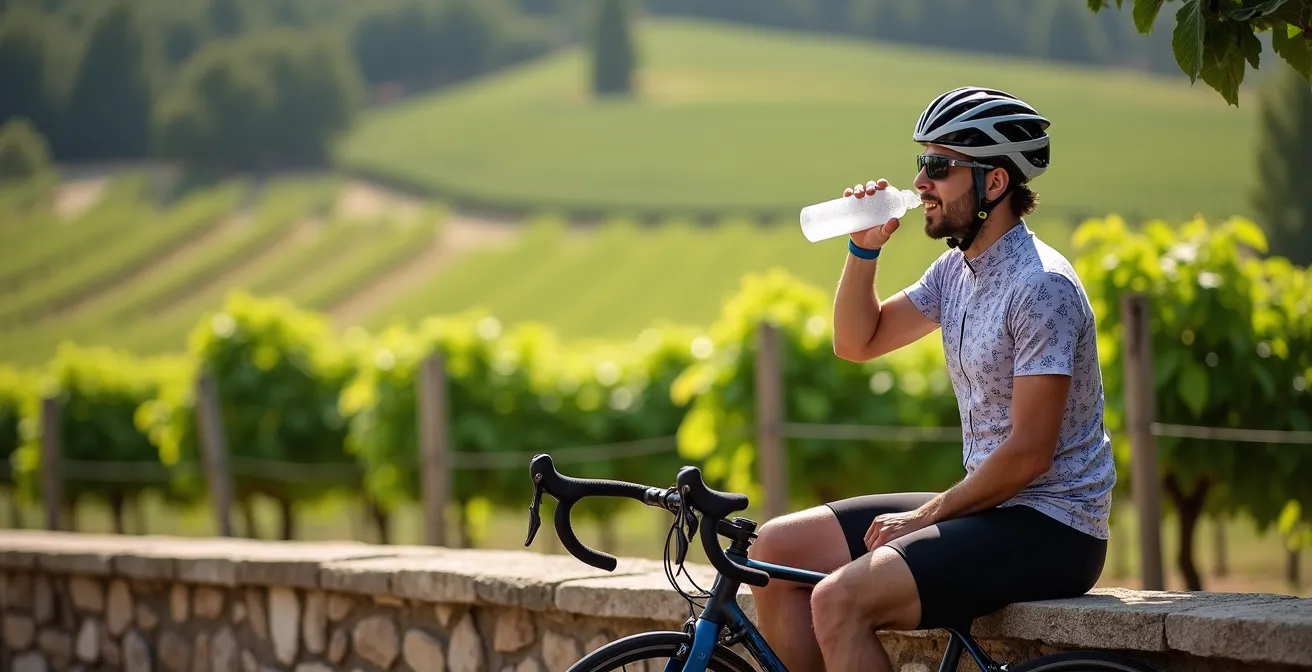
Planning your route to end with a gentle downhill or flat section after your last winery visit is another pro-level safety measure. This thoughtful approach ensures you can enjoy the full sensory pleasure of wine tasting without compromising your safety or the enjoyment of the ride home.
Your Post-Tasting Safety Checklist
- Always use the spittoon: View it as a professional tool, not an insult.
- Apply the ‘One-for-One’ Rule: Drink one full glass of water for every wine tasted.
- Take a mandatory 30-60 minute break after your final tasting before cycling.
- Eat a high-protein snack (nuts, cheese) during your break to slow alcohol absorption.
- Plan your route to finish on downhill or flat terrain after your last winery stop.
When to Arrive at Wineries to Ensure a Personal Tasting Session?
In a region with over 4,200 wineries scattered across 44 villages, you might think you can simply drop in for a tasting. This is a common and costly misconception. The best producers are often small, family-run operations, and an appointment is almost always mandatory. But just getting an appointment isn’t enough; timing it correctly is the secret to a memorable, personal session. The golden rule is to avoid the ‘tourist rush hour’ between 11 AM and 3 PM. During these hours, hosts are often stretched thin, and your experience can feel rushed.
The true “golden hours” for a tasting are the very first appointment of the day (usually around 10 AM) or the very last (around 4:30 PM). In the morning, your host is fresh, your palate is clean, and you have their undivided attention. In the late afternoon, the day’s rush is over, and winemakers are often more relaxed and generous with their time and stories. These slots provide the best opportunity for a genuine connection and a deeper dive into their wines.
The time of the week and year also matter. For a quieter, more intimate experience, plan your key tastings for Tuesday through Thursday. Weekends are significantly busier. Visiting in the shoulder seasons of May, early June, or late September/October allows you to avoid the peak summer crowds. Be aware, however, that visiting during the harvest in September can be a double-edged sword: the region is alive with energy, but winemakers will be extremely busy and likely unavailable. The key takeaway is simple: always book in advance and be strategic about your timing.
When to Book Your Bike Slot on the Train to Guarantee Space?
The first and last steps of your Burgundy adventure will likely involve a train, and successfully navigating the French rail system with a bicycle requires careful planning. It’s a common mistake to assume all trains are bike-friendly. The key is to understand the crucial difference between the two main types of trains you’ll encounter: the high-speed TGV (Train à Grande Vitesse) and the regional TER (Transport Express Régional).
For TGV trains, which you’ll use to travel from Paris to Dijon or Beaune, bike spaces are extremely limited and must be reserved when you purchase your passenger ticket. You’ll need to look for a small bicycle symbol on the schedule and select the “Add a bike” option during the online booking process on the SNCF Connect website or app. During peak season (June to September), these coveted spots can sell out weeks or even months in advance. The rule here is to book your TGV bike space as early as possible—ideally the moment tickets go on sale, which is typically 2-3 months ahead.
For the regional TER trains that shuttle between Burgundy towns like Dijon, Beaune, and Chalon-sur-Saône, the system is different and far more flexible. These trains usually have dedicated bike areas (‘espace vélo’) that operate on a first-come, first-served basis and do not require a reservation. While this is more convenient, it’s wise to take an early morning train to avoid competition for space, especially on weekends. Having a Plan B, like a local bike rental or a bike shipping service, can provide peace of mind if your primary plan falls through.
How to Sync Your Trip with the Distillation Process for a Sensory Experience?
While the optimal months for cycling in Burgundy are generally considered to be May to September, when the vines are lush and the weather is warm, there’s a secret season that offers a completely different and profoundly sensory experience. For the traveler seeking a unique story, planning a trip in the heart of winter (November through March) provides a front-row seat to the ancient ritual of distillation. This is when the region’s famous pomace brandy, Marc de Bourgogne, and wine brandy, Fine de Bourgogne, are made.
During these cold months, a magical sight appears in the quiet village squares: the *alambic ambulant*, or mobile alembic still. These magnificent copper contraptions travel from village to village, and local producers bring their grape pomace (the skins, pulp, seeds, and stems left after pressing) to be distilled. The air fills with the warm, aromatic steam of the eau-de-vie being born. It’s a spectacle of copper, steam, and fire set against the stark beauty of dormant winter vineyards.
Planning a trip around this off-season activity offers several advantages. The bike routes are virtually empty, accommodations are cheaper, and you gain access to a side of Burgundian life that summer tourists never see. Witnessing the distillation process is to connect with the full life cycle of the vine, long after the harvest is complete. It transforms a simple bike tour into a deeper, more holistic understanding of the region’s culture and craft, appealing directly to the connoisseur’s soul.
Key Takeaways
- Plan your climbs and descents strategically around the sun’s position and your energy levels for an efficient and enjoyable ride.
- Intelligent indulgence is key: the spittoon is your most important tool, and consistent hydration is non-negotiable for safety.
- For wine transport, combine a small personal carry for immediate enjoyment with professional winery shipping for larger purchases.
How to Identify Organic and Biodynamic Wines on a Menu?
As your appreciation for Burgundy deepens, you’ll naturally become more curious about the farming practices behind the wines you love. Identifying organic and biodynamic producers adds another layer to your tasting journey, connecting you to the vignerons who are most dedicated to expressing their specific terroir. While a guide might suggest that many Burgundy vineyards are farmed organically by default due to tradition, the reality is more nuanced. True organic and biodynamic farming is a conscious, rigorous commitment.
The easiest way to identify these wines on a menu or in a shop is to look for official certification logos. The most common are the green leaf of the EU’s ‘AB’ (Agriculture Biologique), ‘Demeter’, and ‘Biodyvin’ for biodynamic wines. However, the best clues are often found right in the vineyard as you cycle past. Look for cover crops like grass and clover growing between the vine rows—this is a hallmark of organic farming, used to promote soil health instead of relying on chemical herbicides. You might also notice signs of manual tilling and a greater sense of biodiversity, with more insects, birds, and wildflowers. These “wilder,” less manicured parcels often belong to the most thoughtful producers.
Don’t be afraid to engage with sommeliers and winery staff. A simple question like, “Travaillez-vous en lutte raisonnée ou en bio?” (“Do you work with sustainable or organic methods?”) can open up a fascinating conversation. Seeking out renowned natural wine producers like Domaine Prieuré Roch or Yann Durieux is another direct way to explore this philosophy. Learning to spot these cues, both on the label and in the landscape, elevates your tour from a simple tasting to a genuine exploration of winegrowing philosophy.
Now that you are armed with the strategies for intelligent pacing, sensory logistics, and mindful tasting, the next step is to start sketching out your own personalized Burgundy adventure. Begin by choosing your season, deciding on your touring style, and mapping a few must-visit villages to create the framework for an unforgettable journey.