In summary:
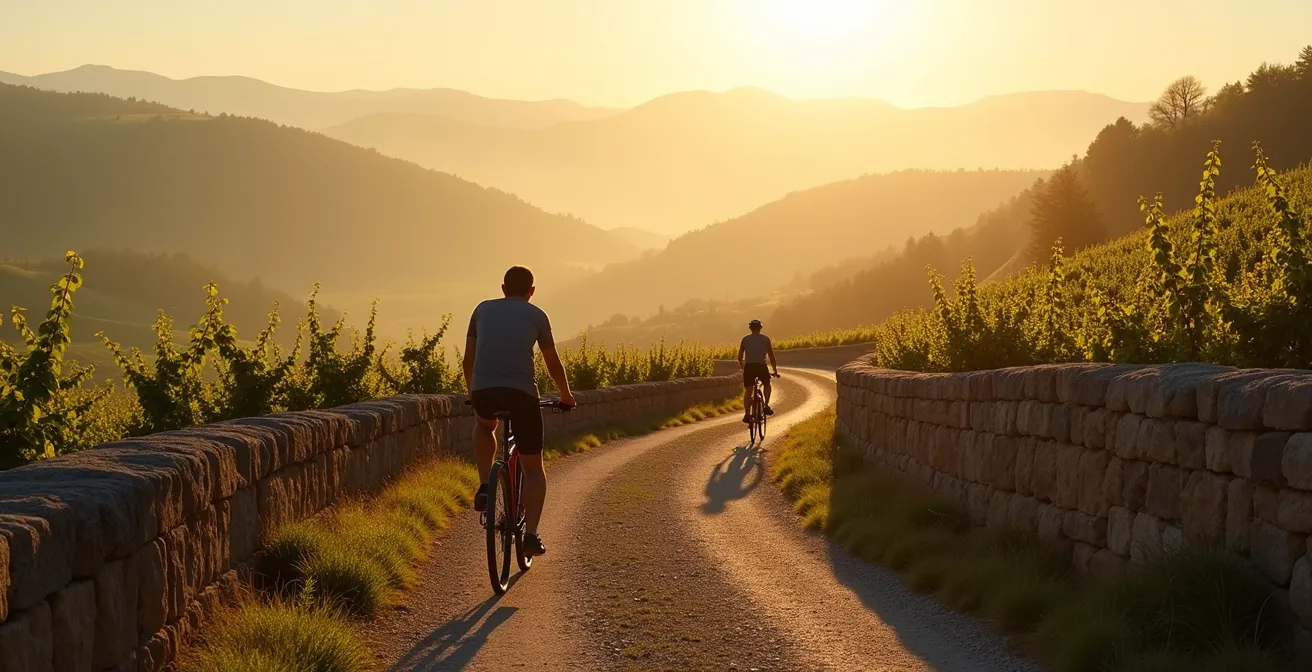
- Embrace car-free travel not as a constraint, but as a strategy to deeply connect with Burgundy’s landscape and terroir.
- Combine scenic, flat cycling on the Canal de Bourgogne with regional trains (TER) to move between hubs like Dijon and Beaune.
- Prioritize “human-paced exploration” by walking through vineyards, allowing the physical effort to reveal the secrets of wine quality.
- Discover hidden gems by exploring the “in-between spaces” and avoiding the mistake of only visiting the most famous villages.
- Use your knowledge of terroir to identify authentic, small-production organic and biodynamic wines that tell the story of the land.
Planning a trip to Burgundy’s legendary Côte d’Or often starts with a single, seemingly practical question: “Should I rent a car?” The default answer for many is a resounding “yes,” envisioning scenic drives from one famous wine village to the next. But this approach, while efficient, often misses the very essence of the region. It keeps you behind glass, disconnected from the sun, soil, and slopes that give birth to the world’s most revered Pinot Noir and Chardonnay.
What if the most profound way to experience Burgundy wasn’t about covering the most ground, but about feeling it under your feet? This guide proposes a radical shift in perspective. Here, traveling without a car is not a limitation to overcome; it’s a deliberate choice, a philosophy of slow travel. It’s about trading the speed of an engine for the rhythm of your own pace, allowing you to engage in a form of sensory geography where the journey itself becomes the destination.
This approach transforms a simple vacation into an intimate dialogue with the landscape. By choosing to walk, cycle, and take the train, you don’t just see the vineyards—you connect with them. You begin to understand the subtle shifts in gradient, the composition of the soil, and the unique character of each parcel of land. This article will guide you through the practicalities and the mindset needed for this immersive, car-free exploration, showing you how to unlock a deeper, more authentic Burgundy.
To set the scene and offer a visual taste of one of the region’s main hubs, this short film immerses you in the artistic and architectural atmosphere of Dijon.
To help you navigate this rewarding approach, we have structured this guide to answer the key questions every car-free traveler faces. From understanding the cultural landscape to the practical details of getting around and making informed choices, each section builds on the last to create a complete roadmap for your slow travel adventure.
Summary: A Guide to Savoring Burgundy Without a Car
- Why Are the “Climats” of Burgundy a UNESCO World Heritage Site?
- How to Cycle the Canal de Bourgogne for a Flat and Scenic Route?
- Beaune or Dijon: Which City Is the Better Hub for Exploring Vineyards?
- The Itinerary Error That Makes You Miss the Hidden Gems of Burgundy
- When to Visit Burgundy to See the Vendanges in Action?
- Why Do the Best Vineyards Often Have the Steepest Hills?
- When to Visit Alsace to Eat Genuine Sauerkraut with Fresh Cabbage?
- How to Identify Organic and Biodynamic Wines on a Menu?
Why Are the “Climats” of Burgundy a UNESCO World Heritage Site?
To truly appreciate a car-free journey through Burgundy, one must first understand the very soul of its landscape: the Climats. This is not about meteorology; in Burgundy, a Climat is a specific, precisely demarcated plot of vines, cultivated for centuries. Each possesses its own unique geological and climatic conditions—its own micro-terroir—that have been recognized as producing a wine with a distinct character. This concept is so fundamental to the region’s identity that the Climats of the Côte de Nuits and Côte de Beaune were granted UNESCO World Heritage status.
The recognition is not just for the vineyards themselves, but for the entire human and natural system that created them. According to the official decision, there are over 1,247 precisely delimited vineyard parcels included in the inscription, each with its own name, history, and taste. Traveling slowly allows you to perceive the subtle but significant differences between them. Walking from the Grand Cru of Le Chambertin to its neighbor, Clos de Bèze, you can physically experience a boundary that has defined wine hierarchy for a millennium.
This living culture is constantly celebrated. In 2025, the region will mark the 10th anniversary of its UNESCO listing with major events, including an international conference. The award-winning Cité des Climats et Vins de Bourgogne, with sites in Beaune, Chablis, and Mâcon, serves as a modern embassy for this ancient concept, offering interactive exhibits that make the complex idea of terroir accessible to all. Understanding the Climats transforms your journey from a simple tour into a pilgrimage through a cultural landscape of immense value.
How to Cycle the Canal de Bourgogne for a Flat and Scenic Route?
While the vineyard-covered hills present a challenge, the Canal de Bourgogne offers a wonderfully serene and, most importantly, flat alternative for car-free exploration. This 18th-century waterway slices through the heart of the region, and its towpath has been converted into a dedicated cycling greenway (voie verte) that is almost entirely free of car traffic. It is the epitome of human-paced exploration, where the only rush comes from the desire to stop at the next charming lock-keeper’s cottage or waterside bistro.
Starting a cycling trip is remarkably easy. From the main train station in Dijon, you can rent a variety of bicycles—from comfortable touring bikes to e-bikes for those wanting an extra boost. Companies like Bourgogne Evasion are located conveniently for this purpose. From there, the towpath is just a short ride away, immediately immersing you in a tranquil world of weeping willows, gliding barges, and historic stone bridges. The route is an experience in itself, with the rhythm of your pedaling punctuated by encounters with the canal’s infrastructure: locks, aqueducts, and tunnels.
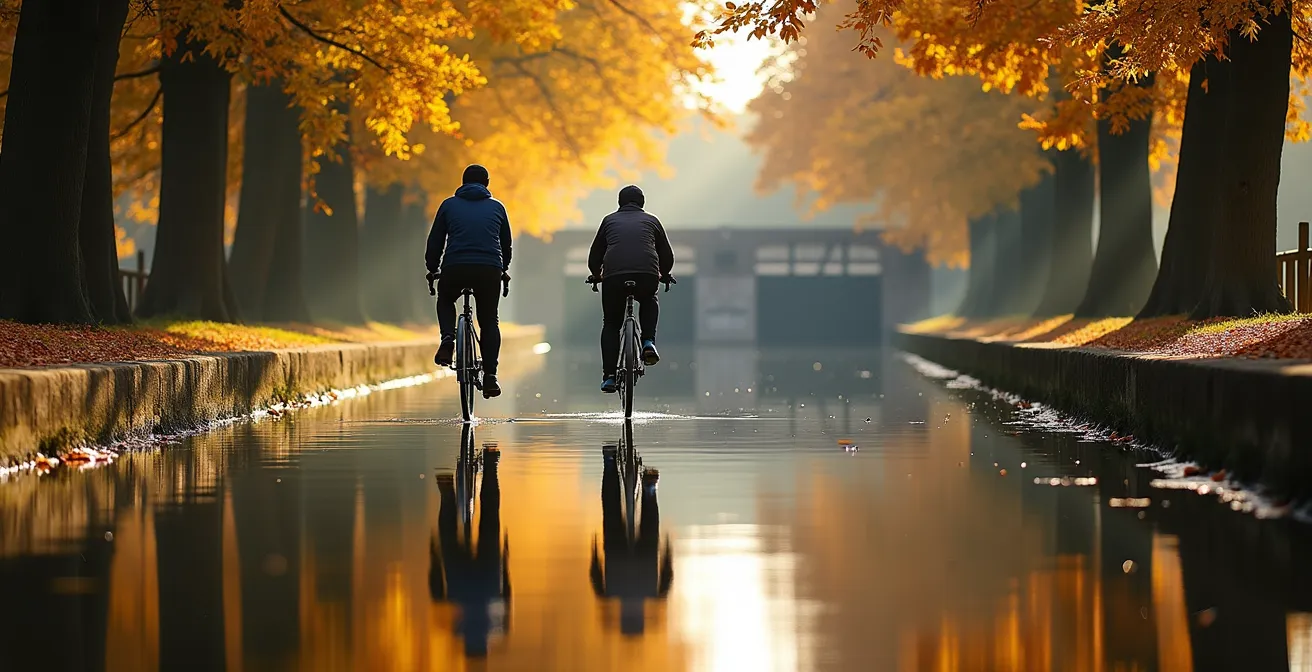
As you can see, the path is sheltered and scenic, making it ideal for leisurely rides. A smart strategy for a car-free traveler is to plan a one-way journey. You can cycle for a day, or even several, and then use the regional MobiGo bus or train network to return to your base. This allows you to cover significant distances without the burden of backtracking. While the canal itself doesn’t run directly through the most famous vineyards, it provides a perfect artery from which you can launch shorter, hillier excursions into the nearby Hautes-Côtes.
Beaune or Dijon: Which City Is the Better Hub for Exploring Vineyards?
The choice between Beaune and Dijon as a home base is a classic Burgundy dilemma, especially for the car-free traveler. As travel writer Sophie Nadeau points out, the region is surprisingly well-suited to this mode of transport.
All of the cities and towns listed within this itinerary can be reached via public transport, and for many of the more historic older towns in Burgundy, you probably wouldn’t want to have a car with you!
– Sophie Nadeau, Solosophie Travel Guide
Both cities offer excellent but different advantages for exploring the vineyards. Dijon, the grand capital of the Dukes of Burgundy, is a major TGV hub, making it easily accessible from Paris and other European cities. It serves as the gateway to the prestigious Côte de Nuits vineyards to its south. While you’ll need to take a 30-minute regional train to reach the heart of the wine villages, Dijon offers a wealth of museums, a fantastic covered market (Les Halles), and the impressive Cité de la Gastronomie et du Vin for rainy days.
Beaune, on the other hand, is smaller, more intimate, and sits directly at the heart of the Côte de Beaune. From here, you can literally walk or cycle into famous wine villages like Pommard and Volnay. It is the starting point for the “Voie des Vignes,” a dedicated cycling path that runs through the vineyards. Its primary focus is wine tourism, with the magnificent Hospices de Beaune as its crown jewel. The trade-off is fewer train connections and fewer indoor attractions if the weather turns.
To help you decide, this comparison breaks down the key factors for a traveler without a car, based on information from a recent car-free traveler comparison.
| Criteria | Beaune | Dijon |
|---|---|---|
| Train Connections | Good regional connections | Excellent TGV & regional hub |
| Cycling Infrastructure | Direct vineyard access via Voie des Vignes | Canal paths but further from vineyards |
| Wine Tourism | Heart of Côte de Beaune, Hospices museum | Gateway to Côte de Nuits, Cité de la Gastronomie |
| Rainy Day Options | Limited indoor attractions | Multiple museums, covered market Les Halles |
| Village Access | Walking distance to wine villages | Requires 30-min train to wine areas |
The Itinerary Error That Makes You Miss the Hidden Gems of Burgundy
One of the biggest mistakes car-dependent travelers make in Burgundy is thinking in straight lines. They follow the main road, the D974, ticking off a checklist of famous villages: Gevrey-Chambertin, Vosne-Romanée, Meursault. While these are essential stops, this linear approach causes them to miss the very fabric of the region: the tangle of back roads, unnamed hamlets, and the authentic “in-between spaces” where true slow travel moments happen. Without a car, you are naturally forced to abandon this rigid mindset and embrace discovery.
The “last mile” problem is a classic error. Travelers might take a train to a station like Gevrey-Chambertin but fail to plan the 2km walk to a specific winery, missing the journey through the village itself. This walk is not an inconvenience; it’s an opportunity. It’s where you might find a hidden bakery, stumble upon a local petanque game, or have a spontaneous chat with a winemaker tending their garden. To avoid this, allow generous time for these transitions and see them as part of the experience.
Case Study: The Pisy Village Phenomenon
Slow travelers Amy and Larry shared a fascinating experience where their attempts to navigate rural Burgundy’s “tangle of roads” led them repeatedly back to the tiny village of Pisy. Instead of getting frustrated, they embraced it. By letting go of a fixed destination, they found authentic moments: watching a local bike race they hadn’t planned for, meeting farmers, and enjoying impromptu picnics in fields. Their key insight was that the journey through these seemingly insignificant “in-between spaces” became far more memorable than reaching a famous landmark. It’s a perfect illustration of how getting “lost” can lead to finding what you’re really looking for.
Another common mistake is over-scheduling. A packed itinerary of back-to-back tastings in premier villages leaves no room for serendipity. True slow travel requires buffer time to linger over a coffee, follow a curious-looking path, or simply sit on a bench and watch village life unfold. By consciously building this unstructured time into your plan, you open yourself up to the unexpected encounters that become the most cherished memories of a trip.
When to Visit Burgundy to See the Vendanges in Action?
Timing your visit to Burgundy can dramatically shape your experience, especially as a car-free traveler reliant on outdoor activities like cycling and walking. For general touring, the consensus is clear: the season is long and pleasant. Bicycle tour specialists confirm that the window from May to September for ideal cycling conditions offers five months of glorious weather, with long daylight hours and lush, green vineyards. Spring brings wildflowers, while early autumn offers a golden glow.
However, if your goal is to witness the most exciting and photogenic time of year—the wine harvest, or vendanges—you’ll need to be more specific. As Lonely Planet notes, this flurry of activity typically happens “around September, when grapes are harvested by hand.” The exact timing is a nail-biting decision for winemakers, dependent on the year’s weather, and can vary from late August to early October. Visiting during this period is a double-edged sword: the region is buzzing with energy, the air is thick with the sweet smell of ripe grapes, and the vineyards are alive with teams of pickers. It’s a fantastic spectacle of tradition and hard work.
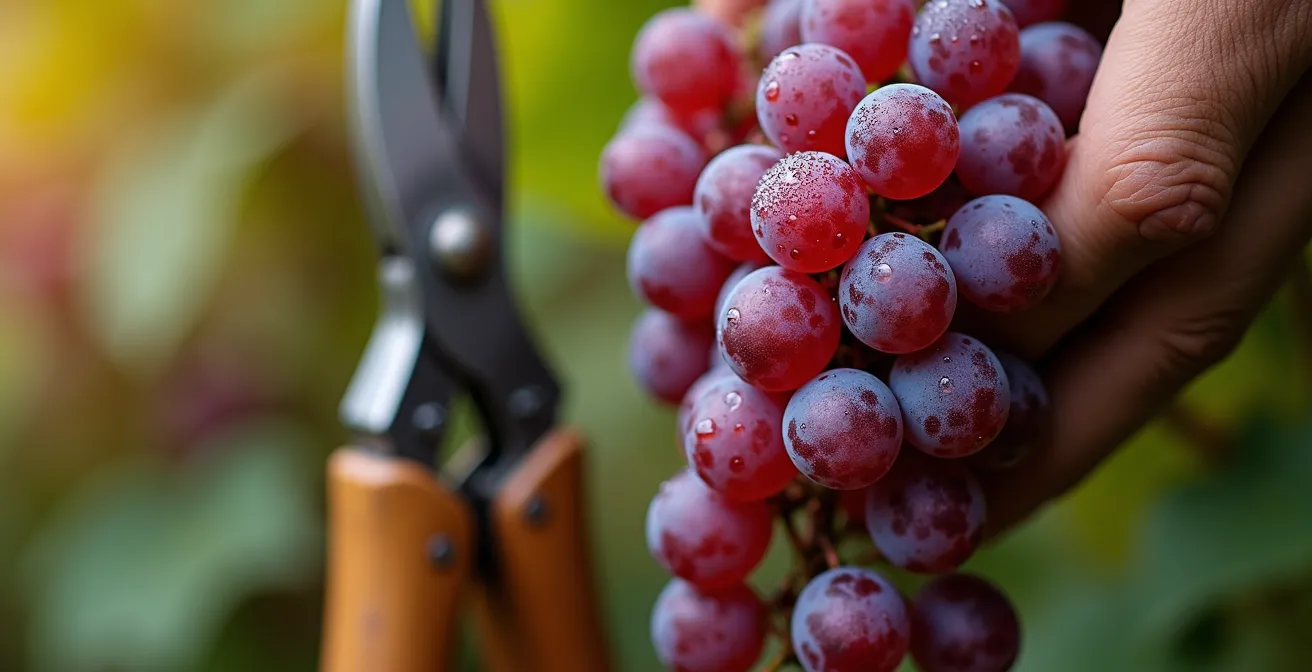
The downside is that many winemakers are intensely busy and less available for tastings or tours. Some smaller domains may even close to visitors entirely. If your priority is in-depth cellar visits, it might be better to come in June or October. But for the sheer sensory experience of the harvest, late September is a magical time. You can stand at the edge of a vineyard and watch the ancient ritual unfold, a powerful reminder of the human effort that goes into every bottle.
Why Do the Best Vineyards Often Have the Steepest Hills?
As you walk or cycle through the Côte d’Or, you’ll quickly notice a pattern: the most revered vineyard names are often found on the steepest, most unforgiving slopes. This is no coincidence. It’s the core principle of Burgundian terroir. The best wines come from vines that have struggled. A steep, well-drained hillside forces the vine’s roots to dig deep into the limestone-rich subsoil in search of water and nutrients. This struggle results in fewer, smaller grapes with a higher concentration of flavor, complexity, and character.
On the flat, fertile valley floor, vines have it easy. They produce plentiful, juicy grapes, but these often lack the depth and nuance of their hillside counterparts. This is the concept of “tactile terroir”: the quality of the wine is directly related to the physical geography you can feel under your feet. A car-free traveler has the unique advantage of being able to physically experience this quality hierarchy in a way that someone driving by cannot.
Case Study: The Downhill Terroir Tour Strategy
Travel expert Rick Steves suggests a brilliant strategy for understanding this phenomenon without a car. Take a taxi to a viewpoint high up on the slope, above a famous Grand Cru vineyard like Chambertin or Montrachet. Then, simply walk downhill. You will physically descend through the quality pyramid. You’ll start on the rocky, thin soil of the Grand Cru plots, pass through the slightly less steep Premier Cru vineyards marked by their stone walls (clos), and end up on the richer, flatter land of the ‘village’ level appellations. The 200-yard quality difference that seems abstract on a map becomes a tangible reality as you feel the gradient change and see the soil composition shift.
This downhill walk is more than just a pleasant stroll; it’s a practical lesson in viticulture. The steeper, more rugged slopes of the Côte de Nuits, home to powerful Pinot Noirs, feel different from the gentler, rolling hills of the Côte de Beaune, known for elegant Chardonnays. By engaging with the landscape this way, you’re not just a tourist; you’re a student of the terroir, learning the ‘why’ behind the wine in your glass.
When to Visit Alsace to Eat Genuine Sauerkraut with Fresh Cabbage?
While Burgundy is a world unto itself, its proximity to another of France’s great wine regions, Alsace, offers a tantalizing opportunity for an extended car-free journey. The two regions, though distinct in culture and wine style, are surprisingly well-connected, allowing for an ambitious and rewarding two-part trip that contrasts Burgundian terroir with Alsatian charm.
Case Study: A Two-Region Car-Free Wine Journey
A solo female traveler successfully proved the feasibility of this itinerary in 2021. She combined a week in Burgundy with several nights in Alsace, using the excellent public transport in both regions. The key is the direct TGV train connection from Dijon to Mulhouse, which then offers easy access to the Alsatian hubs of Colmar and Strasbourg. From these cities, a network of buses serves the famous “Route des Vins,” making it possible to hop between picturesque villages like Riquewihr and Eguisheim without a car. Her experience shows that a car-free trip can be expansive, not limiting.
Just as in Burgundy, timing your visit to Alsace is key to unlocking its seasonal specialties. The question of when to eat genuine sauerkraut is an excellent example of this. While the hearty, slow-cooked choucroute garnie is a winter staple, the true delicacy is choucroute nouvelle. This “new” sauerkraut is made from the year’s freshly harvested cabbage in autumn and is lighter, crisper, and more delicate. It’s a seasonal treat that coincides perfectly with the Alsatian wine harvest, offering a perfect food-and-wine pairing moment.
To help plan a multi-region trip, this calendar highlights the peak seasonal specialties of both Burgundy and Alsace, allowing you to align your travel dates with your culinary desires.
| Season | Burgundy Specialties | Alsace Specialties |
|---|---|---|
| Spring | Jambon persillé (Easter), fresh escargot | White asparagus, spring Riesling |
| Summer | Cassis for kir, Charolais beef | Fresh Munster cheese, summer festivals |
| Autumn | Epoisses cheese peak season, wine harvest | Choucroute nouvelle (fresh sauerkraut), vendanges |
| Winter | Boeuf bourguignon, truffle season | Choucroute garnie, Christmas markets |
Key Takeaways
- The best car-free strategy combines different modes of transport: trains for long distances, bikes for flat terrain, and walking for deep vineyard immersion.
- Embrace the “in-between spaces” and unplanned moments; the journey between famous villages is often more rewarding than the destinations themselves.
- Connect your physical experience to the wine by understanding how slope, soil, and struggle (tactile terroir) directly influence the quality in your glass.
How to Identify Organic and Biodynamic Wines on a Menu?
After days spent walking the vineyard slopes and feeling the terroir, your appreciation for the connection between land and wine will have deepened immensely. This new perspective naturally leads to a desire to seek out wines that express this connection most purely. These are often wines made by producers who practice organic (biologique) or biodynamic (biodynamie) farming. As Aubert de Villaine, a leading figure in Burgundy, has stated, these methods are seen by many as essential for authenticity.
Many top producers believe these farming methods are the only way to truly express the unique ‘terroir’ of a specific UNESCO-listed plot.
– Aubert de Villaine, President of the Association for UNESCO Climats Recognition
These producers work to create a healthy, living soil, avoiding synthetic chemicals and fostering biodiversity. Biodynamics takes this a step further, viewing the vineyard as a holistic, self-sustaining ecosystem and following a farming calendar based on cosmic rhythms. The resulting wines are often described as having more energy, vibrancy, and a clearer expression of their place of origin. For a slow traveler who has invested time and effort in understanding the land, choosing such a wine is the logical conclusion of the journey. But how do you spot them on a French wine list or label?
Fortunately, a few key terms and logos can guide you. While not every small, artisanal producer pursues official certification, these markers are a reliable starting point for identifying wines made with minimal intervention and a deep respect for the land.
Your Checklist for Spotting Natural Wines in France
- Look for ‘AB’ (Agriculture Biologique): This is the official French and EU certification for organic farming.
- Spot the ‘Demeter’ or ‘Biodyvin’ logo: These are the two main certifications for biodynamic farming, which requires adherence to specific preparations and calendars.
- Identify ‘Vin Nature’ or ‘Vin Méthode Nature’: This indicates a “natural wine” made with minimal intervention, typically with native yeasts and little to no added sulfur.
- Check for ‘Sans soufre ajouté’ or ‘S.A.I.N.S.’: This phrase means “no added sulfur,” a hallmark of many natural winemaking philosophies.
- Find ‘Vigneron Indépendant’: This logo signifies an independent winemaker who handles everything from grape growing to bottling, often implying a more traditional, hands-on approach.
Now that you’re equipped with both the philosophy and the practical tools for a car-free exploration of Burgundy, the only thing left is to begin. Start by sketching out your ideal pace, choose your base, and allow space in your itinerary for the magic of the unexpected. This journey is an invitation to slow down and savor one of the world’s most profound cultural landscapes, one step, one pedal, and one sip at a time.