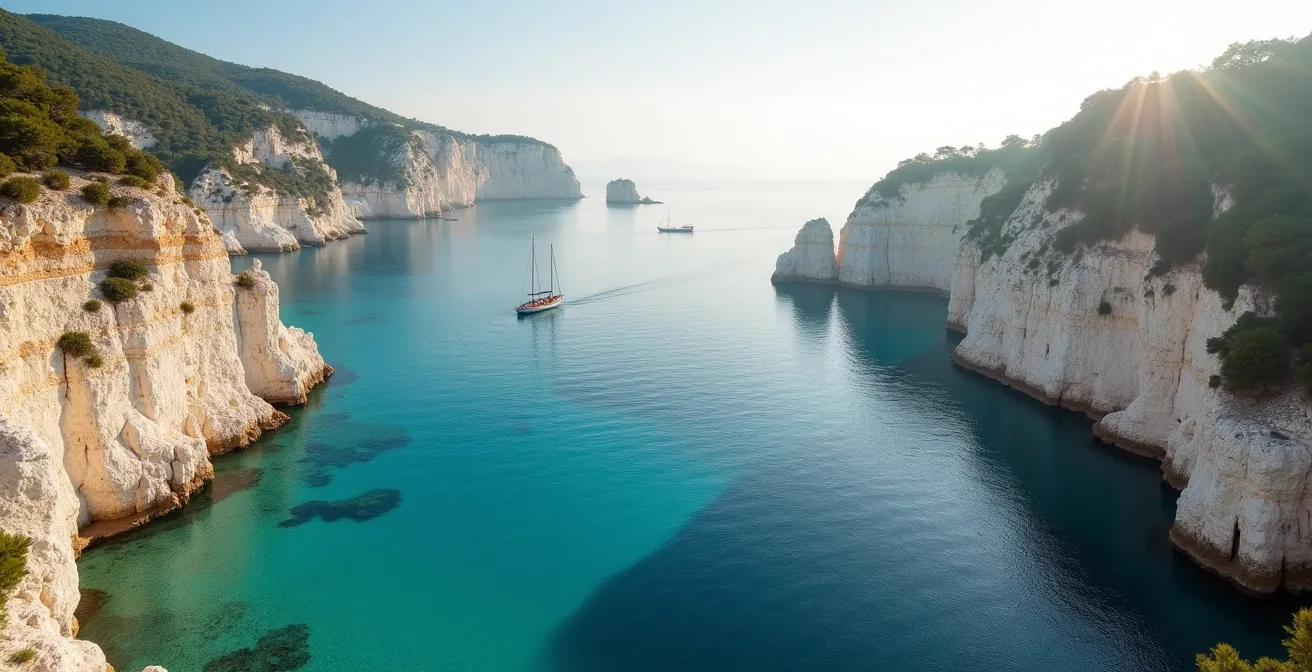
The key to a guilt-free visit to the Calanques is shifting your mindset from a tourist consuming a view to a guardian preserving an ecosystem.
- Success lies not in finding secret spots, but in understanding and respecting the park’s limited carrying capacity.
- Strategic planning around timing, transport, and regulations is more effective than simply showing up early.
Recommendation: Use the official reservation systems and park-and-ride shuttles not as an inconvenience, but as your primary tool for a sustainable visit.
The Calanques of Cassis present a painful paradox for the modern traveller. You see the photos of crystalline turquoise water framed by towering white limestone cliffs and feel an irresistible pull. Yet, you’ve also seen the headlines about overtourism, the queues of hikers, and the environmental strain on Europe’s most beloved natural sites. The desire to witness this beauty clashes with the guilt of potentially contributing to its degradation. It leaves nature lovers asking a difficult question: is it possible to experience this magic without becoming part of the problem?
Most advice focuses on the basics: wear good shoes, bring water, and go early. While sound, this advice fails to address the core issue. It treats the problem as one of personal comfort—avoiding crowds—rather than one of collective responsibility. Beating the crowds is a fundamentally different goal than alleviating the pressure on a fragile environment. The sheer volume of visitors, even well-intentioned ones, creates a cumulative impact that basic etiquette cannot solve.
But what if the solution wasn’t about finding a secret, empty calanque? What if it was about fundamentally changing your approach? This guide proposes a new strategy: to visit the Calanques not as a consumer of a landscape, but as a temporary steward of a delicate ecosystem. It’s about understanding the systemic pressures at play—on the trails, on the water supply, on the very flora and fauna—and making conscious choices to operate within the park’s limits. This is how you transform a potentially damaging visit into a regenerative one.
By exploring the hidden logic behind the park’s rules, mastering its visitor flow systems, and timing your visit with surgical precision, you can not only find the solitude you crave but also actively participate in the preservation of this world-class treasure. Let’s delve into the practical strategies that make this responsible approach possible.
Summary: A Strategic Guide to Visiting the Calanques
- Why Touching Stalactites in Caves Causes Irreversible Damage?
- How to Use Park-and-Ride Systems to Access Protected Sites Stress-Free?
- Sunrise or Sunset: Which Time Offers Solitude at Popular Landmarks?
- The Shortcut Mistake That Destroys Years of Restoration Work
- When to Reserve Your Entry to Restricted Natural Sites to Guarantee Access?
- Why Do Water Systems Fail in Tourist Towns During August?
- Why Are Permit Lotteries the Fairest Way to Limit Crowds?
- What Are the Strict Prohibitions in French National Parks You Must Know?
Why Touching Stalactites in Caves Causes Irreversible Damage?
While the Calanques are famous for their open-air cliffs, the principle of “irreversible damage from a single touch” is the perfect starting point for understanding your impact. This isn’t about caves; it’s about the fragility of the entire ecosystem. The problem isn’t malice, but the sheer volume of contact. The Calanques National Park authority confirms that a single calanque like En-Vau can see over 1,000 visitors on its small beach daily during peak season. When multiplied, the smallest actions create a massive ecological footprint.
This impact goes far beyond dropping litter. There are three types of “touch” that cause significant, often invisible, harm to the Calanques ecosystem:
- Physical Touch: Every step off a marked trail contributes to soil compaction. This process crushes the delicate garrigue vegetation (wild thyme, rosemary) and prevents new growth. Over time, this creates erosion channels, washing away the thin soil layer that took decades to form.
- Chemical Touch: The sunscreen on your skin, unless certified “reef-safe,” washes off while you swim and leaves an invisible film on the water. These chemicals are toxic to the Posidonia seagrass meadows, the vital “lungs of the Mediterranean” that produce oxygen and act as nurseries for marine life.
- Acoustic Touch: The natural amphitheater shape of the calanques amplifies sound. Loud conversations, music, or shouting can disturb nesting birds, such as the peregrine falcon, causing them to abandon their nests permanently and disrupting the fragile food web.
To truly grasp the impact of physical touch, consider the marked trails. The image below illustrates the stark contrast between a healthy path and one suffering from erosion due to foot traffic. It’s a visual reminder that staying on the path is not just a rule, but a vital act of conservation.

As you can see, the protected area maintains its structure and vegetation, while the trodden path shows compacted earth and broken roots. Understanding these three forms of impact is the first step in shifting your behaviour from a passive visitor to an active protector. Every decision, from your choice of sunscreen to the volume of your voice, matters.
How to Use Park-and-Ride Systems to Access Protected Sites Stress-Free?
The single greatest source of congestion and frustration around the Calanques is the car. The narrow roads were never designed for the current volume of traffic, and access to trailheads like the Calanque de Sormiou or Morgiou is strictly regulated or closed to non-residents in high season. Attempting to drive close and find parking is a recipe for stress and a major contributor to local pollution and gridlock. The strategic solution is to embrace visitor flow management systems designed by the park.
These are not inconvenient hurdles; they are the most efficient and responsible way to access the park. The primary tool at your disposal is the park-and-ride shuttle (navette in French). Instead of fighting for a non-existent parking spot near the coast, you park in a large, designated lot further inland and take a dedicated bus directly to the park entrance or city center.
Case Study: The Gorguettes Park-and-Ride Strategy
The main park-and-ride for accessing the Calanques from Cassis is located at Les Gorguettes. Operating from April to October, it offers free parking with a paid shuttle service that drops you at the edge of the park, a short walk from the Port-Miou and En-Vau trailheads. This system entirely bypasses the congested town center. Experienced visitors recommend arriving before 9:30 AM in July and August to guarantee a spot. A crucial “Plan B” is to park in the neighboring town of La Ciotat and take the public bus (e.g., line L68) to Cassis if the Gorguettes lot is full. This proactive approach saves hours of frustration and significantly reduces your carbon footprint.
Using the park-and-ride is a conscious choice to reduce your impact. You are removing one car from the congested coastal roads, reducing emissions, and supporting a system designed to protect the very environment you’ve come to enjoy. It reframes the journey from a stressful battle for parking into a seamless, stress-free part of the experience.
Sunrise or Sunset: Which Time Offers Solitude at Popular Landmarks?
Once you’ve solved the logistics of getting to the park, the next strategic layer is timing. The majority of visitors operate on a standard tourist schedule, arriving mid-morning and leaving late afternoon. By simply shifting your visit to the edges of the day, you can experience a completely different version of the Calanques—one defined by solitude and superior light.
The choice between sunrise and sunset is not just about preference; it’s a strategic decision with different trade-offs. A sunrise hike offers true solitude and a more comfortable physical experience. According to avid hikers, those who start for Calanque d’En-Vau at dawn often encounter fewer than a dozen people before 8 AM. The air is cool, making the strenuous climbs more manageable, and the southeasterly orientation of Port-Pin and En-Vau means you are greeted with spectacular golden light on the cliffs. By 9 AM, when the first wave of crowds is just beginning their hike, you are already enjoying a quiet swim in perfect water.
A sunset visit, conversely, offers dramatic photographic light but is a more shared experience. You will likely share the trail with many others who had the same idea. The real secret window for solitude is the “blue hour”—the 30-45 minutes immediately *after* the sun has set. Most people leave right at sunset, but if you wait, you are rewarded with magical twilight colors and a profound sense of peace. The critical consideration for this strategy is safety: the trails are unlit and treacherous in the dark. A powerful headlamp is not optional, it is essential for a safe return journey. Without one, a sunset hike becomes a dangerous liability.
Choosing the edges of the day is the most powerful tool to escape the feeling of being in a theme park and reconnect with the wild spirit of the place. It’s a direct way to reduce pressure during peak hours, effectively spreading the carrying capacity of the trails across a longer period.
The Shortcut Mistake That Destroys Years of Restoration Work
On the steep, winding trails of the Calanques, the temptation to take a shortcut is immense. It looks like a harmless way to save five minutes of effort. In reality, it is one of the most destructive actions a visitor can take. As the Calanques National Park highlights, the cumulative effect of these small transgressions is catastrophic. The constant trampling prevents the regeneration of the fragile pine forest undergrowth and destroys the thin layer of topsoil.
The most infamous example is the notorious shortcut on the final, steep descent to Calanque d’En-Vau. What began as a small path has, over years of use, become a massive erosion scar several meters wide. This “sentier des éboulis” (scree path) is a wound on the landscape. With every rainstorm, tons of loose soil and rock are washed directly down this man-made channel and into the calanque, clouding the once-pristine water and smothering the marine life below. Park rangers estimate this single shortcut, used by hundreds of people daily in summer, has undone over a decade of natural vegetation recovery.
This is a perfect illustration of how individual convenience, when multiplied, leads to collective destruction. The marked trail, with its carefully constructed switchbacks, was designed for a reason: to distribute the gradient and prevent erosion. By respecting the designated path, you are not just following a rule; you are actively participating in the park’s restoration efforts. Each time you resist the urge to cut a corner, you are protecting the integrity of the landscape and ensuring the water below remains as clear for future generations as it is for you today.
The official path might be longer, but it is the only path that ensures the long-term survival of the Calanques. Think of every switchback as a small contribution to the preservation of this magnificent place.
When to Reserve Your Entry to Restricted Natural Sites to Guarantee Access?
As visitor numbers grow, national parks worldwide are adopting reservation systems as a critical tool for visitor flow management. The Calanques National Park is a pioneer in this area, having implemented a mandatory, free reservation system for its most fragile and popular site: the Calanque de Sugiton. Ignoring this system doesn’t just mean you might not get in; it means you will be turned away.
Understanding the mechanics of this system is essential for any visit during the high season (typically June to September). As the World Economic Forum reports, the successful trial has led to the system’s extension, and it’s likely to be expanded to other sites like En-Vau in the future. For now, here is the tactical guide to securing a spot for Sugiton:
- Booking Window: Reservations open daily at 5 PM Paris time for visits scheduled two days ahead. (e.g., on Monday at 5 PM, slots open for Wednesday).
- High Demand: During July and August, the daily quota of slots can be filled within 5 to 10 minutes of opening. You need to be online and ready at the exact time.
- The Golden Tip: Once you receive your confirmation QR code, take a screenshot immediately. Cell service is weak to non-existent within the park, and you will not be able to pull up your email or the reservation website at the checkpoint. No QR code means no entry.
This system is a clear example of a park moving beyond passive rules to active management of its carrying capacity. It’s a fair, first-come-first-served digital queue that caps daily visitors at a sustainable number, allowing the ecosystem time to recover. By participating in this system, you are directly contributing to the preservation of Sugiton and signaling your support for responsible tourism policies.
Why Do Water Systems Fail in Tourist Towns During August?
The impact of overtourism isn’t confined to the trails; it radiates outwards and puts immense strain on the infrastructure of host communities like Cassis. One of the most critical and often invisible points of failure is the water system. These small Mediterranean towns were built to support a modest permanent population. In the summer, this population can swell dramatically, and the infrastructure simply cannot keep up.
The scale of tourism is staggering. Recent data shows the wider Marseille region, including Cassis, recorded 16.2 million overnight stays in a single year. In August, the demand for water for showers, laundry, and drinking skyrockets. This can lead to water pressure drops, usage restrictions, and in extreme cases, temporary shortages. This directly impacts the quality of life for local residents and puts the region, already prone to drought, under severe environmental stress.
As a responsible visitor, you can play a significant role in alleviating this pressure. Your water consumption habits in your hotel or rental have a direct and measurable impact. Here are four simple actions to become a water-conscious traveller:
- Take short, 3-minute “post-hike rinses” instead of long 15-minute showers.
- Bring a reusable water bottle and refill it. It takes approximately three liters of water to produce a single one-liter plastic bottle.
- Reuse your hotel towels for multiple days. This simple act can reduce a hotel’s laundry-related water consumption by up to 40%.
- When booking, inquire if your accommodation has water-saving certifications or policies in place.
These actions may seem small, but when adopted by thousands of visitors, they collectively reduce the peak demand that strains the system. It’s another way of acknowledging that your visit is part of a larger system that includes the local community and its finite resources.
Why Are Permit Lotteries the Fairest Way to Limit Crowds?
As reservation systems become more common, a debate emerges about the fairest way to implement them. The current first-come-first-served model used for Sugiton, while effective, tends to favor visitors who are tech-savvy, have flexible schedules, and can be online at a specific time. This can inadvertently exclude certain demographics, such as elderly locals or last-minute travellers without constant internet access. This has led to discussions about alternative models, such as lotteries.
A true lottery system, where all applicants have an equal chance of being selected, is often seen as the most equitable solution for access to public lands. It removes the “fastest finger first” element and levels the playing field for everyone. However, the French approach, as seen in the Calanques, often combines access control with mandatory education. The goal isn’t just to limit numbers, but to ensure that those who do enter are aware of the rules and their responsibilities. As French Tourism Minister Olivia Grégoire noted in the broader context of overtourism, a key strategy is to bring out other destinations and other tourist routes, but when focusing on a single site, managing access becomes paramount.
The current system for Sugiton is a hybrid. While it operates on a first-come-first-served basis, the process requires you to agree to the park’s terms and conditions, creating a moment of informed compliance. You are not just getting a ticket; you are entering into an agreement to respect the environment. While a lottery might be fairer in a purely democratic sense, the current system prioritizes a balance between access and active conservation education.
Understanding this philosophy is key. Whether it’s a reservation or a lottery, these are not punishments. They are rational, necessary tools for managing a finite resource. By respecting and participating in these systems, you are validating a model of tourism that prioritizes the long-term health of the ecosystem over unlimited, and ultimately destructive, access.
Key Takeaways
- Strategic Timing: Visiting at sunrise or post-sunset (with a headlamp) avoids 90% of the crowds and reduces peak-hour trail erosion.
- Logistical Planning: Using park-and-ride shuttles is not an inconvenience but the most efficient, stress-free, and low-impact way to access trailheads.
- Regulatory Compliance: Embracing reservation systems like Sugiton’s is a direct contribution to managing the park’s carrying capacity and ensuring its long-term survival.
What Are the Strict Prohibitions in French National Parks You Must Know?
Beyond the strategic advice for managing your impact, there are hard, non-negotiable rules in place to protect both the park and its visitors. These prohibitions, especially regarding fire risk and marine protection, are strictly enforced, and ignorance is not an excuse. Mastering this final layer of informed compliance is the capstone of a responsible visit.
The most critical system to understand is the daily fire risk closure. The Provence region is extremely prone to wildfires in the summer (June 1 to September 30). Access to the Calanques is not guaranteed and depends on a daily prefectural decision based on weather conditions (wind, heat, humidity). Breaking these rules can result in a hefty fine (€135) or even criminal charges if you are deemed responsible for starting a fire. Your entire hiking plan depends on this daily update.
Action Plan: Your Daily Fire Risk Check
- Check the Map: Every day at 6 PM, the official ‘Bouches-du-Rhône Prefecture’ website releases the fire risk map for the following day. This is your single source of truth.
- Understand the Colors: Yellow or Orange means access is permitted but caution is required. Red means access is partially restricted, often to coastal areas only. Black means a TOTAL BAN on all access, including for hikers.
- Plan Accordingly: If the color is Red or Black, your planned hike is cancelled. Do not attempt to enter. This decision is made to save lives and the forest.
- Confirm the Dates: This system is primarily active from June 1 to September 30, but can be extended during periods of drought. Always verify.
- Acknowledge the Penalty: The €135 fine is a minimum. The legal and financial consequences of causing a fire are life-altering.
The park’s protection also extends beneath the waves. The Calanques National Park is a marine protected area with strict regulations that many visitors on boats or kayaks are unaware of. Key rules include a complete ban on drones to protect wildlife, speed limits of 3 knots within the calanques, and a prohibition on anchoring on the fragile Posidonia seagrass meadows, which carries a fine of up to €1,500. These rules are in place to preserve the stunning underwater world that is just as vital as the cliffs above.
Your journey to the Calanques begins not when you step on the trail, but when you commit to this thoughtful, strategic approach. By planning your visit around the needs of the ecosystem, you transform your trip from a simple holiday into a meaningful act of conservation. The next step is to take these principles and build your own responsible itinerary.