
Forget the generic advice to “just take a walk.” Effective solo Shinrin-Yoku is a deliberate practice of sensory calibration, not a simple stroll. By understanding the specific biochemical and neurological responses your body has to the forest environment—from inhaling immune-boosting chemicals to resetting your brain’s stress centers—you can transform any walk into a powerful, self-guided therapeutic session for profound stress relief.
The feeling is familiar to many: a sense of being overwhelmed by the constant hum of digital notifications and urban noise. The common prescription is to “connect with nature,” a piece of advice that is as well-intentioned as it is vague. Many guides on Shinrin-Yoku, or forest bathing, suggest simply turning off your phone and walking slowly. While helpful, this advice barely scratches the surface and often leaves the independent practitioner wondering if they are “doing it right.” It overlooks the profound, measurable science that underpins this ancient practice.
What if the true key to unlocking the forest’s benefits lies not in just being present, but in consciously engaging in a biochemical dialogue with your surroundings? What if you could learn to orchestrate your own sensory experience to trigger specific physiological responses, achieving the same benefits as a guided session, but on your own terms? This approach transforms forest bathing from a passive activity into an active practice of sensory calibration.
This guide moves beyond the platitudes. We will explore the specific mechanisms that make Shinrin-Yoku a potent tool for stress relief. You will learn not just what to do, but why it works—from the invisible chemicals trees release to the way natural silence recalibrates your brain. By understanding these principles, you will gain the confidence to create a deeply personal and effective practice, no guide required.
In the following sections, we will delve into the science and sensory techniques that empower you to master solo forest bathing. From understanding the minimum effective “dose” of nature to choosing the right type of forest, this article provides a complete roadmap for your self-guided journey.
Table of Contents: A Self-Guided Journey into Forest Bathing
- Why Do Trees Release Chemicals That Boost Your Immune System?
- How to Sync Your Breath with Your Steps in the Woods?
- 20 Minutes or 2 Hours: What Is the Minimum Dose of Nature?
- Pine or Oak: Which Forest Type Is Better for Respiratory Health?
- Solo Silence or Group Sharing: Which Deepens the Connection?
- Why Natural Silence Is More Than Just the Absence of Noise?
- Why Does Your Brain Need 72 Hours in Nature to Fully Reset?
- Why Does Your Sense of Smell Sharpen After 24 Hours in the Woods?
Why Do Trees Release Chemicals That Boost Your Immune System?
The most profound magic of the forest is often invisible and airborne. When you walk through the woods, you are moving through a complex atmosphere rich with antimicrobial volatile organic compounds called phytoncides. Trees and plants release these chemicals to protect themselves from fungi, bacteria, and insects. When we inhale this forest air, our bodies respond in a remarkable way, initiating a direct biochemical dialogue that has powerful health consequences.
The primary benefit is a significant boost to our immune system. Phytoncides stimulate the activity of our Natural Killer (NK) cells, a type of white blood cell that plays a vital role in fighting off tumors and virus-infected cells. A comprehensive meta-analysis from 2024 confirms that exposure leads to a substantial increase in NK cell function, essentially putting your immune system on high alert. This isn’t just a feeling of freshness; it’s a measurable cellular enhancement.
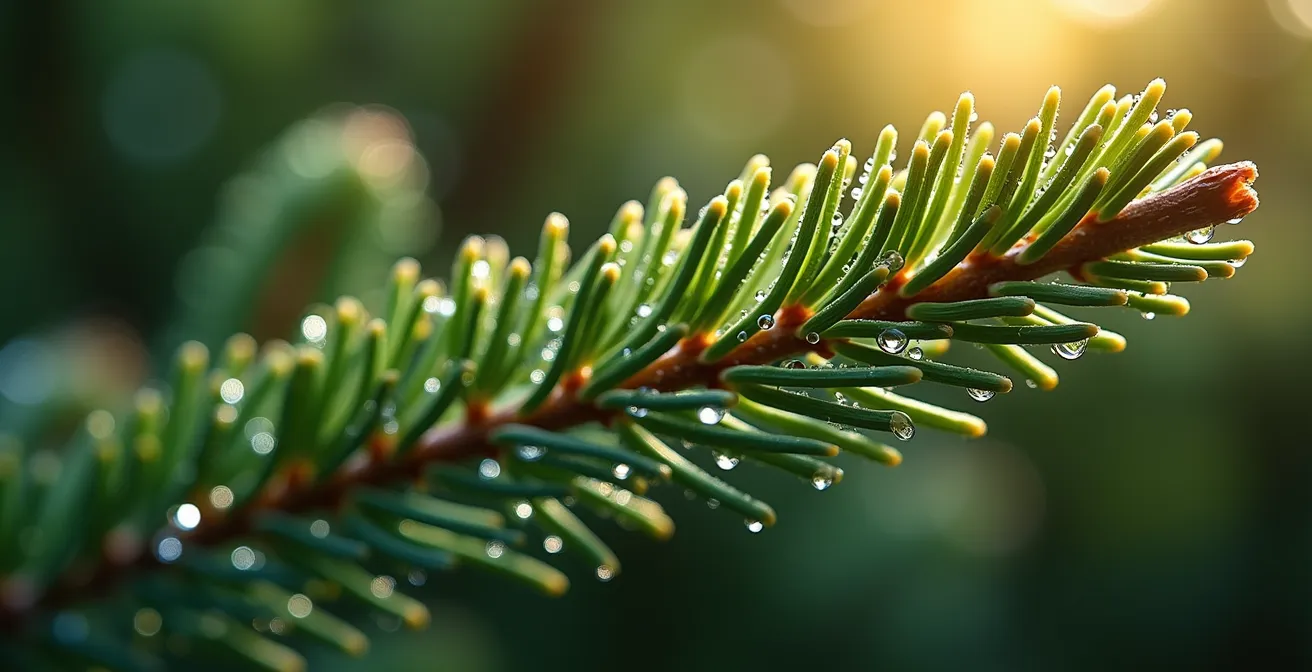
As the image above illustrates, these essential oils are a tangible part of the tree’s defense system that we can directly benefit from. The potency of this effect is so significant that the benefits can be replicated even outside the forest, as demonstrated by a fascinating study in Japan.
The Japanese Hotel Room Phytoncide Experiment
To isolate the effects of phytoncides, researchers vaporized essential oil from hinoki cypress trees in hotel rooms where subjects stayed for three nights. The results were striking: participants showed a significant increase in NK cell activity and other immune-boosting cells. Simultaneously, their levels of stress hormones, such as adrenaline and noradrenaline, decreased significantly. This experiment proves that the simple act of breathing in these natural compounds is a powerful mechanism for both strengthening immunity and reducing stress.
Therefore, your solo walk becomes a therapeutic session from the very first breath, engaging your body on a cellular level without any conscious effort.
How to Sync Your Breath with Your Steps in the Woods?
While the forest passively showers you with benefits like phytoncides, you can actively deepen the experience by synchronizing your most fundamental rhythm—your breath—with the environment. Conscious breathing shifts your nervous system from the “fight-or-flight” state (sympathetic) to the “rest-and-digest” state (parasympathetic). In the context of a forest, this practice becomes a bridge between your inner world and the outer landscape, turning a simple walk into a moving meditation.
The goal is to let go of the hurried, shallow breathing of daily life and adopt a slow, deliberate pace that mirrors the calm of the woods. One of the most effective methods is belly breathing. Place one hand on your belly and the other on your chest. As you inhale slowly through your nose, focus on feeling your belly expand while your chest remains relatively still. Exhale slowly, feeling your belly deflate. This simple technique ensures you are using your diaphragm for a full, oxygenating breath, which naturally calms the nervous system.
As one forest therapy practitioner eloquently states in the PITH + VIGOR guide on Shinrin-Yoku meditation:
The breath has three parts: there is an inward filling and receiving, and there is the outward exhalation and, finally, a letting go. It requires gently holding your breath. This choice point is our moment of awareness.
– Forest therapy practitioner, PITH + VIGOR guide on Shinrin-Yoku meditation
This “choice point” is where the solo practitioner finds power. You can experiment with different rhythms to find what feels most grounding. A simple practice is to sync your breath to your steps: inhale for four steps, hold for a moment, and then exhale for six steps. The slightly longer exhale further stimulates the parasympathetic response. There is no right or wrong rhythm; the act of paying attention is the practice itself.
By consciously orchestrating your breath, you create an internal state of calm that allows you to more fully receive the sensory gifts of the forest.
20 Minutes or 2 Hours: What Is the Minimum Dose of Nature?
For the independent practitioner, a crucial question is one of efficiency and impact: how much time do I actually need to spend in nature to feel a real difference? The concept of a “dose-response” relationship, borrowed from medicine, applies perfectly to forest bathing. The duration and frequency of your nature exposure directly correlate with the type and magnitude of the benefits you receive. Fortunately, science provides clear guidelines for a self-prescribed “nature pill.”
The most widely cited benchmark comes from a massive study involving nearly 20,000 participants. Research from the University of Exeter found that people who spent at least 120 minutes per week in nature reported significantly better health and higher psychological wellbeing than those who didn’t. This two-hour threshold seems to be the sweet spot for overall benefit, and it doesn’t matter if it’s achieved in one long session or several shorter ones. This gives the solo practitioner flexibility to fit nature into their schedule.
However, even shorter “doses” are highly effective for specific goals, particularly acute stress reduction. If you only have a short break, a 20-to-30-minute session is potent. This duration is optimal for achieving the most significant drop in the stress hormone cortisol. The key is to find a spot where you can sit or walk quietly, minimizing distractions to maximize the effect.
The following table, based on data from a comprehensive review in Frontiers in Psychology, breaks down the recommended doses for different outcomes, helping you tailor your practice to your needs.
| Duration | Frequency | Primary Benefit | Evidence |
|---|---|---|---|
| 20-30 minutes | 3x per week | Stress hormone reduction | Cortisol & alpha-amylase decrease |
| 10-20 minutes | As needed | Mental health boost | Improved mood markers in students |
| 120+ minutes | Weekly total | Overall wellbeing | Benefits across all demographics |
This knowledge allows you to be intentional. A quick 20-minute walk at lunchtime isn’t a failed long session; it’s a targeted dose for cortisol reduction.
Pine or Oak: Which Forest Type Is Better for Respiratory Health?
Just as a connoisseur selects a specific wine for its unique characteristics, a Shinrin-Yoku practitioner can choose their environment for a targeted therapeutic effect. While any natural setting is beneficial, different types of forests offer distinct advantages, particularly concerning the phytoncides we inhale. The choice between a coniferous forest and a deciduous one can shape the very nature of your biochemical dialogue.
For respiratory health and maximizing immune-boosting effects, coniferous forests are generally superior. Trees like pine, fir, cedar, and cypress are prolific producers of phytoncides. The sharp, clean scent you notice in a pine forest is the direct sensory evidence of this rich chemical atmosphere. Research confirms that evergreen forests, particularly those with cedar, oak, and pine, emit higher concentrations of these compounds. Dr. Qing Li, a pioneer in forest bathing research, has consistently demonstrated that exposure to these specific phytoncides lowers blood pressure, reduces stress, and significantly increases NK cell activity.
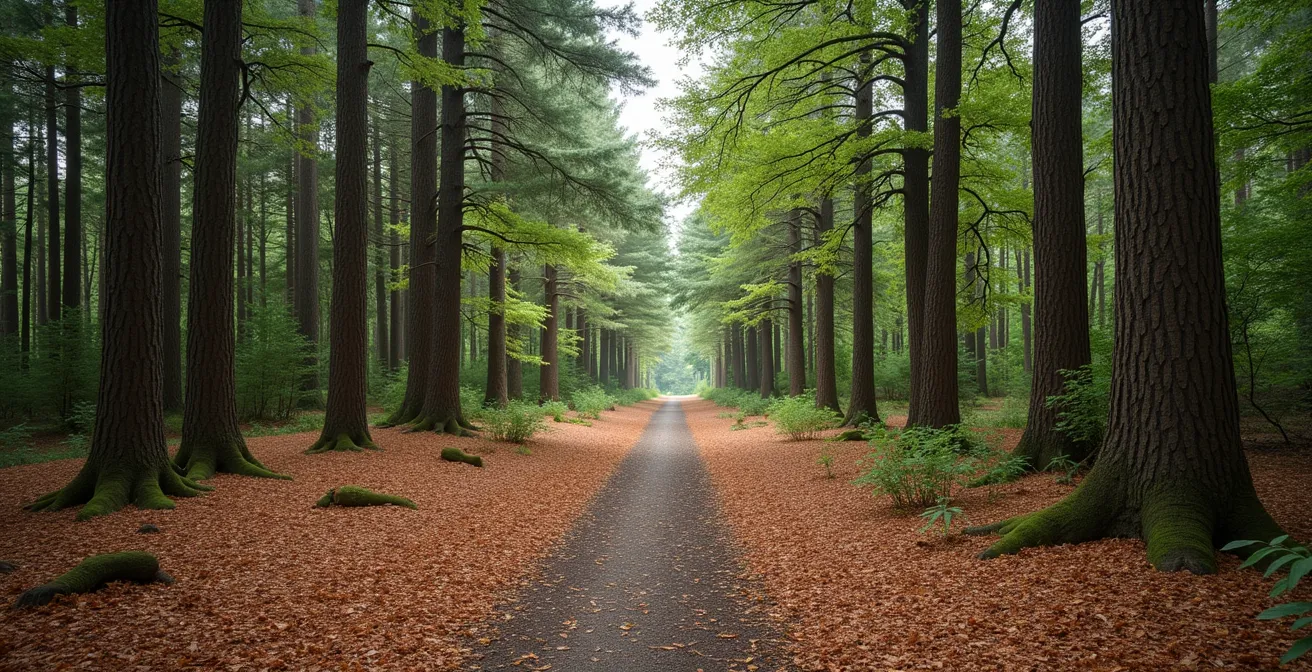
However, this doesn’t mean deciduous forests of oak, maple, or beech are without their own unique merits. Their environment changes dramatically with the seasons, offering a powerful lesson in cycles of growth, release, and renewal. The quality of light in a deciduous forest is often softer and more varied, and the soundscape changes as leaves emerge and fall. A walk through a broadleaf forest might be considered more beneficial for visual and mental relaxation, with its open canopy and shifting patterns of light and shadow.
Ultimately, the “better” forest is the one you can access and feel a connection with. If you have a choice, opt for pine or cedar for a potent immune-boosting session. If an old oak forest is what’s near you, embrace its unique seasonal beauty and gentle atmosphere. The practice is about connection, not perfection.
By understanding these nuances, you can start to select your environment with the same intention you bring to the rest of your practice.
Solo Silence or Group Sharing: Which Deepens the Connection?
While guided group sessions can provide a valuable introduction to Shinrin-Yoku, the solo practice offers a unique and arguably deeper level of connection. Practicing alone removes the social dynamic entirely—there’s no pressure to share, no distraction of others’ experiences, and no external schedule to follow. This creates an unfiltered channel between you and the natural world, allowing your own senses and intuition to become the guide.
The core principles of solo practice are simplicity and silence. As a guide from Healing Forest explains, the key is to “go in silence and go slow.” Silence here is not an empty void; it is the space required to hear the subtle language of the forest and the quiet whispers of your own inner state. It allows you to notice the faint rustle of a leaf, the texture of bark under your fingertips, or the way sunlight filters through the canopy. These small moments of sensory awareness are the building blocks of a profound connection.
Going solo also cultivates self-reliance. You learn to trust your own body’s signals. You decide when to pause, which trail to take, and what to focus your attention on. This autonomy is empowering and builds a personal relationship with the practice and the place. The experience becomes entirely your own, creating memories and insights that are uniquely meaningful.
To structure and deepen this solo experience, a simple journaling practice after your walk can be incredibly effective. It’s not about writing a masterpiece, but about anchoring your sensory observations and emotional responses. This act of reflection solidifies the benefits and helps you notice patterns in your experience over time.
Your Action Plan: Deepening Connection with Forest Journaling
- Find a comfortable spot: After your walk, sit down in a quiet place, either still in the forest or immediately upon returning home.
- Record sensory data: Jot down what you noticed with each sense. What sounds did you hear? What were the dominant smells? What textures did you feel? What visual details caught your eye?
- Note your internal response: Document any emotions, feelings, or insights that arose during the walk. Did you feel a sense of calm, curiosity, or joy?
- Identify patterns of attention: Consider what you were drawn to. Was it the small details on the forest floor or the vastness of the canopy? This reveals your state of mind.
- Set an intention for next time: Based on your notes, think about what you might want to focus on during your next solo forest bath.
Ultimately, solo practice isn’t about isolation; it’s about a different kind of companionship—one with yourself and the living world around you.
Why Natural Silence Is More Than Just the Absence of Noise?
In our urban lives, we often perceive silence as the absence of noise—the brief quiet between traffic sounds or the hush after an appliance turns off. In the forest, however, silence is not an absence but a presence. It is a rich and complex acoustic ecology, a vibrant soundscape composed of layers of natural, restorative sounds. Understanding this distinction is key to moving beyond a simple digital detox and into a deeper sensory calibration.
This natural silence is composed of what scientists call “biophony” (the sounds of non-human life, like birdsong and insect calls) and “geophony” (the sounds of the non-biological world, like wind in the trees and flowing water). Unlike the sharp, chaotic, and stressful noises of the city, these natural sounds are often patterned, harmonious, and operate within frequencies that are inherently soothing to the human brain. The environment is not just quiet; it is filled with a different quality of sound that actively promotes relaxation.
This restorative quality goes beyond acoustics and extends to the very air you breathe. Forests maintain higher oxygen levels than urban environments, providing your brain and body with cleaner, richer fuel. But perhaps the most profound mechanism is one of synchronization. Researchers exploring the concept of “spontaneous self-organization” suggest that the human body, with its own internal rhythms, naturally harmonizes with the vibrations of the forest. As one guide explains:
Harmonizing Vibrations: The Body in the Forest
The principle of entrainment suggests that when different vibrating objects or rhythms come into proximity, they will often start to synchronize. This phenomenon can be seen in physics and biology. When you enter a forest and practice controlled, slow breathing, your body’s vibrations—your heart rate, your brainwaves—begin to harmonize with the subtle, natural frequencies of the land. You are not just walking through the forest; you are syncing up with its rhythm, creating a unified state of being that is deeply calming and restorative.
Therefore, the silence you seek in the woods is not emptiness. It is an immersive, multi-sensory symphony that your body is biologically primed to connect with and respond to.
Why Does Your Brain Need 72 Hours in Nature to Fully Reset?
While short bursts of nature provide immediate stress relief, a deeper, more profound mental restoration requires a longer immersion. The idea of a full “neurological reset” is linked to giving our brains sufficient time to disengage from the high-stimulation, attention-demanding state of modern life and return to a more natural, reflective mode of operation. Researchers have found that a multi-day immersion, typically around 72 hours, can lead to significant improvements in creativity, problem-solving, and mental clarity.
This need for a reset is rooted in our increasingly indoor lives. Dr. Qing Li, a leading expert on forest medicine, estimates that we spend a staggering 93 percent of our time indoors. He terms the resulting psychological and physiological deficits a “nature deficit disorder,” which can be significantly improved by forest bathing. A longer immersion works by quieting the prefrontal cortex, the brain’s command center responsible for planning, decision-making, and filtering stimuli. In the forest, this area can finally rest, allowing for more creative and wandering thought processes to emerge.
Even on a shorter timescale, the forest has a direct and measurable calming effect on the brain’s fear and stress center: the amygdala. This is the part of your brain that triggers the “fight-or-flight” response. Chronic stress keeps it overactive. However, time in nature provides a powerful antidote. Recent brain imaging research shows a measurable decline in amygdala activity after just one hour of walking in a forest compared to walking in an urban environment. This neurological down-regulation is the physical manifestation of the peace and calm you feel.
This effect is a cornerstone of the Attention Restoration Theory, which posits that natural environments allow our “directed attention” (the kind we use for work and focus) to rest, while engaging our “involuntary attention” or fascination. After 72 hours, this restoration is so complete that cognitive performance is measurably enhanced. It’s the ultimate brain detox.
So while a weekend camping trip might seem like a simple getaway, it’s also a deep-cleaning cycle for your overworked brain, allowing you to return with a renewed sense of focus and creativity.
Key Takeaways
- Effective solo Shinrin-Yoku is a scientific practice, not just a walk. It involves consciously engaging with natural elements like phytoncides.
- A “dose-response” relationship exists: 120 minutes a week provides general wellbeing, while 20-30 minutes is a potent dose for stress hormone reduction.
- The benefits are measurable and neurological, including a calmer amygdala (the brain’s stress center) and a rested prefrontal cortex, leading to enhanced creativity.
Why Does Your Sense of Smell Sharpen After 24 Hours in the Woods?
After a day or more immersed in a natural environment, many people report a heightened sensory awareness, particularly a sharper sense of smell. This isn’t just an illusion; it’s the result of your olfactory system recalibrating away from the overwhelming, often harsh, and monotonous smells of urban life. In the city, your nose is constantly bombarded with stimuli—exhaust fumes, artificial fragrances, cooking smells—which can lead to a state of sensory fatigue or habituation. Your brain learns to tune out this olfactory “noise.”
In the forest, the air is not only cleaner but also filled with a complex, subtle, and constantly shifting tapestry of scents: the damp earth after rain (a smell known as geosmin), the sweet decay of fallen leaves, the spicy resin of pine bark, and the delicate fragrance of wildflowers. Free from the assault of artificial odors, your olfactory receptors can “reset.” They become more sensitive to these nuanced aromas, allowing you to perceive the world with a richness you may have forgotten.
This heightened sense of smell is more than just a pleasant experience; it is a direct pathway to stress reduction. Many of the scents you inhale, particularly those from phytoncides, have a direct physiological effect. As research from Reveal Nature highlights, breathing in phytoncide-rich air demonstrably lowers cortisol levels, the primary hormone responsible for feelings of tension and anxiety. By consciously engaging your sense of smell, you are actively participating in this stress-reducing process.
You can turn this into a simple mindfulness exercise. As you walk, intentionally bring your awareness to your sense of smell.
- Pause and breathe in the layered smell of the earth and vegetation.
- Notice the distinct aromatic differences between different types of trees or areas of the forest.
- Pay attention to how the scent profile changes with the weather, time of day, or season.
This practice of “forest aromatherapy” anchors you firmly in the present moment and deepens your sensory connection to the landscape.
By engaging your sense of smell, you are not just passively observing the forest; you are inviting its very essence into your body, completing the cycle of a truly immersive and healing solo Shinrin-Yoku practice.