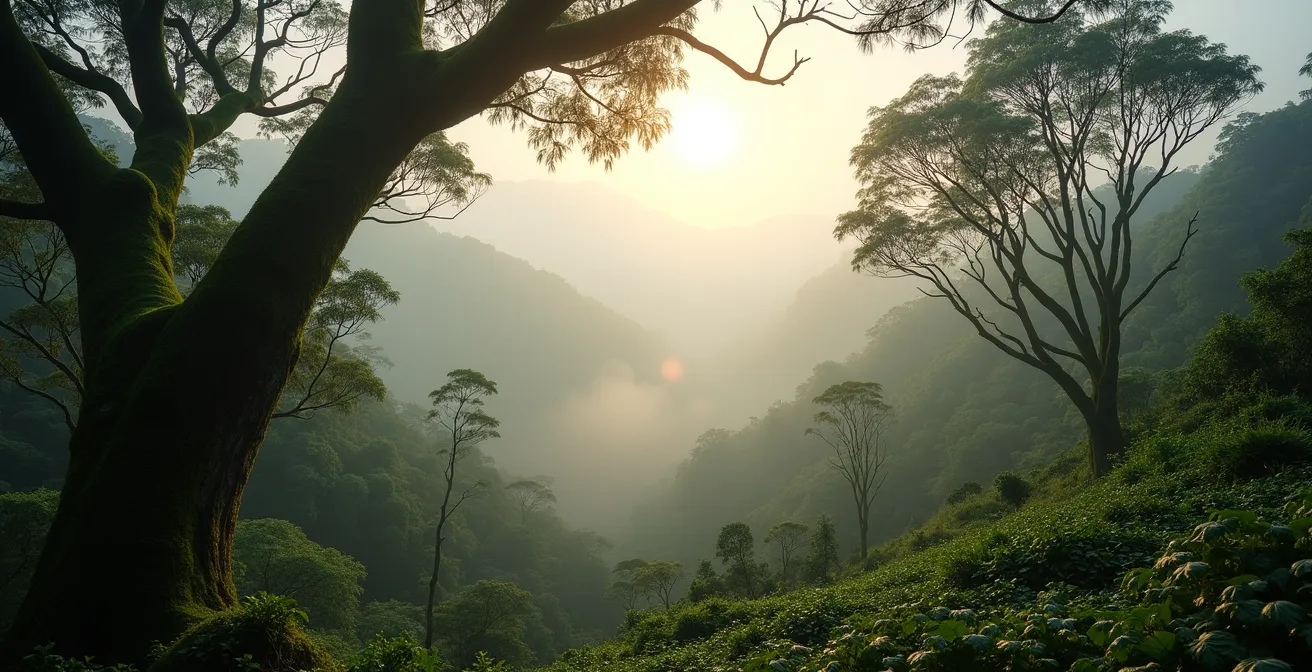
Seeing the Resplendent Quetzal isn’t about luck or just visiting during nesting season; it’s about mastering the unique environment of the cloud forest.
- The constant humidity is a feature, not a bug, driven by “horizontal precipitation” that requires specific gear acclimatization techniques.
- Success comes from a sensory strategy that prioritizes listening over looking in the dense foliage.
Recommendation: To avoid crowds, apply the ‘Doubtful Sound’ principle by choosing quieter reserves like Curi-Cancha, which offer high sighting chances with more solitude.
The vision is iconic for any nature lover: the Resplendent Quetzal, a jewel of emerald and crimson, its twin tail feathers trailing like ribbons through the misty green canopy of a Costa Rican cloud forest. It’s a primary motivation for thousands of visitors who flock to Monteverde each year. Most travel guides offer a simple piece of advice: go during the nesting season, roughly from January to July. While this is sound, it’s also a recipe for sharing that magical moment with hundreds of other people, potentially diluting the very experience you came for.
The common approach focuses on *when* to go, but rarely on *how* to go. It overlooks the fundamental physics of the cloud forest, the practical challenges of 100% humidity on your equipment, and the subtle skills required to spot wildlife in such a dense environment. What if the secret to a successful and serene quetzal quest wasn’t just about picking the right month, but about understanding the forest on a deeper level? What if you could dramatically increase your chances of a profound wildlife encounter by shifting your strategy from passive looking to active, informed observation?
This guide moves beyond the basics. We’ll explore the science behind the forest’s constant drip, provide professional techniques to keep your camera and binoculars clear, and weigh the benefits of day versus night exploration. We’ll delve into the inspiring conservation history that saved this paradise and offer concrete tips for navigating its famous suspension bridges. Ultimately, this is a masterclass in how to strategically approach Monteverde, enabling you to find that sublime moment of connection with its most famous resident, far from the beaten path.
To help you plan this unique expedition, we have structured this guide to cover every strategic aspect of your visit. Explore the sections below to master the art and science of wildlife watching in the cloud forest.
Summary: A Strategic Guide to Seeing Quetzals in Monteverde
- Why Does the Forest “Drip” Even When It Is Not Raining?
- How to Keep Your Optics Dry in 100% Humidity?
- Night Walk or Day Hike: Which Reveals More Mammals?
- The Quaker Decision That Saved Monteverde from Deforestation
- How to Walk on Suspension Bridges If You Have Vertigo?
- Why Are Wolves Essential for the Health of French Forests?
- Looking or Listening: Which Sense Reveals More in a Dense Forest?
- Milford Sound or Doubtful Sound: Which Fjord Offers True Solitude?
Why Does the Forest “Drip” Even When It Is Not Raining?
One of the first things you’ll notice in Monteverde is a constant, gentle dampness. Water drips from leaves, mist clings to the air, and every surface feels slick with moisture, even on a day with no discernible rainfall. This isn’t just residual rain; it’s the defining feature of a cloud forest, a phenomenon known as horizontal precipitation. Unlike a rainforest, which relies on vertical rain falling from high clouds, a cloud forest is literally immersed in low-lying clouds. The trees and the abundant epiphytes (plants like orchids and mosses that grow on other plants) act as a massive, living net, combing moisture directly out of the passing mist.
This process is remarkably efficient. Research shows that horizontal precipitation can provide up to 50% of a cloud forest’s water needs. In fact, some studies in Monteverde have estimated that the total amount of water arriving below the canopy can be roughly twice the amount of measured rainfall alone. This constant moisture is the lifeblood of the ecosystem, supporting an incredible density of plant life, which in turn provides food and shelter for the entire food web, including the avocado-tree fruits that quetzals depend on.
For a visitor, understanding this means preparing for an environment where “dry” is a relative term. The air is permanently at or near 100% humidity, which has significant implications not just for your clothing, but more importantly, for your expensive optics. This isn’t a problem to be avoided; it’s the very engine of the ecosystem you’ve come to see.
How to Keep Your Optics Dry in 100% Humidity?
The direct consequence of horizontal precipitation is a birdwatcher’s and photographer’s worst enemy: condensation. When you bring your cool, air-conditioned camera or binoculars out into the warm, saturated air of the forest, they will instantly fog up, rendering them useless for crucial minutes. Simply wiping the lens is a temporary fix; the condensation will return until the gear’s temperature equalizes with the ambient air. Fighting this battle requires a proactive strategy of gear acclimatization.
Professionals and experienced guides don’t fight the humidity; they manage the temperature differential. The goal is to allow your equipment to warm up to the outside temperature slowly and in a controlled way, preventing moisture from condensing on or inside your lenses. Wiping a foggy lens can also smear microscopic fungi spores across the glass, which can lead to permanent damage in the long run. The following protocol is the best way to ensure your gear is ready when a quetzal appears.
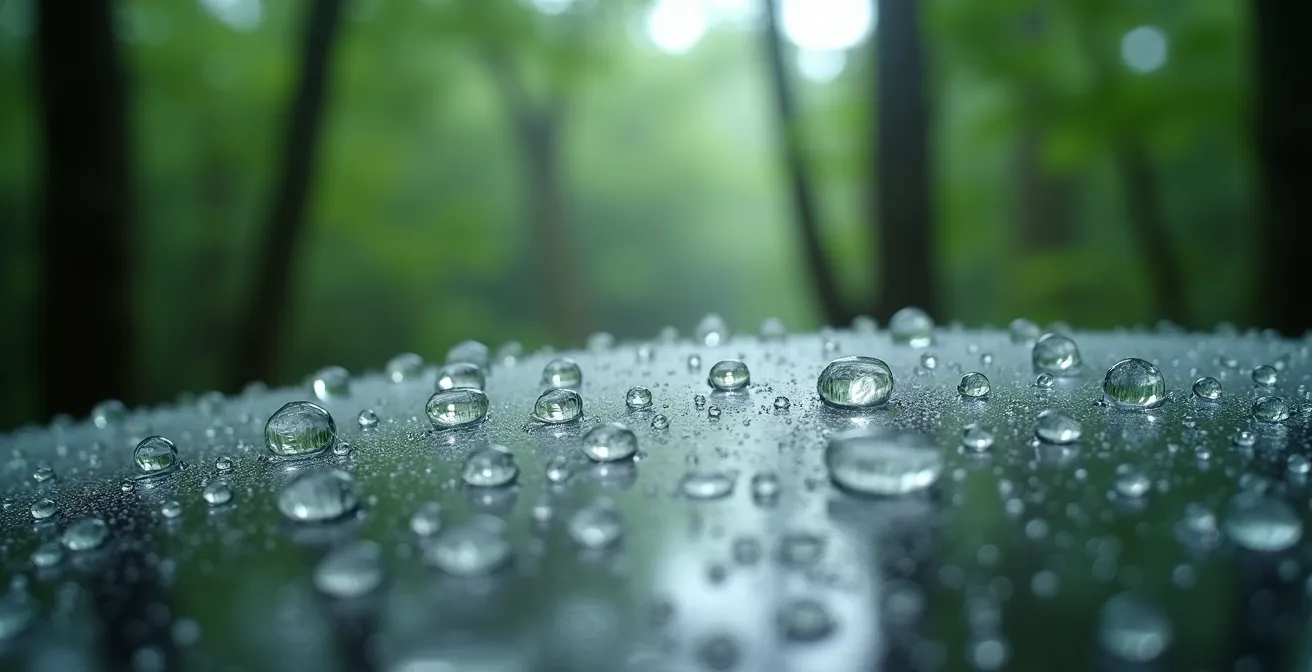
To master this process, follow these steps meticulously before every outing:
- Place your camera and/or binoculars in a sealed plastic bag (like a Ziploc) at least one hour before your hike.
- Leave the sealed bag outside your room on a secure balcony or porch. This allows the equipment to slowly reach the ambient outdoor temperature.
- Keep reusable silica gel desiccant packs inside your camera bag at all times to absorb any invasive moisture.
- Use a lens hood, which acts as a small awning, reducing the amount of moist air that comes into direct contact with the front element of your lens.
- For emergencies, a chemical hand warmer packet placed near (but not touching) your gear inside its bag can gently raise its temperature to combat fogging.
Night Walk or Day Hike: Which Reveals More Mammals?
While the quetzal is a daytime star, Monteverde’s forests undergo a dramatic shift after sunset. As Ricardo Guindon, a local expert, notes in an Off the Beaten Path interview, Monteverde is home to hundreds of species, and a huge number of them are nocturnal. This presents a fantastic dilemma for the wildlife enthusiast: stick to day hikes for birds and monkeys, or venture out on a night walk for a glimpse into a secret world of mammals?
The answer depends entirely on your objectives. A day hike offers excellent lighting for photography and is the best time to see diurnal creatures like coatis, agoutis, and troops of howler monkeys. Birds, including the quetzal, are also most active during the day. A night walk, however, is a completely different sensory experience. Guided by flashlight beams, you enter a world dominated by sound and shadow, where the focus shifts to finding elusive nocturnal mammals like kinkajous, olingos, and sloths, as well as a fascinating array of frogs and insects. The table below breaks down the trade-offs.
| Time Period | Wildlife Activity | Best For | Photography Potential |
|---|---|---|---|
| Day Hikes | Coatis, agoutis, howler monkeys, birds | Photography, primate viewing | Excellent lighting |
| Night Walks | Kinkajous, olingos, porcupines, sloths | Unique nocturnal species | Challenging, flash needed |
| Crepuscular (Dawn/Dusk) | Both diurnal and nocturnal shift change | Maximum diversity | Golden hour lighting |
For the traveler hoping to maximize their sightings, the ultimate strategy is to do both. However, if time is limited, consider the “crepuscular” periods—the hours of dawn and dusk. This is when the “shift change” occurs, with diurnal animals heading to bed and nocturnal ones just beginning to stir, offering a brief window to potentially see the highest diversity of life.
The Quaker Decision That Saved Monteverde from Deforestation
The lush, protected paradise you see today wasn’t always a given. Its existence is a direct result of the foresight and principles of a small group of Quakers from the United States. Fleeing the Korean War draft in the early 1950s, these families were drawn to Costa Rica, a country that had famously abolished its army. They sought a peaceful place to practice their dairy farming trade and live in harmony with their values. What they found in the high-altitude forests of Monteverde was perfect pastureland, but they also recognized the vital importance of the watershed on the mountain slopes above them.
In a decision that was decades ahead of its time, the Quakers who immigrated to the area set aside a portion of the cloud forest, a headwaters area of about 3,500 acres, as a protected reserve to ensure a clean water supply for the community below. This was the seed from which the world-renowned Monteverde Cloud Forest Preserve would grow. This act of stewardship created a powerful conservation ethos that defines the region to this day.
Case Study: Wolf Guindon’s Transformation
One of the most compelling figures in this story is Wolf Guindon. Initially one of the few experienced dairy farmers, he ironically became the first chainsaw dealer in Costa Rica to help clear land for pasture. However, his deep connection to the forest and his community’s values led him on a remarkable journey of transformation. He evolved into a pioneering conservation leader, instrumental in the formal establishment and expansion of the Monteverde Cloud Forest Preserve, dedicating his life to protecting the very wilderness he once cleared.
This history is not just a footnote; it’s the soul of Monteverde. The culture of conservation you encounter—from the world-class reserves to the knowledgeable local guides—is a direct legacy of this far-sighted decision. When you pay your entrance fee to a reserve, you are participating in a story that began over 70 years ago with a community’s commitment to protect its most precious resource.
How to Walk on Suspension Bridges If You Have Vertigo?
A signature experience in Monteverde is the “sky walk,” a series of suspension bridges that transport you from the forest floor into the heart of the canopy. This offers a unique, bird’s-eye perspective and is often the best way to spot canopy-dwelling creatures. However, for those with a fear of heights or vertigo, the thought of walking on a swaying bridge high above the forest floor can be daunting. Fortunately, this is a common anxiety, and there are proven cognitive-behavioral techniques you can use to manage it and enjoy the experience.
The key is to give your brain signals of stability and control, even when your inner ear is sensing movement. It’s about managing your focus and physiology. Instead of letting your mind spiral, you can take active steps to ground yourself. The following checklist outlines a practical approach to crossing with confidence.
Your Action Plan: Crossing Bridges with Confidence
- Anchor Your Gaze: Focus your eyes on a fixed, non-moving point at the far end of the bridge, like a specific tree trunk. Avoid looking down.
- Control Your Breathing: Actively manage your breath with a slow, controlled pattern. A simple 4-second inhale and 6-second exhale can calm your nervous system.
- Provide Stability Cues: Firmly grip both handrails. This provides your brain with multiple points of contact, reinforcing a sense of stability and control.
- Time Your Walk: Go during the early morning hours. There are typically fewer people and less wind, which means the bridges will sway less.
- Start Small: If your chosen park has multiple bridges, consider starting with the shortest and widest ones to build your confidence before tackling the longer, more exposed spans.
Furthermore, not all bridge parks are created equal. Some are designed to be wider and more stable, making them more “vertigo-friendly.” Choosing the right park can make all the difference.
| Bridge Park | Bridge Width | Average Height | Stability Rating | Alternative Options |
|---|---|---|---|---|
| Selvatura | Wider platforms | 40-60m | More stable | Canopy tram available |
| Sky Walk | Standard width | 50-80m | Moderate sway | Observation towers |
| 100% Aventura | Narrower design | 30-50m | More movement | Ground trails available |
Why Are Wolves Essential for the Health of French Forests?
This question, seemingly about European ecology, holds a powerful lesson for understanding Monteverde. Just as wolves, through a process called a “trophic cascade,” are essential for maintaining the health and diversity of forests in France by regulating deer populations, Monteverde has its own set of critical “ecological engineers.” These are keystone species, organisms that have a disproportionately large effect on their natural environment relative to their abundance. The health of the entire ecosystem depends on them.
While Monteverde is home to an incredible biodiversity, with more than 100 species of mammals, a few key players do the heavy lifting of shaping the forest. Understanding their roles reveals the intricate web of connections that makes this place so special. Removing even one of these species could have cascading negative effects, impacting everything from tree diversity to the food supply for countless other animals, including the Resplendent Quetzal.
So, who are the “wolves” of Monteverde? They come in all shapes and sizes, from massive trees to tiny insects. Here are some of the most important ecological engineers to know:
- Giant Ficus (Strangler Fig) Trees: These behemoths provide a year-round source of fruit, acting as a critical food bank for dozens of species, from monkeys to quetzals.
- Army Ants: Their massive raids clear the forest floor of insects and other small creatures, triggering feeding frenzies for numerous species of “antbirds” that follow in their wake.
- Baird’s Tapir: As large herbivores and fruit-eaters, they are vital seed dispersers, especially for trees with large seeds, including some of the avocado relatives favored by quetzals.
- Three-wattled Bellbirds: Famous for their unique call, these birds are also crucial seed dispersers, helping to maintain the genetic diversity and distribution of key forest trees.
- Howler Monkeys: By pruning trees as they feed, they can influence the structure of the canopy, allowing light to penetrate to the forest floor and promoting new growth.
Looking or Listening: Which Sense Reveals More in a Dense Forest?
In the dense, layered environment of a cloud forest, your eyes can be deceiving. The foliage is so thick that an animal can be just a few feet away and remain completely invisible. This is why seasoned guides and naturalists rely on a different tool: their ears. Adopting a sensory strategy that prioritizes listening is often the single most effective way to locate wildlife. The forest is a symphony of sounds, and learning to pick out the key notes can lead you directly to your target.
a melodious but dolorous two-tone birdsong resounded through the rainforest canopy
– Trupti Devdas Nayak, Off the Beaten Path birding experience
The call of a quetzal, the rustle of a coati in the undergrowth, or the sharp “chip” of a small bird issuing an alarm call—these are all auditory signposts. Your guide’s seemingly magical ability to spot wildlife often begins with hearing a sound, identifying it, and then zeroing in on the location. You can train yourself to do the same. It starts with a simple change in behavior: stop, close your eyes, and just listen.
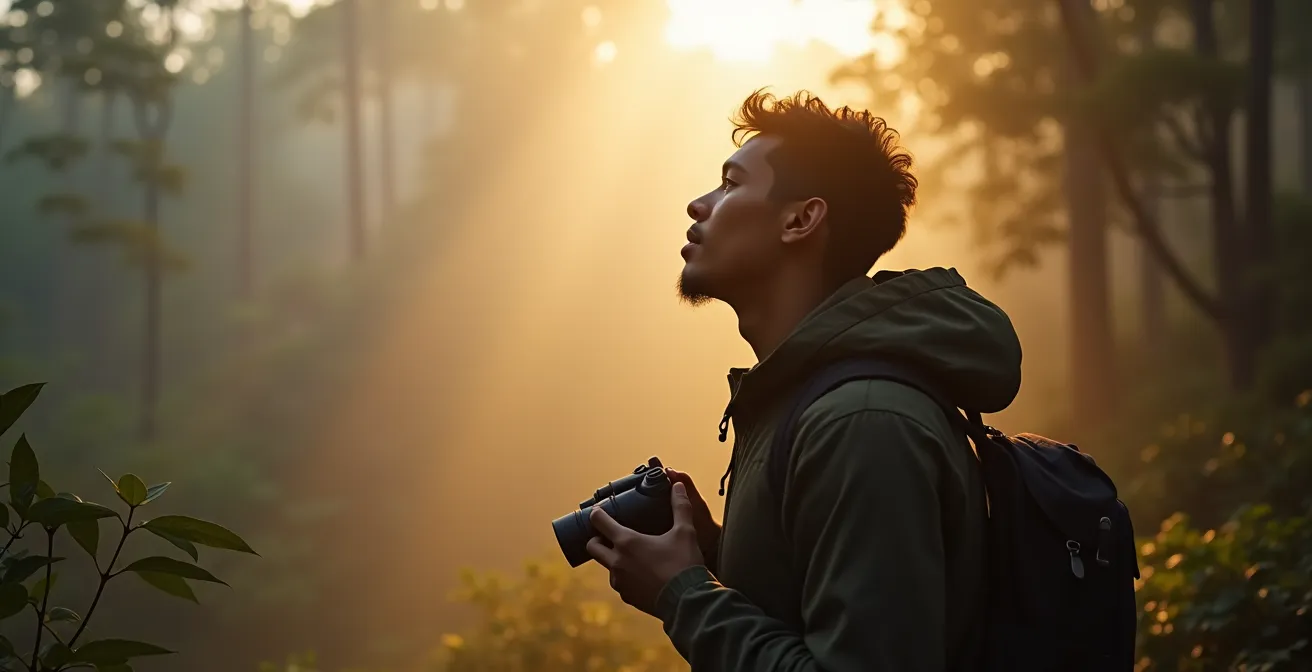
To enhance your auditory skills, here are some active listening techniques:
- Prepare Your Ears: Before your trip, download a bird identification app like Merlin Bird ID and listen to the calls of the most common species in Monteverde, especially the quetzal and the three-wattled bellbird.
- Isolate Sounds: Practice distinguishing between the songs of birds and the sounds of insects and frogs, which form the background hum of the forest.
- Listen for Alarms: Pay close attention to sharp, repetitive “chip” or “churr” noises. These are often alarm calls made by smaller birds or squirrels, indicating a predator or other large animal is nearby.
- Use the “Scan with Ears, Focus with Eyes” Technique: Instead of constantly scanning with your binoculars, stand still and listen. Once you detect a promising sound, then slowly raise your binoculars to scan that specific zone.
- Freeze on Activity: The moment you hear something, stop all movement. This makes you less of a threat and gives you time to pinpoint the source of the sound before the animal flees.
Key Takeaways
- The forest’s constant “drip” is from clouds (horizontal precipitation), so gear must be actively acclimatized to prevent condensation.
- Finding wildlife is a sensory strategy; in the dense foliage of Monteverde, listening for calls and alarms is often more effective than looking.
- To escape crowds and find solitude, apply the ‘Doubtful Sound’ strategy: choose quieter reserves like Curi-Cancha over the more famous Monteverde Preserve.
Milford Sound or Doubtful Sound: Which Fjord Offers True Solitude?
In New Zealand’s Fiordland, travelers face a classic choice: visit the world-famous, easily accessible, and often crowded Milford Sound, or make the extra effort to reach the more remote, vast, and deeply quiet Doubtful Sound. This exact dilemma exists for visitors to Monteverde. You can go to the “Milford Sound” of the region—the magnificent Monteverde Cloud Forest Preserve—or you can seek the “Doubtful Sound” experience in one of the area’s quieter, yet equally spectacular, reserves.
The Monteverde Cloud Forest Preserve is famous for a reason. It’s stunning, well-managed, and offers excellent chances of seeing a quetzal. However, its fame comes with a cap of 450 visitors per day, which can still feel crowded on narrow trails. For those seeking true solitude and a more intimate connection with nature, exploring the alternatives is the ultimate strategy. These “Doubtful Sound” reserves often host the same biodiversity with a fraction of the visitor pressure.
| Reserve Type | Example | Crowd Level | Quetzal Chances | Access Difficulty |
|---|---|---|---|---|
| ‘Milford Sound’ | Monteverde Cloud Forest Preserve | 450 visitors/day cap | High with guide | Easy, well-marked |
| ‘Doubtful Sound’ | Curi-Cancha, Children’s Eternal | Much quieter | Moderate-High | Requires planning |
| Private Reserves | Various small reserves | Very quiet | Variable | Local knowledge needed |
Case Study: Curi-Cancha Reserve as the ‘Doubtful Sound’
The Curi-Cancha Reserve is the perfect embodiment of the “Doubtful Sound” strategy. It protects a mix of primary and secondary forest and is a known hotspot for quetzals. In fact, many guides report that in recent years, quetzals have been spotted more frequently here than in the main preserve. It offers a similar level of biodiversity with significantly fewer crowds, allowing for a more peaceful and personal wildlife-watching experience. The trails are open and sunny in parts, making it excellent for both birding and photography.
The choice is a personal one. If you have limited time and want a guaranteed, well-trodden path, the Monteverde Preserve is an excellent option. But if your goal is to fulfill the promise of the H1—to see quetzals *without the crowds*—then embracing the “Doubtful Sound” philosophy and heading to places like Curi-Cancha is the most effective strategy.
By shifting your perspective from a tourist to a strategist—understanding the environment, mastering your gear, tuning your senses, and choosing your location wisely—you transform a trip to Monteverde from a gamble into a calculated and deeply rewarding expedition. Now that you have the strategies, it’s time to start planning your own thoughtful journey into the heart of the cloud forest.