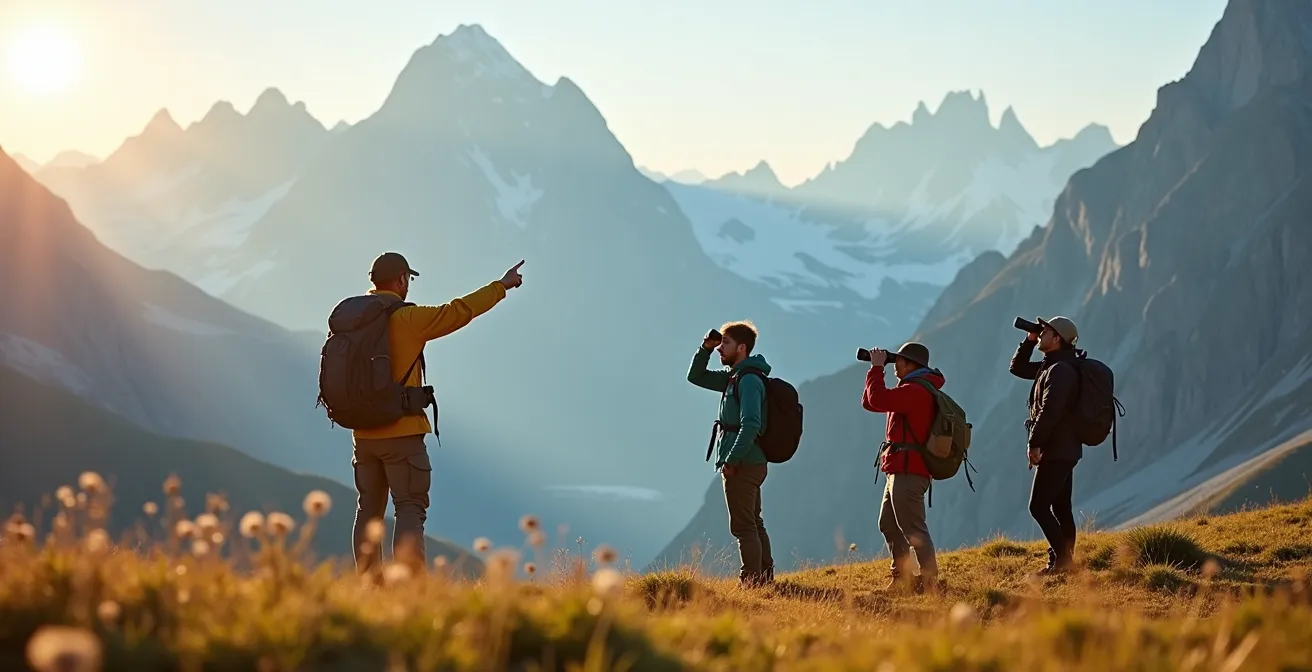
Hiring a Vanoise guide isn’t about not getting lost; it’s about mastering the invisible variables that even experienced hikers overlook.
- A guide manages ‘temporal navigation’ to avoid hidden dangers like softening snow bridges that appear safe in the morning.
- They apply ‘energy economics’, ensuring you reach crucial technical sections with strength, not exhaustion.
- They use ‘counter-detection’ tactics, turning a game of chance with ibex into a calculated success.
Recommendation: Move beyond basic navigation and invest in expertise that unlocks a deeper, safer, and more successful mountain expedition.
For the self-reliant hiker, the call of the Vanoise National Park is irresistible. You trust your map, your compass, and your stamina. The idea of hiring a guide might seem superfluous—an unnecessary expense for something you’ve successfully done alone countless times. You know how to follow a trail and prepare for changing weather. You’ve packed your binoculars and are ready to scan the vast mountain ridges for the iconic silhouette of the Alpine ibex.
The common wisdom suggests guides are for safety and for pointing out the obvious. They know the “best spots” or can name a few flowers. But this view misses the fundamental point. The true value of a professional mountain guide, especially in a complex ecosystem like Vanoise, lies not in what they see, but in what they anticipate. It’s about mastering a set of invisible variables—time, energy expenditure, snow-pack stability, and animal behavior—that are imperceptible to the untrained eye.
What if the key to a successful ibex expedition wasn’t just looking in the right place, but approaching at the right time, from the right direction, and with the right energy reserves? This guide isn’t about questioning your competence; it’s about revealing a hidden layer of mountain strategy. We will explore the critical expertise a guide brings, from the historical context of the park’s creation to the subtle arts of temporal navigation on glaciers and counter-detection techniques that transform your chances of a genuine wildlife encounter.
To fully understand this strategic advantage, this article breaks down the specific skills and knowledge a guide deploys. The following sections will guide you through the concrete benefits that turn a simple hike into a true alpine expedition.
Summary: Why Hiring a Guide in Vanoise National Park Is Crucial for Spotting Ibexes?
- Why Was Vanoise Created as France’s First National Park?
- How to Select a Guide Who Specializes in Botany or Geology?
- Group Join-in or Private Guide: Which Offers Better Value for Families?
- The Navigation Error That Makes Glacier Crossings Deadly for Amateurs
- How to Sequence Your Hut Bookings for a Seamless Vanoise Tour?
- When to Book Mountain Refuges to Secure a Bed for the Summer Season?
- Why Can an Ibex See You Before You Even Spot It?
- How to Cross the Brèche de Roland Safely for Intermediate Hikers?
Why Was Vanoise Created as France’s First National Park?
Understanding the value of a guide in Vanoise begins with understanding the park’s very reason for being: the Alpine ibex. In the 19th century, this magnificent creature was hunted to the brink of extinction. Across the entire Alps, fewer than 100 individuals remained, huddled in the Gran Paradiso region of Italy. The creation of Vanoise as France’s first national park in 1963 was not a general conservation gesture; it was a direct, emergency response to save the last of France’s ibex population.
This historical context is more than a trivia point; it’s the foundation of a guide’s knowledge. They are the inheritors of a legacy of conservation. Decades of strict protection and carefully managed reintroduction programs have yielded incredible results. A guide can point to a herd and explain that its existence is a direct outcome of this focused effort, which has seen the population rebound. In fact, specific conservation efforts have successfully increased the ibex population from a mere 40 individuals at the park’s inception to over 2,000 today.
This success story means the park is now a complex habitat where human activity and wildlife preservation must be carefully balanced. A guide doesn’t just know where to find ibex; they understand the boundaries, the seasonal behaviors, and the ethical responsibilities that come with entering their territory. They are not just navigators, but stewards of this incredible recovery, and hiring one is an investment in that continued legacy.
How to Select a Guide Who Specializes in Botany or Geology?
Once you recognize the deep ecological context of Vanoise, the choice of guide becomes more nuanced. Any certified guide can ensure your safety, but a specialist can transform the landscape from a beautiful backdrop into a living museum. Vanoise is a treasure trove of alpine flora and fascinating geological formations, but without an interpreter, you are essentially walking past closed display cases. A specialist guide holds the key.
Finding this expert requires asking questions that go beyond certification and availability. You are vetting a storyteller and a teacher. Instead of asking “Do you know the flowers?”, ask “Can you give me an example of how you would explain the geological formation of this valley to a hiker?”. Their answer will reveal not just their knowledge, but their passion and ability to make complex subjects engaging. A true specialist won’t just name a flower; they’ll explain its medicinal use, its role in the ecosystem, and the story of how it came to be named.
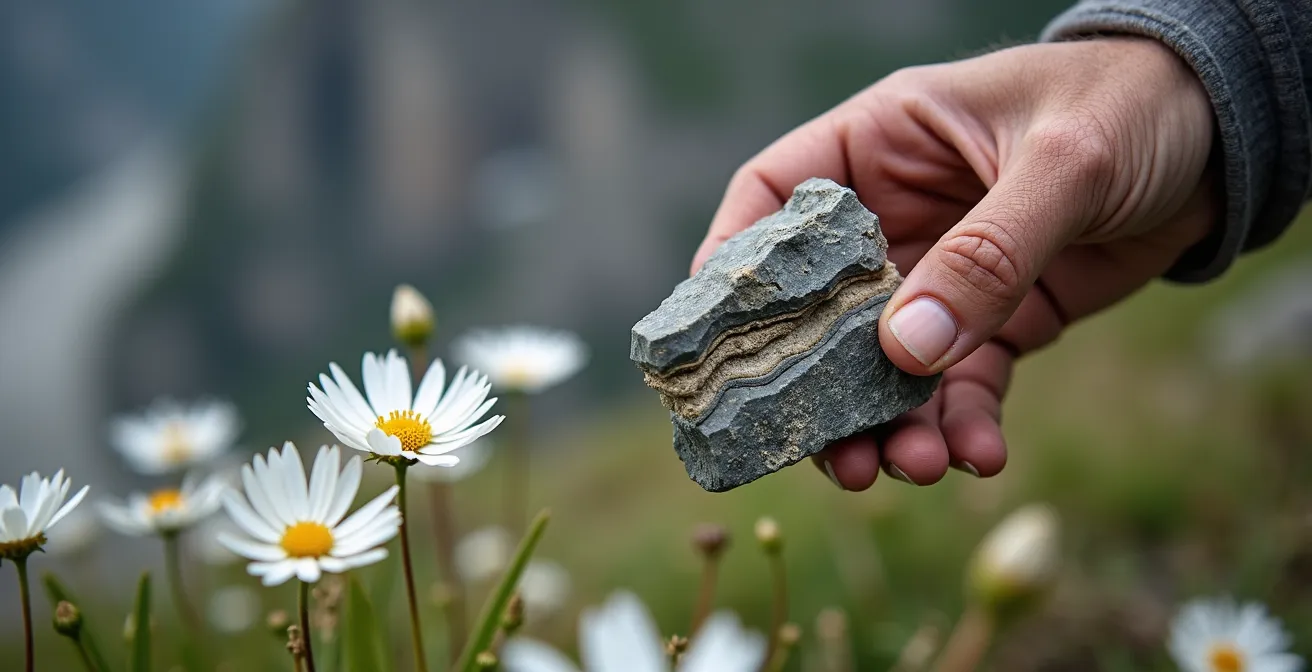
As the illustration above suggests, the best learning happens when information is made tangible. A great guide will connect the rock in your hand to the mountain range on the horizon. To ensure you find such an individual, a structured approach to your inquiry is essential. The following checklist provides a framework for interviewing potential guides to uncover their true specialization.
Your Action Plan: Vetting a Specialist Guide
- Verify Certification Level: Ask if they are an apprentice, assistant, or fully certified guide to understand their level of autonomy and experience.
- Inquire about Specific Experience: How many seasons have they spent guiding specifically in the Vanoise range? Local expertise is paramount.
- Test Their Storytelling: Ask for a concrete example of how they explain a concept, like a geological formation or a plant’s life cycle.
- Assess Their Teaching Approach: Do they focus on sensory learning and skill transfer, or do they simply lecture? You want an interactive experience.
- Confirm Specialization: What percentage of their guiding work involves detailed botanical or geological interpretation? This separates a hobbyist from a true specialist.
Group Join-in or Private Guide: Which Offers Better Value for Families?
For families, the decision between a private guide and a standard group tour is a critical one that goes far beyond cost. While a group tour is undeniably cheaper per person, its value proposition often crumbles under the dynamic needs of children. The fixed pace, generalized commentary, and divided attention of a group leader can quickly turn an exciting adventure into a frustrating ordeal for both parents and kids.
A private guide, in contrast, offers a completely adaptable experience. Their entire focus is on your family’s needs. This means the pace is dictated by the energy levels of the youngest child, not the fittest person in a group of strangers. Breaks are taken preventatively, not at scheduled stops. More importantly, the educational content is tailored. A guide can transform a six-hour hike into a series of engaging “micro-challenges” for children—spotting marmot burrows, identifying five types of lichen, or learning to use binoculars. This personalized attention maintains engagement and turns potential boredom into active discovery.
This difference is starkly reflected in results. One analysis of family expeditions in Vanoise showed that private guiding led to a 100% success rate in wildlife observation, compared to a typical 60% rate in mixed group tours. The guide’s ability to position the family for the best views and ensure everyone gets a turn with the binoculars makes all the difference. When considering the overall experience, a private guide often provides far superior value by ensuring the day is memorable for the right reasons.
The following table breaks down the core differences, helping you make an informed decision based on what truly matters for your family’s experience.
| Aspect | Private Guide | Group Tour |
|---|---|---|
| Pace Flexibility | Fully adaptable to youngest child | Fixed pace for whole group |
| Guide Attention | 100% dedicated to your family | Divided among 8-12 participants |
| Educational Value | Age-appropriate explanations | General adult-oriented content |
| Wildlife Spotting Success | High – guide focuses on your needs | Lower – shared attention |
| Cost per Family (4 people) | €400-600/day total | €200-300/day total |
| Break Flexibility | Unlimited, preventive | Scheduled group stops only |
The Navigation Error That Makes Glacier Crossings Deadly for Amateurs
For an experienced hiker, a glacier on a map is a known entity. You see the route, you have the gear, and you know how to walk on ice. The deadliest error, however, isn’t one of geography; it’s one of timing. The most critical invisible variable a guide manages is time, a concept known as “temporal navigation.” A glacier is not a static feature; it is a dynamic environment where conditions can change catastrophically in a matter of hours.
Snow bridges that are solid and safe at 7 AM can become dangerously soft and prone to collapse by early afternoon as the sun warms them. This single factor is terrifyingly significant; research on alpine accidents shows that over 80% of incidents on glaciers occur after 2 PM. An amateur hiker might make a small 30-minute route-finding mistake early in the day, a seemingly minor delay. But this error creates a domino effect. That delay pushes the glacier crossing into the warmer, more dangerous part of the day.
A professional guide’s entire plan is built around temporal navigation. They start pre-dawn not just to have a longer day, but to cross critical sections during their window of maximum stability. Their route planning includes time buffers for unexpected events, ensuring that even with a minor delay, the team remains within the safety window. They are constantly reading the snow, not just for the path ahead, but for how it’s reacting to the time of day and sun exposure. This strategic foresight is something a map cannot provide and is arguably the single most important safety function a guide performs in high-altitude terrain.
How to Sequence Your Hut Bookings for a Seamless Vanoise Tour?
The logistical challenge of securing accommodation in Vanoise’s mountain refuges can be as daunting as any technical pass. The popularity of the park means that a successful multi-day tour depends on a well-orchestrated sequence of bookings made months in advance. Simply booking huts as you find them available is a recipe for a disjointed and potentially impossible itinerary. A guide’s expertise here is in strategic planning, ensuring your tour flows logically and efficiently.
The sequence begins with identifying the “keystone” refuges. Huts like the Refuge du Col de la Vanoise are extremely popular and act as critical nodes in many classic routes. These must be booked the moment reservations open, often as early as February for the July-August high season. Once these are secured, the rest of the itinerary can be built around them. A guide also understands the importance of altitude progression. They will sequence your bookings to allow for proper acclimatization, planning your first night in a lower-altitude refuge (below 2,300m) before moving higher.
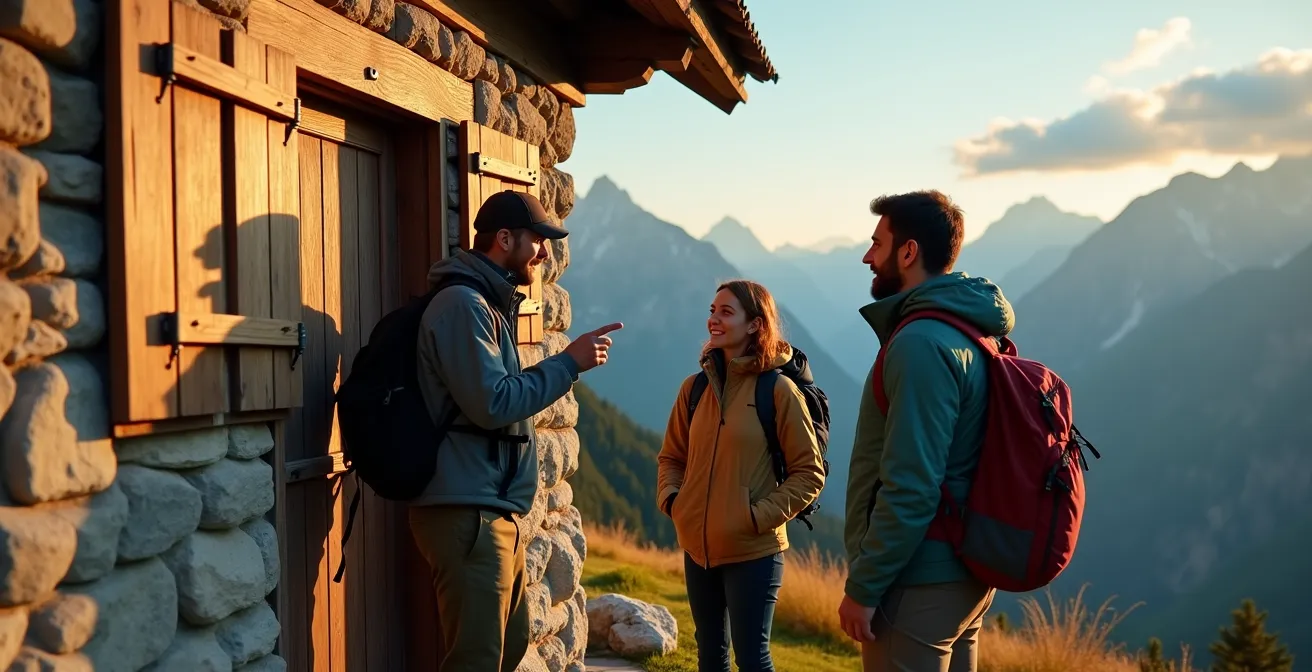
Furthermore, guides have invaluable local knowledge of “Plan B” options. When a popular refuge is fully booked, they know of lesser-known huts that may still have availability and can be integrated into a revised route. They often have personal relationships with the refuge guardians, which can sometimes open doors for last-minute bookings or provide crucial information about cancellations. This insider knowledge transforms the stressful puzzle of hut booking into a seamless, professionally managed process.
When to Book Mountain Refuges to Secure a Bed for the Summer Season?
The demand for Vanoise’s mountain refuges is not just high; it’s accelerating. The most popular huts are seeing a dramatic increase in traffic, with some, like the Refuge du Col de la Vanoise, reporting over 14,000 overnight stays in a single season. This intense pressure means that the window for booking is narrow and requires a precise, timely strategy. Waiting until spring to plan a summer trek is no longer a viable option.
A guide’s value is in navigating this competitive booking landscape. They operate on a clear timeline, beginning research and route planning with their clients in December and January. They are poised to act the moment online booking systems open, typically in early February for the most sought-after huts. This first wave is critical; many popular refuges reach 50% capacity within the first few weeks of March. The half-board packages, offering dinner and breakfast, sell out even faster than bed-only spots, making immediate reservation essential.
For those who miss this initial window, a guide still holds the key. They know which moderately-demanded refuges to target in the second wave of bookings and are adept at checking for last-minute availability at off-route huts in April and May. As a final resort, their personal connections can be invaluable; a direct call to a refuge guardian 48 hours in advance can sometimes secure a spot from a late cancellation, an opportunity rarely available to the general public. This booking timeline is a science, and a guide is its master practitioner.
To navigate this competitive environment, understanding the booking calendar is non-negotiable. This table outlines the critical actions required throughout the year.
| Period | Action Required | Refuge Status |
|---|---|---|
| December-January | Research routes and refuge options with guide | Planning phase |
| February | Online bookings open for popular refuges | Book within first week! |
| March | Second wave bookings for moderate-demand refuges | 50% capacity reached |
| April-May | Last-minute availability check | Only off-route refuges available |
| 48 hours before | Contact guardians directly | Cancellation spots possible |
Why Can an Ibex See You Before You Even Spot It?
Spotting an Alpine ibex is the primary goal for many visitors to Vanoise, yet most attempts by unguided hikers end in frustration. You scan the ridges for hours only to see nothing, or worse, catch a fleeting glimpse of a white rump disappearing over a crest. The reason is simple: the ibex’s sensory abilities are so advanced that it detects you long before you have any chance of seeing it. Its survival depends on it.
An ibex possesses a remarkable 320-degree field of vision thanks to its horizontal pupils, allowing it to monitor its surroundings without moving its head. Its hearing is tuned to the specific sound of a displaced stone under a hiker’s boot, and its sense of smell can detect human scent from up to a kilometer away if the wind is right. A guide’s expertise is not in having “better eyes,” but in employing a strategy of “counter-detection.” They understand the ibex’s sensory advantages and use tactics to neutralize them. This expertise dramatically shifts the odds, with studies showing that guided hikers have a wildlife sighting success rate of around 70%, compared to just 20% for unguided groups.
Counter-detection involves a series of calculated techniques. A guide will constantly monitor wind direction to ensure the group approaches from downwind. They use the natural sound of streams to mask the noise of their footsteps. They avoid silhouetting the group against the skyline and use the natural contours of the terrain—what’s known as “dead ground”—to break the line of sight during an approach. They know that ibex are less vigilant during their main feeding periods at dawn and dusk, and time the search accordingly. This is not luck; it’s a hunt conducted with intelligence and respect for the animal.
Your Action Plan: Guide Techniques for Ethical Ibex Sighting
- Use the Wind: Always approach from downwind to ensure your scent is carried away from the animals.
- Move During Feeding Times: Capitalize on the lower vigilance of ibex during their dawn and dusk grazing periods.
- Read Their Body Language: A raised head and forward-facing ears signal stress. Immediately freeze or begin a slow, non-threatening retreat.
- Utilize Dead Ground: Use hills, ridges, and depressions in the terrain to stay out of the ibex’s line of sight during your approach.
- Maintain a Safe Distance: Respect a minimum distance of 100 meters. A successful sighting is one that doesn’t disturb the wildlife. Use binoculars for a closer look.
Key Takeaways
- A guide’s true value is strategic, involving ‘temporal navigation’ for safety and ‘energy economics’ for performance.
- Specialist guides transform a hike into a narrative experience, decoding the geology, botany, and history of the landscape.
- Success in wildlife spotting isn’t chance; it relies on a guide’s ‘counter-detection’ techniques that neutralize an ibex’s superior senses.
How to Cross the Brèche de Roland Safely for Intermediate Hikers?
Technical passes like the famous Brèche de Roland or the Col de la Vanoise represent a significant challenge for the intermediate hiker. While you may have the physical ability, safety and success on this terrain are governed by another invisible variable: energy economics. Many unguided hikers make a critical error: they expend 80-90% of their effort on the long approach, arriving at the most difficult, technical section of the day already exhausted. At this point, physical and mental fatigue leads to poor decisions and an increased risk of a fall.
A professional guide is a master of energy management. They set a steady, sustainable pace from the very first step, aiming to keep the group at a 60-70% effort level. This preserves crucial energy reserves for when they are needed most. They implement micro-rest strategies, such as a 30-second pause every 10 minutes, to manage breathing and heart rate. They enforce hydration schedules to prevent performance decline. This scientific approach ensures that climbers arrive at the crux of the pass with the full physical and mental capacity required to navigate it safely.
On the technical section itself, the guide’s instruction is precise and economical. They teach you to use your stronger leg muscles for climbing by looking for footholds first, rather than relying on arm strength. They demonstrate how to use flat palm pressure on rock instead of gripping with fingers to conserve forearm strength. Every piece of advice is designed to maximize safety while minimizing energy expenditure. They know that a steady, calm ascent is infinitely safer than a rushed, exhausted scramble.
This disciplined management of your body’s resources is the difference between a successful summit and a dangerous retreat. It’s a skill that turns a daunting obstacle into a manageable and rewarding challenge.
To truly experience the Vanoise and its magnificent wildlife, move beyond simply navigating a trail. By engaging a professional guide, you are investing in a deeper level of strategy, safety, and discovery that will fundamentally transform your time in the mountains.