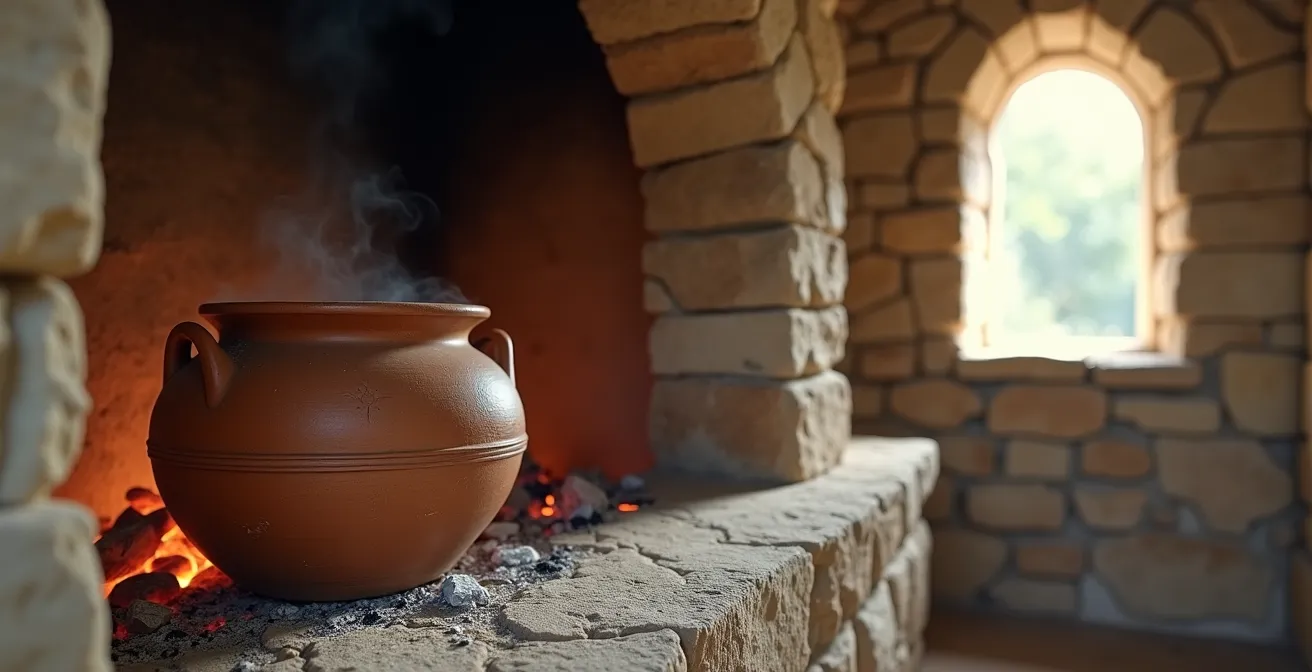
While microwaves are surprisingly good at preserving some nutrients, focusing only on that metric misses the entire point of cooking.
- Slow, traditional cooking develops an unparalleled depth of flavor and texture that rapid heating cannot replicate.
- It reconnects us to a rich culinary inheritance, from sensory skills passed down through generations to vital communal traditions.
Recommendation: To truly elevate your cooking, look beyond speed and efficiency and embrace time, touch, and tradition as essential ingredients.
In the modern kitchen, a battle rages between two philosophies: the relentless pursuit of convenience and the quiet call of tradition. The microwave stands as the undisputed champion of speed, promising a hot meal in minutes. We often assume this speed comes at a high nutritional cost, a compromise we make for a busy life. Conversely, we romanticize slow cooking as a more “natural” and therefore healthier method. The truth, however, is far more nuanced and infinitely more interesting. Some research even shows that the short cooking times of a microwave can be remarkably effective, with some studies finding that microwaving preserves up to 97.3% of antioxidants in certain vegetables.
But what if the debate over nutrient percentages is a distraction from a more profound loss? The real casualty of our quest for efficiency isn’t just a handful of vitamins; it’s the rich tapestry of sensory wisdom, culinary inheritance, and social connection that is woven into traditional cooking. When we choose a microwave, we are choosing a sterile, automated process. When we choose to cook slowly, over low heat, we are engaging in an ancient dialogue with our food, where time itself becomes a key ingredient. This is about more than just nutrient retention; it’s about flavor development, textural transformation, and the preservation of stories.
This article moves beyond the simplistic “slow vs. fast” debate. We will explore the forgotten arts that give slow cooking its soul. We’ll learn why food from an unglazed clay pot tastes fundamentally different, how to read the language of an open fire, and why the collapse of the village oven was a social tragedy, not just a culinary one. It’s time to rediscover that the most valuable things our food has to offer are not measured in milligrams, but in memory, flavor, and connection.
This guide will walk you through the core principles and forgotten techniques of traditional cooking, revealing the wisdom that our ancestors knew intuitively. Explore the sections below to reconnect with a more flavorful and meaningful way of preparing food.
Summary: Why Slow Cooking on Low Heat Preserves More Nutrients Than Microwaving?
- Why Does Food Cooked in Unglazed Clay Taste Different?
- How to Control Temperature on an Open Fire Without a Thermometer?
- Pickling or Fermenting: Which Method Adds Probiotics to Your Diet?
- The Social Mistake That Ruined the Village Bread Oven Tradition
- How to Record a Grandmother’s Recipe That Has No Measurements?
- Why Are the Most Iconic French Dishes Originally Peasant Food?
- Podcast or Elder: How Is Oral History Being Saved Today?
- How to Spot “Staged Authenticity” in Cultural Performances?
Why Does Food Cooked in Unglazed Clay Taste Different?
The unique, earthy, and deeply satisfying flavor of food cooked in unglazed clay is not just a product of nostalgia; it’s a result of pure physics and a gentle interaction between the vessel and its contents. Unlike metal or glazed ceramic, which acts as an inert barrier, porous clay breathes. It absorbs a small amount of steam during cooking and then slowly releases it, creating a moist, self-basting environment that prevents food from drying out. This process is fundamentally different from the aggressive heat of a metal pan, resulting in a more tender and succulent texture.
The true magic, however, lies in the type of heat the clay emits. Clay cookware heats up slowly and evenly, radiating far-infrared heat. This long-wave heat penetrates food deeply and gently, cooking it from the inside out as much as from the outside in. This gentle process is crucial for preserving the integrity of ingredients. In fact, some research on clay cookware suggests that far-infrared heat from clay preserves up to 100% of delicate nutrients that are easily damaged by the harsh, direct heat of conventional cookware.
This unique cooking method leads to a superior sensory experience. The slow, even heat allows flavors to meld and deepen in a way that rapid cooking cannot achieve. A compelling example comes from a New York Times article that compared various tagines. While all produced moist chicken, the one cooked in a traditional unglazed clay vessel yielded a sauce with unparalleled intensity, richness, and even a deeper, more complex color. The clay itself becomes a participant in the cooking, its porous nature holding onto the “ghosts” of meals past, adding an indescribable depth and a true taste of culinary inheritance to every new dish.
How to Control Temperature on an Open Fire Without a Thermometer?
Before digital thermometers and induction cooktops, cooks possessed a profound sensory wisdom, an ability to read and understand heat through sight, sound, and touch. Mastering an open fire was not about hitting a precise number; it was about learning the language of the flame. This ancestral skill allowed for incredible control, enabling everything from high-heat searing to low-and-slow braising. Reconnecting with these methods allows a modern cook to step away from sterile precision and engage with the cooking process more intuitively.
The first step is to become an observer. The fire communicates its intensity through a variety of cues. The color of the flames, the sound of the burning wood, the look of the smoke, and the glow of the embers all provide critical information for managing your cooking.
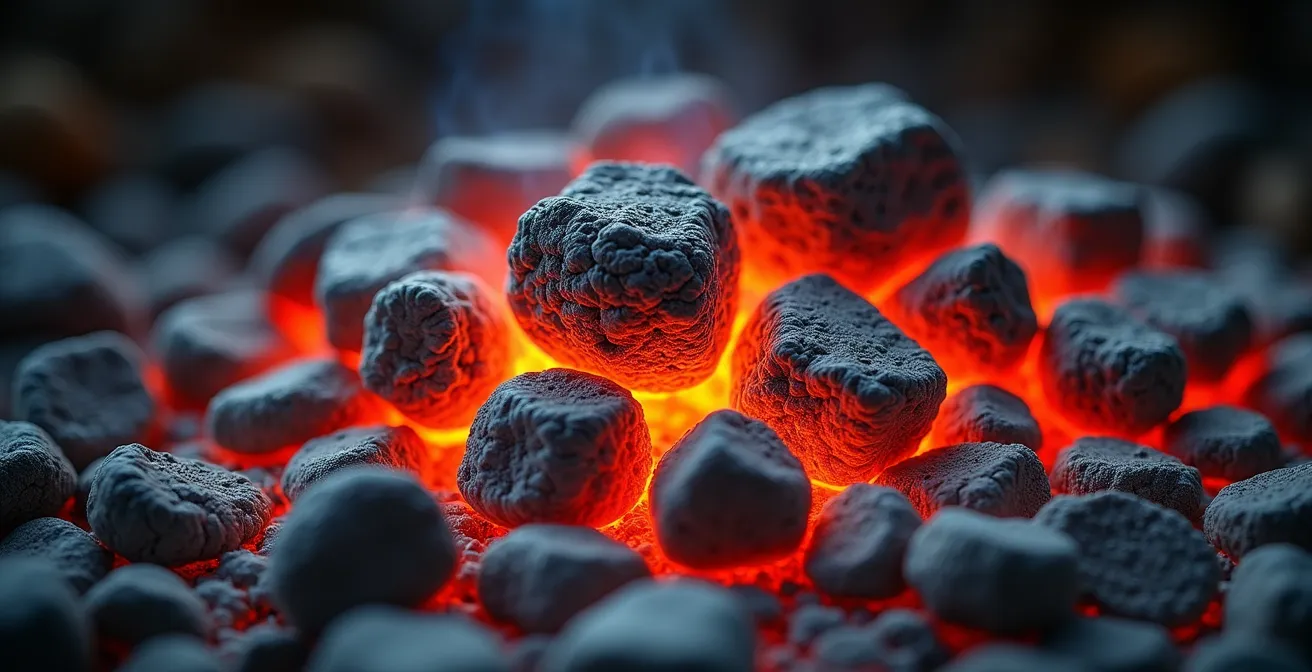
As you can see from the glowing embers, different zones of the fire hold different levels of heat. Learning to identify and utilize these zones is the key to open-fire cooking. Here are some of the ancestral techniques you can use to read the fire:
- Observe flame color: Bright yellow flames indicate a temperature around 1100°F (593°C), a more intense orange-red suggests 1800°F (982°C), and a brilliant blue-white flame is burning at over 2300°F (1260°C).
- Listen to wood sounds: A rapid, loud crackling means the wood has high moisture content and is burning inefficiently. A steady, gentle hiss indicates a more stable and optimal cooking temperature.
- Use the hand test: Carefully hold your hand about 6 inches above the cooking surface. If you can only hold it there for 2-3 seconds, you have high heat. A 5-7 second tolerance signifies medium heat, while 10 or more seconds means low heat.
- Watch smoke patterns: A thin, almost invisible blue smoke is the sign of a clean, efficient fire, ideal for most cooking. Thick, white smoke means the wood is smoldering and not burning completely, which will impart a bitter taste.
- Monitor ember glow: A bed of deep red embers is perfect for roasting. For slow cooking, wait until the embers are covered in a layer of gray ash, which provides a gentle, consistent, and long-lasting heat.
Pickling or Fermenting: Which Method Adds Probiotics to Your Diet?
In the world of food preservation, the terms “pickling” and “fermenting” are often used interchangeably, but they represent two fundamentally different processes with vastly different impacts on your health. Understanding this distinction is key to unlocking the probiotic benefits of this ancient culinary tradition. While both methods extend the life of fresh produce, only one actively creates a thriving ecosystem of beneficial bacteria.
Vinegar pickling is a preservation method where food, like cucumbers, is submerged in an acidic brine (usually vinegar). This high-acid environment prevents spoilage by killing off virtually all bacteria, including any potentially beneficial ones. Fermentation, on the other hand, is a biological process. It relies on naturally present bacteria, primarily Lactic Acid Bacteria (LAB), to convert sugars into lactic acid. This acid acts as a natural preservative while allowing beneficial probiotic cultures to multiply exponentially. Research shows that traditionally prepared foods like kimchi can be incredibly dense with these microbes, with some studies showing that kimchi fermentation produces approximately 9-10 log CFU per gram of live bacteria.
The following table, based on information from leading health institutions, breaks down the key differences.
| Method | Process | Probiotics Present | Health Benefits |
|---|---|---|---|
| Fermentation | Natural LAB conversion | Yes – billions of live cultures | Gut health, immune boost, reduced inflammation |
| Vinegar Pickling | Acid preservation | No – acid kills bacteria | Low calorie, some minerals retained |
| Heat Processing | Pasteurization | No – heat destroys cultures | Long shelf life, food safety |
However, the benefits may go even deeper than just the live bacteria. As Dr. Suzanne Devkota, an expert at the Cedars-Sinai Human Microbiome Research Institute, points out, the process itself creates powerful compounds:
Many of the bacteria in fermented foods won’t survive nor colonize the gut, but the thousands of chemical products of fermentation that are in the food are the most beneficial part. They interact directly with immune cells and your gut barrier, and feed the existing good bacteria in your gut.
– Dr. Suzanne Devkota, Cedars-Sinai Human Microbiome Research Institute
Therefore, to add probiotics and their beneficial byproducts to your diet, you must choose foods that are naturally fermented and, crucially, unpasteurized, as heat will destroy the very cultures you seek.
The Social Mistake That Ruined the Village Bread Oven Tradition
The disappearance of the communal village bread oven from our landscapes represents more than just the loss of a cooking appliance; it marks the erosion of a vital social fabric. These ovens were once the warm, beating hearts of their communities, a central point where sustenance and society intertwined. The “mistake” that led to their ruin was not a technical failure but a social one: we began to value private convenience over collective effort, forgetting that the oven’s purpose was as much about community as it was about baking.
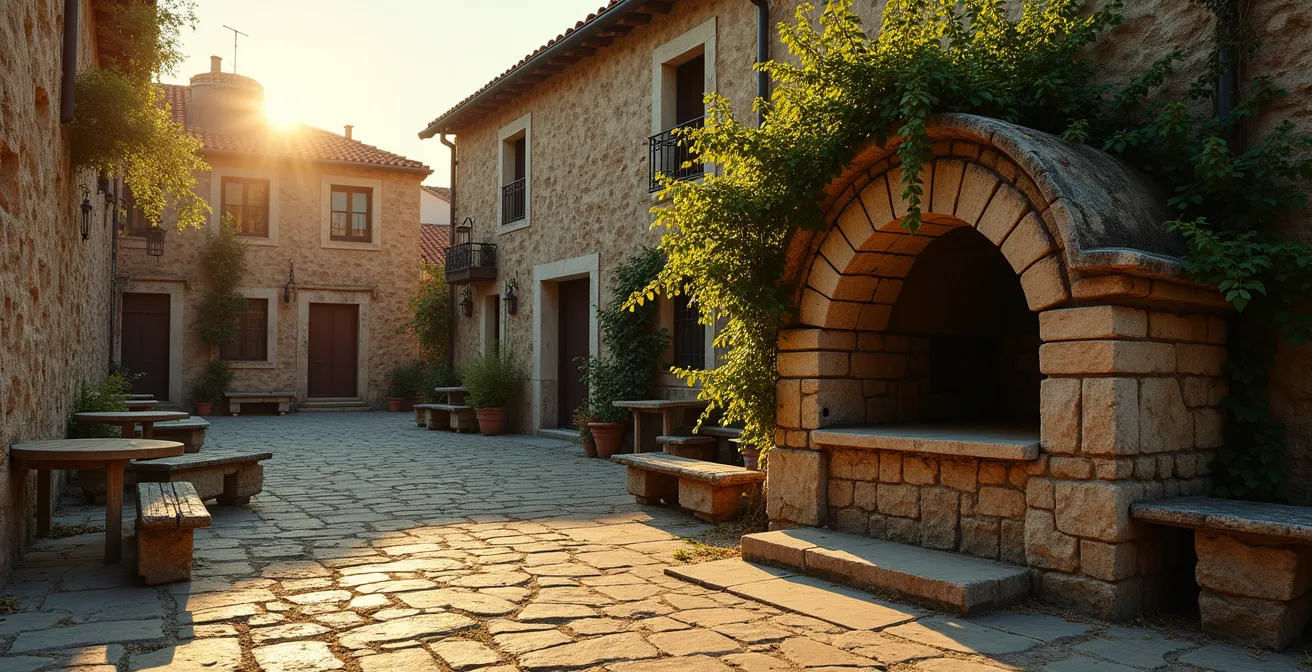
Looking at an abandoned oven, you see more than just weathered stone; you see the ghost of a lost social architecture. Each family didn’t have to maintain their own oven. Instead, the community shared the resource and the labor of firing it. This created a natural, weekly rhythm of gathering. It was a place where news was exchanged, childcare was informally shared, and social bonds were strengthened. The gentle, radiant heat of the massive earthen structure, which could cook food with incredible efficiency from the inside out, was a shared benefit that reinforced collective identity.
When individual households began acquiring smaller, private ovens, it was seen as a mark of progress and personal prosperity. But this shift had an unintended consequence. It atomized the community. The central gathering point vanished, and with it, the casual, daily interactions that held the social fabric together. The efficiency of the communal oven—capable of baking dozens of loaves at once with a single firing—was lost to less efficient, individual efforts. We traded the warmth of the shared hearth for the isolation of our own kitchens. The ruin of the village oven tradition is a poignant reminder that when we optimize for individual ease, we often unknowingly dismantle the very structures of community that enrich our lives.
How to Record a Grandmother’s Recipe That Has No Measurements?
A recipe from a grandmother that contains no precise measurements is not a flawed document; it is a treasure map of sensory wisdom. The lack of cups and tablespoons is a sign that the recipe lives in the hands, nose, and eyes of the cook, not on a written page. Documenting this kind of culinary inheritance requires you to become an apprentice and an archivist, focusing on process and cues rather than on static quantities. Your goal is to capture the logic and feel of the dish, not just a list of ingredients.
This process is an act of translation, converting a lifetime of intuitive knowledge into a format that can be shared and preserved. Forget about forcing your grandmother to use measuring cups, which can feel unnatural and disrupt her flow. Instead, embrace her method and become a keen observer. You’ll need to pay attention to visual markers, textures, sounds, and smells. The recipe’s secrets are hidden in phrases like “cook until it smells nutty,” “the dough should feel like your earlobe,” or “add flour until it pulls away from the side of the bowl.”
To successfully capture this living knowledge, you must shift your mindset from measuring to documenting. The following checklist provides a framework for this deeply personal and rewarding process.
Your Action Plan: How to Capture a Recipe with No Measurements
- Record the Process: Film the entire cooking session, paying close attention to hand movements, speed, and the visual appearance of the ingredients at each stage.
- Document Sensory Checkpoints: Ask questions and write down the answers. What does it look like? What does it smell like? What texture are you looking for? Use analogies: “color like autumn leaves,” “sauce coats the back of a spoon.”
- Note Environmental Factors: Document the conditions of the day. The humidity, room temperature, and even the season can affect ingredients like flour, requiring slight adjustments that are second nature to an experienced cook.
- Map the Logic of Substitutions: Ask “what if” questions. “What if the tomatoes aren’t sweet enough?” (Answer: “Add a pinch of sugar.”) “What if the meat is tough?” (Answer: “Add a little more liquid and cook it longer.”) This captures the problem-solving aspect of the recipe.
- Capture Stories and Context: Ask about the recipe’s history. When is it made? Who taught it to her? What memories are associated with it? This is the narrative of the food, and it’s as important as the ingredients.
By following these steps, you are not just writing down instructions; you are preserving a piece of your family’s history and ensuring that this precious culinary inheritance can be passed down to the next generation.
Why Are the Most Iconic French Dishes Originally Peasant Food?
The soul of French cuisine is not found in the lofty, intricate dishes of royal courts, but in the humble, slow-simmered pots of its peasantry. Dishes like boeuf bourguignon, cassoulet, and coq au vin are celebrated globally, yet their origins lie in hardship and frugality. Their iconic status is a direct result of the culinary wisdom born from necessity: the need to transform cheap, tough, and undesirable ingredients into something deeply flavorful and nourishing.
The primary challenge for a peasant cook was to make tough cuts of meat palatable. The solution was time as an ingredient. These cuts, full of connective tissue, are impossible to eat when cooked quickly. But when simmered for hours over a low, gentle heat, that same collagen breaks down into rich, unctuous gelatin, rendering the meat fall-apart tender and creating a sauce with incredible body. This slow transformation is the heart of peasant cooking. It wasn’t a choice of luxury, but the only method available to make the most of what little they had.
This method also proved to be remarkably nutrient-savvy. As research from authorities like Dr. Andrew Weil confirms, the lower temperatures in slow cooking help preserve nutrients that can be destroyed by rapid, high-heat methods. Furthermore, peasant cooking was defined by the one-pot meal, a practice that inherently maximizes nutrition. Any water-soluble vitamins, like C and B vitamins, that leach out of vegetables and meat during the long cooking process are not discarded. Instead, they become part of the very sauce or broth that is served with the meal. This practice of incorporating all the cooking liquids ensures that every possible bit of nourishment is retained and consumed, a perfect example of how frugal wisdom and nutritional science align. These dishes are a testament to the idea that with time and patience, the most humble ingredients can become truly sublime.
Podcast or Elder: How Is Oral History Being Saved Today?
In our digital age, we face a critical choice in how we preserve our culinary inheritance: do we rely on the sterile, scalable format of a podcast or a YouTube video, or do we prioritize the rich, contextual wisdom of an elder? While digital platforms offer unprecedented reach and permanence, they often strip away the very soul of oral history, reducing a living tradition to a set of reproducible data points. An elder’s knowledge is not just a sequence of steps; it’s a multi-sensory, interactive experience embedded in a lifetime of practice.
When an elder teaches, they provide more than a recipe. They offer a narrative. They explain *why* you let the dough rest, not just that you should. They demonstrate the feel of perfectly kneaded dough, a tactile lesson a video cannot convey. They share stories of past failures and successes, answer questions in real-time, and adapt the recipe based on the humidity of that specific day. This is a dynamic, living transfer of knowledge. A podcast or a blog post, by contrast, is static. It is a one-way broadcast that lacks the feedback loop, the personalization, and the emotional connection that makes learning from a person so powerful.
The challenge for our generation is to bridge this gap—to use modern tools not to replace the elder, but to better capture the essence of their wisdom. The goal shouldn’t be to create a simple, shareable list of instructions, but to document the entire ecosystem of the recipe. This means preserving the techniques, the stories, and the sensory cues that give it life. Modern technology, when used thoughtfully, can be a powerful ally in this mission of cultural preservation.
- Create video documentation with multiple camera angles to capture subtle hand techniques and visual cues from the cook’s perspective.
- Record audio narratives alongside the video, where the cook explains the “why” behind each action and shares family stories associated with the dish.
- Document responses to variations, capturing the cook’s intuitive problem-solving when an ingredient is different or something goes slightly wrong.
- Capture seasonal adaptations, noting how the recipe changes based on what is available in the garden or at the market.
- Facilitate interactive sessions, using video calls to connect learners with elders in real-time, allowing for the crucial question-and-answer dynamic.
Key takeaways
- True flavor and texture in cooking are developed through slow transformation, a process that rapid heating can’t replicate.
- Traditional cooking is a holistic skill that involves not just recipes, but sensory wisdom, intuitive adjustments, and often, community participation.
- Preserving an heirloom recipe is about more than just instructions; it’s about safeguarding a family story and a piece of your cultural identity.
How to Spot “Staged Authenticity” in Cultural Performances?
In a world hungry for genuine experiences, the concept of “authenticity” has become a powerful marketing tool, especially in food and travel. “Staged authenticity” is the practice of presenting a dish or experience as traditional and genuine when it is, in fact, a simplified, mass-produced, or altered version designed for tourists or convenience. This often manifests as a “slow-cooked” dish that has merely been reheated in a microwave. For the modern cook dedicated to rediscovering traditional skills, learning to spot the difference is crucial. This ability comes not from a label, but from engaging your sensory wisdom.
A truly slow-cooked dish undergoes a profound transformation. A quickly reheated one only mimics the surface characteristics. The difference is not subtle if you know what to look for. The aroma, texture, color, and flavor profile of an authentically prepared meal are complex and integrated, while a staged version will often feel flat, separated, and one-dimensional. The key is to pay attention to the details that time, and only time, can create.
To arm yourself against culinary facsimiles, you can learn to identify the tell-tale signs of a genuine, slow-cooked meal versus a quickly reheated impostor. The following table, drawing on insights from food science and culinary experts like those at Harvard Health, provides a practical guide to spotting the difference.
| Characteristic | Authentic Slow-Cooked | Quickly Reheated |
|---|---|---|
| Meat Texture | Fall-apart tender, fibers separated | Tough, rubbery, fibers intact |
| Sauce Consistency | Unified, complex flavor layers | Separated, flat single notes |
| Vegetable Color | Deep, sauce-absorbed throughout | Surface colored only |
| Aroma | Deep, multilayered, evolved | Sharp, simple, immediate |
| Fat Integration | Emulsified into dish | Floating on surface |
By training your palate and attention on these characteristics, you move beyond being a passive consumer. You become an active participant in preserving true culinary traditions, capable of recognizing and celebrating the irreplaceable value that comes from making time the most important ingredient in the kitchen.
The next time you cook, start by choosing a recipe that asks for more of your time, not less. Rediscover the joy of cooking not as a task to be optimized, but as a tradition to be inhabited and passed on.