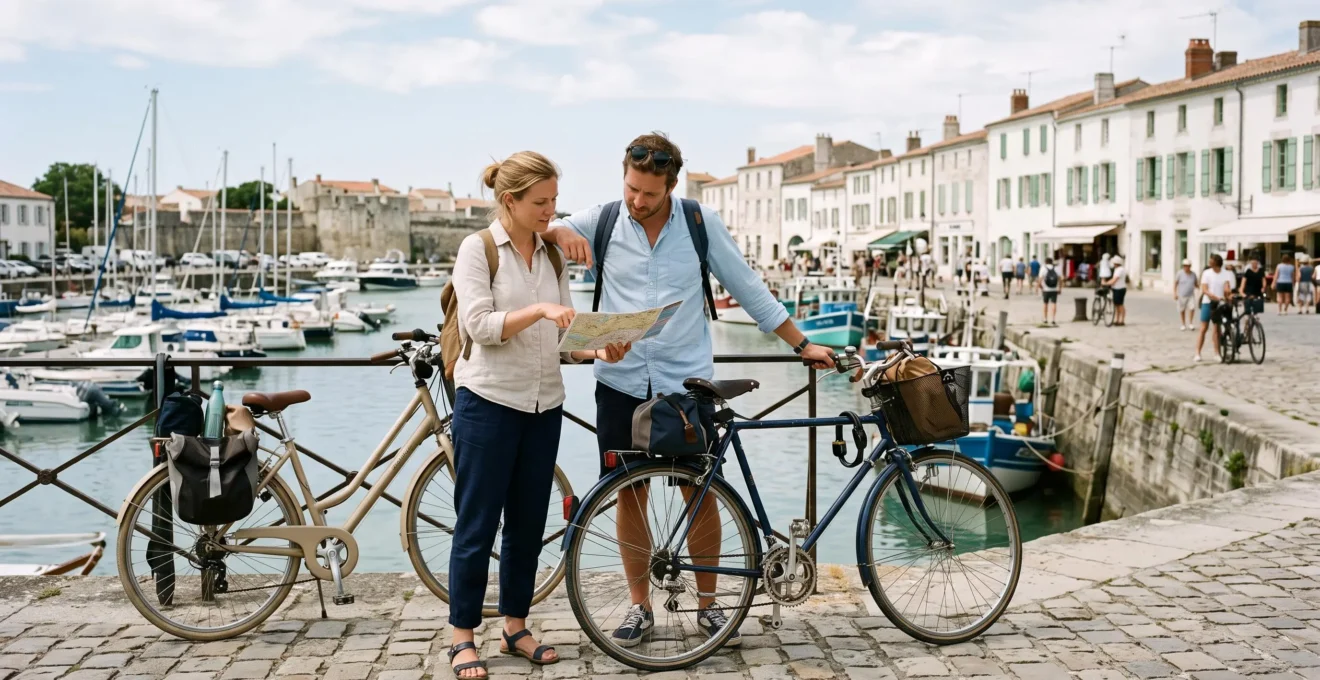
Direct answer: The best area to stay on Île de Ré is the one that matches your travel profile (family, couples, cycling-focused), your budget and how you’ll get around. A lively harbour base (around central/eastern villages) usually suits travellers who want restaurants and evening atmosphere, while quieter western and northern areas tend to fit slower stays and nature-first days—especially if you’re happy to cycle.
If you’re wondering where to stay on Île de Ré, skip the “best village” rankings. The island is compact, so you can explore several communes during one trip—but your accommodation base still matters for daily rhythm: beach style, shops on foot, cycling distances, and how quickly places book up in summer.
Below you’ll find a practical comparison (so you can orient yourself in two minutes), then a profile-based grid to narrow down two or three areas before you start comparing actual accommodation.
A quick way to shortlist your area before you book
- Want evening buzz? Start with harbour villages (often easiest for dining and strolling).
- Want long sandy beaches and a calmer base? Look at south-coast villages with big beach access.
- Travelling without a car? Prioritise villages with shops and services within walking/cycling distance.
- Booking for July–August? Choose your area first, then book early for better choice.
To ground the “car-free” question: Destination Île de Ré (the intercommunal tourist office) states the island has cycle paths on the island138 km of cycle paths, and the local authority describes a cycle network of around 138 km managed across communes—good news if you plan to base yourself near daily essentials.
The Main Areas of Île de Ré at a Glance
Île de Ré is long and narrow (about 30 km end to end according to Destination Île de Ré), so your choice is less about distance and more about day-to-day convenience: what you can do without planning, how “busy” it feels, and what kind of coastline you wake up to.
A useful first split is east vs west (bridge side vs far end of the island), and north vs south (wilder landscapes and salt marshes in parts of the north; vineyards, forests and long beaches on parts of the south, as described by the tourist office).
Here’s a reader-first comparison to help you pinpoint which “type of base” sounds like you.
| Decision factor | More central / harbour-focused villages (often around the middle-east) | More western / nature-first villages (often towards the west and north) |
|---|---|---|
| Atmosphere | More animated around quays, markets and restaurant streets (especially in season) | Quieter, more residential feel; evenings can be calmer |
| Best for | Couples and adults who want to walk to dinner and enjoy an evening stroll | Travellers prioritising beaches, cycling loops, salt marsh landscapes, slower pace |
| Beach “day style” | Often a mix: you may cycle or drive to the beach depending on where you stay | Many stays are organised around beach days and outdoor time |
| Car-free practicality | Usually easier if you want shops, services and dining close by | Works well if you’re comfortable cycling for errands and planning supplies |
| Booking pressure | Can feel tighter in peak summer for the most in-demand harbours | Still busy in summer, but the feel and accommodation mix can be different |
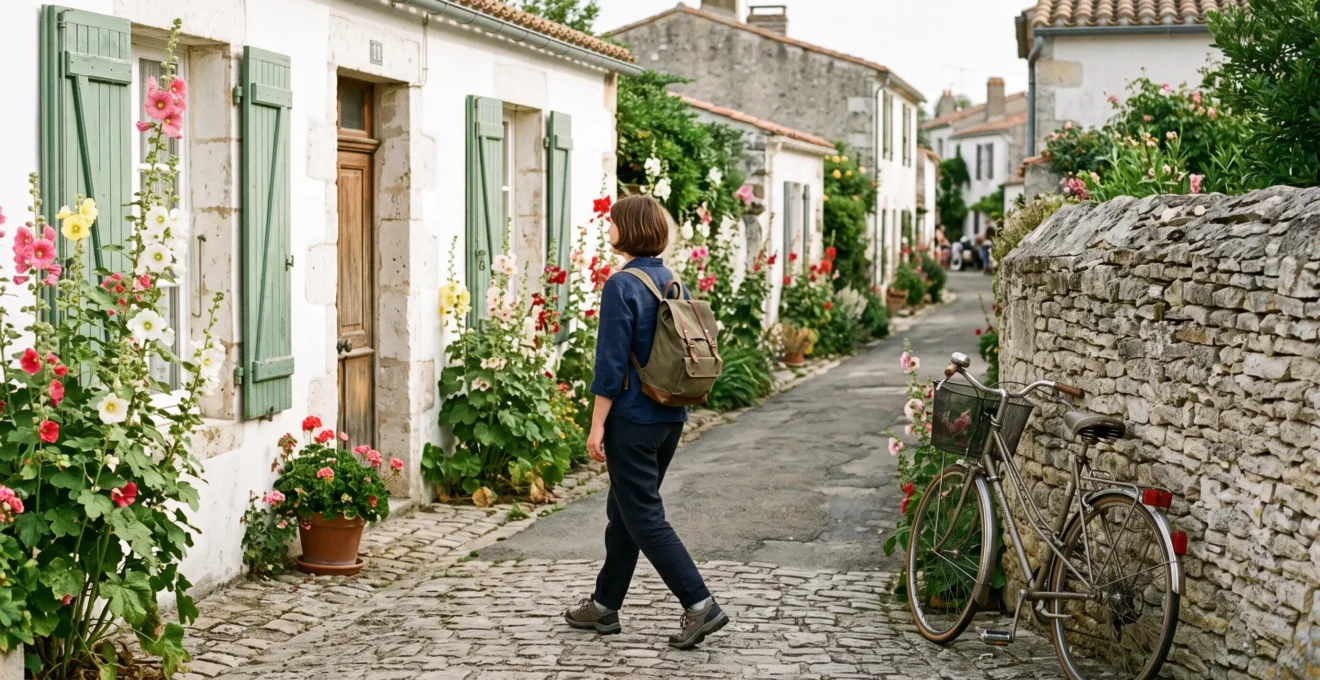
If you’re trying to picture the difference: a central harbour village can give you that “step outside, pick a terrace, wander home” rhythm, while a quieter western or northern base often means you build your days around cycles, beaches and nature stops—then come back to calmer evenings.
For verified local context on landscapes, the tourist office summarises it clearly: The south of the island features vineyards, forests and long beaches
(Destination Île de Ré). That’s why the south coast is often a logical starting point if your ideal holiday day is mostly beach time.
For a practical official overview of how the island is organised (communes and local information), you can cross-check on the intercommunal tourist office FAQ page: Frequently asked questions.
Which Area Suits Your Travel Profile?
The best area to stay on Île de Ré depends on what you want to do most days. Instead of hunting for one “best village”, use your profile to pick a base that saves time and friction: fewer transfers, easier beach access, or more walkable evenings.
If you’re travelling as a family, what should you prioritise?
Prioritise calm streets, easy beach access and simple logistics: somewhere you can reach a sandy beach without making every day a project, and where you can grab essentials (bakery, small groceries) without long detours.
As a starting point, many families look towards south-coast villages because the tourist office explicitly associates the south with long beaches (notably around La Couarde and Le Bois-Plage). The key is not the village name on the listing, but whether your accommodation is actually close to the beach access points and safe cycling routes.
Cas pratique
A hypothetical family with two young children hesitates between a harbour base and a quieter south-coast village. If they plan one beach session most days, the south-coast option can reduce daily travel time—while the harbour base can work better if they want restaurants within a short walk every evening. The deciding check is concrete: distance to the nearest beach access, and whether the route is easy by bike with kids.
If you’re travelling as a couple (or mostly for restaurants), what fits best?
Prioritise harbour atmosphere, dining choice and evening walkability. A base near a lively port tends to suit couples and adults who don’t want to “commute” to dinner after a day out cycling or at the beach.
If you’re weighing “Is it better to stay in Saint-Martin or on the west coast?”, frame it like this: choose the harbour-style option if you want a built-in evening plan most nights; choose the west/north style option if your evenings are quieter and you’re happy to cycle for a specific restaurant rather than browse on foot.
If you’re here to cycle and stay active, where should you base yourself?
Prioritise direct access to the cycle network and a central position for day loops. The island’s cycling infrastructure is a major advantage: Destination Île de Ré states there are 138 km of cycle paths, and the Communauté de communes also reports around 138 km of cycle routes managed across the island.
In practice, this means you can pick your base for atmosphere (lively vs quiet) and still cycle widely. The difference is what you want after the ride: a harbour promenade and choice of terraces, or a calmer village feel near marshes and beaches.
Season and Budget: When and Where to Book
On Île de Ré, seasonality is the main driver of price and availability. If you’re booking for July and August, your biggest risk isn’t choosing the “wrong village”—it’s waiting too long and ending up paying more for what’s left in the areas you actually wanted.
141€
Average annual price per night in paid accommodation in Charente-Maritime (Charentes Tourisme, 2024 edition; compares to 2022). This is a département-level indicator, not specific to Île de Ré.
That figure is useful as a reference point because it comes from an official tourism body, but it has limits: it covers Charente-Maritime overall, not one island or one village. What you can take from the same source is the direction of travel—Charentes Tourisme notes the average annual price is up versus 2022, and highlights strong variation between pre-season and high season.
How do prices and availability vary by season?
Expect the tightest availability and the highest prices in peak summer (especially school-holiday weeks), with better choice and calmer villages in shoulder season. The exact gap depends on the accommodation type and location, and reliable village-by-village price tables are not provided in the sources here—so treat any listing you see as highly specific to that property.
If you’re flexible on dates, shoulder season can be a way to get a similar location for less money and with less competition. If you’re not flexible, you’ll usually do better by deciding your target area first (harbour vibe vs beach-first) and then booking early within that area.
A simple budget comparison you can actually use
Instead of trying to guess “cheap villages” (which can backfire), use a two-step budget test when you compare listings:
- Fix your non-negotiables (walkable dinner? beach within X minutes? private parking?).
- Compare like-for-like (same dates, same capacity, same cancellation conditions) across two or three areas.
Avoid the common pricing trap: a slightly cheaper listing can cost you more time (and sometimes transport) if it’s far from the beach, shops, or the cycle routes you’ll use every day.
Do You Need a Car to Stay on Île de Ré?
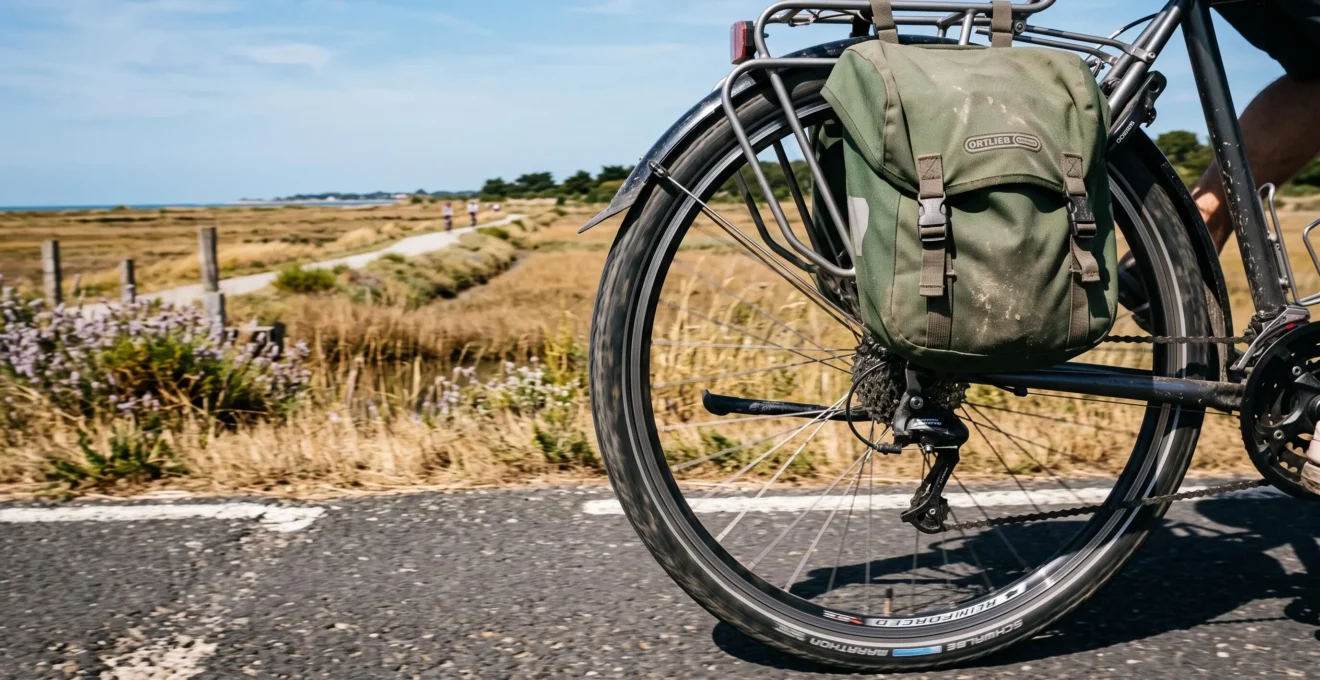
You can plan a car-free stay on Île de Ré, especially if you choose a base where daily essentials are close by and you’re comfortable cycling. The strongest factual reason is infrastructure: both the tourist office and the intercommunal authority describe an island-wide cycle network of around 138 km.
Which areas are easiest without a car?
Stay in or near a main village centre if you want the simplest car-free routine: shops, markets, bike rental options and dining are usually more concentrated, so you’re less dependent on long errands.
Quieter areas can still work without a car if your accommodation is positioned well for cycling and you plan supplies: check the distance to a bakery/grocery on the map, and look at the route (flat is common, but headwinds exist on islands and can change the effort level day to day).
What about buses and shuttles?
Bus and shuttle options can help, but services and frequencies are not documented in the provided sources—so don’t build your whole plan on assumptions. If you’re travelling car-free, treat cycling as your primary connector, and choose accommodation where you can reach at least one beach and basic shops by bike.
If you want broader car-free planning ideas beyond Île de Ré, this internal resource can help you think through the basics (luggage, supply runs, rural distances): car-free planning.
How to Finalise Your Choice of Area
Once you’ve identified what you want most from the island (beach days, harbour evenings, cycling loops, quiet nature), finalising your area becomes a short checklist rather than a gamble. The goal is to shortlist two or three areas, then compare actual listings with the same criteria.
- Write your top 3 priorities
For example: “walk to dinner”, “sandy beach access”, “car-free”. If a listing doesn’t support two of the three, drop it.
- Pick your ‘base style’
Harbour-focused for evenings and services, or beach/nature-first for quieter stays. This prevents paying extra for a vibe you won’t use.
- Shortlist 2–3 matching areas
Don’t overcommit to one village name. Keep options open until you see what’s actually available for your dates.
- Map the essentials around each listing
Check real distances to the beach access, shops and the cycle path. A “great location” description isn’t a measurement.
- Book the best fit for your dates
In peak season, the best fit is often the one that meets your needs with the least compromise—because alternatives disappear quickly.

If your main fear is overpaying for the wrong spot, make the decision in this order: dates (season pressure) → mobility (car-free or not) → daily rhythm (beach vs harbour evenings) → listing details (exact location, access, conditions). That sequence keeps you from falling for a pretty photo in a place that doesn’t match how you’ll actually spend your days.
What is the best area to stay on Île de Ré?
The best area is the one that fits your profile and logistics: harbour villages tend to suit travellers who want dining and evening atmosphere within walking distance, while quieter west/north areas better fit slow travel, cycling loops and nature-first days. Decide based on your dates (peak season pressure), your budget, and whether you want to rely mainly on cycling.
What are the main villages and areas on Île de Ré?
The island is made up of several communes and is often understood through simple splits: east (bridge side) versus west (far end), and north versus south. For landscape differences, the intercommunal tourist office notes the south has vineyards, forests and long beaches (including La Couarde and Le Bois-Plage), while the north is described as wilder with salt marshes and forest-backed beaches.
Which village is best for a family holiday with children on Île de Ré?
Rather than one “best” village, many families do well with a calm base that reduces daily travel to the beach and essentials. South-coast villages are often considered because the tourist office explicitly links that side with long beaches; the practical check is your exact distance to a beach access point and whether the route is easy by bike with children.
Where to stay on Île de Ré on a tighter budget or outside peak season?
For better value, target shoulder-season dates when possible and compare like-for-like listings across two or three areas instead of chasing “cheap villages”. Official data from Charentes Tourisme shows strong variation between pre-season and high season at département level (Charente-Maritime), which matches the typical pattern of tighter supply and higher prices in summer.
Can you stay on Île de Ré without a car?
Yes, a car-free stay is feasible for many trips if you choose the right base and plan around cycling. Both the intercommunal tourist office and the local authority describe an island-wide cycle network of around 138 km. For the easiest experience, stay in or near a main village centre so shops, markets and services are within walking or cycling distance.
Once you match your profile to an area—harbour evenings, long south-coast beaches, or quieter west/north cycling days—choosing where to stay on Île de Ré becomes straightforward. Shortlist two or three areas, map the essentials around each listing, and book the best fit for your dates rather than chasing a universal “top village”.