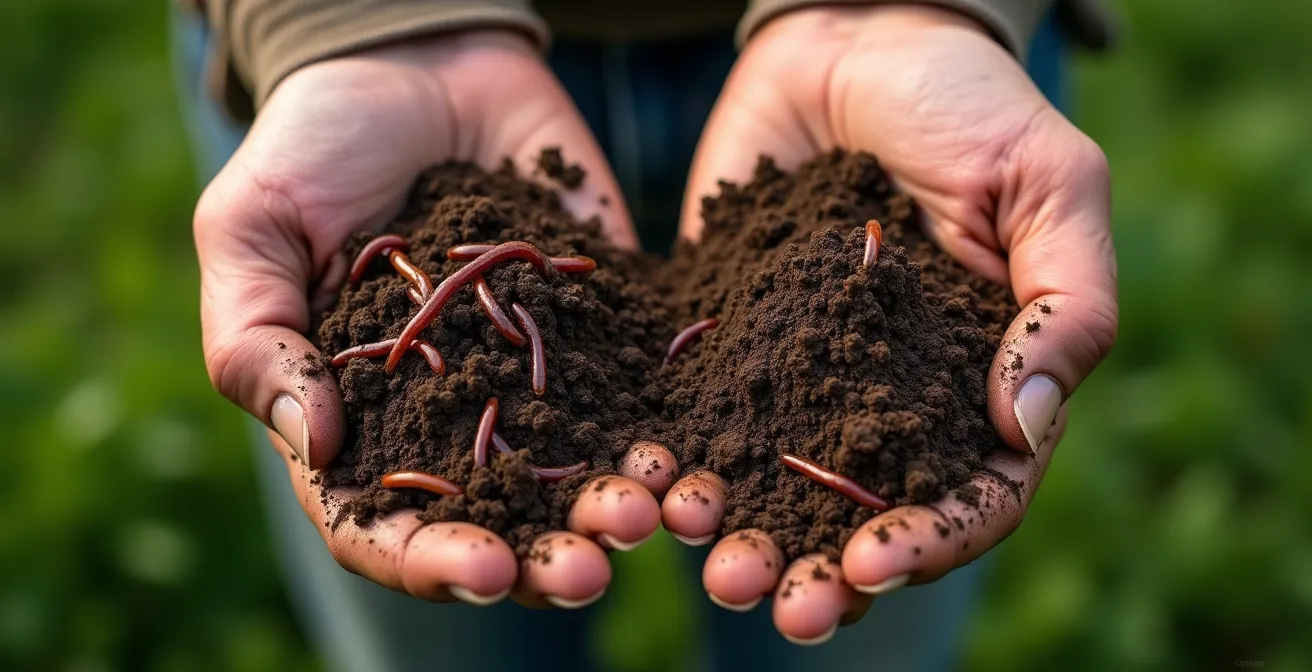
The healthiest food comes from the healthiest soil, a quality that no single label on a package can guarantee.
- Many “eco-friendly” certifications have loopholes that permit environmentally damaging practices, a form of greenwashing.
- The true measure of a farm’s health is its commitment to building living soil, which you can verify by asking targeted questions.
Recommendation: Shift your focus from decoding labels to investigating the farmer’s practices, starting a direct dialogue about soil health, pest management, and the real costs of their work.
You stand in the grocery store aisle, faced with a wall of choices. One package of chicken boasts a “USDA Organic” seal. Another, from a local farm, has no label but a story. A bag of carrots is “Certified Regenerative,” while a bottle of wine is “Biodynamic.” The eco-conscious consumer in you wants to make the right choice—for your health, and for the planet. But the proliferation of green labels has turned a simple act of buying food into a confusing calculus. We’ve been taught to trust the seal, to believe the certification is the ultimate proof of quality.
This reliance on labels creates a dangerous form of “label blindness.” We assume “organic” is inherently sustainable, yet the term can be applied to massive hydroponic factory farms that have never touched real soil. We see “regenerative” and imagine idyllic pastures, but the term is largely unregulated, allowing major corporations to use it while still relying on chemical inputs. The truth is, these labels often tell an incomplete, and sometimes misleading, story. They are a starting point, not a destination.
But what if the key wasn’t in decoding the symbol on the package, but in understanding the living system that produced the food? This guide proposes a radical shift: instead of just trusting labels, we must learn to read the farm itself. The real certification of health lies in the farmer’s dialogue with the soil. It’s in the biodiversity of their fields, the richness of their compost, and the honesty of their answers. This article will equip you to become a “farm detective,” moving beyond the marketing to find food that is not just free of toxins, but is actively healing the earth.
For those who prefer a visual format, the following video offers a powerful immersion into the principles of soil health that are at the heart of the regenerative movement, complementing the practical advice in this guide.
To navigate this complex landscape, this article breaks down the critical questions and tools you need. We’ll explore why labels can fail, how to vet a farmer’s practices directly, and how to use modern technology to find the most vibrant farms in your area. This is your roadmap to food you can truly trust.
Summary: A Guide to Food That Truly Nurtures the Earth
- Why Do Some “Organic” Farmers Refuse to Pay for the Label?
- Which 3 Questions Reveal If a Farmer Uses Pesticides?
- Supermarket Organic or Local Conventional: Which Tastes Better?
- Why Does Real Organic Chicken Cost Three Times More?
- How to Use Soil Maps to Find the Healthiest Farms in Your Region?
- Why Many “Eco-Friendly” Labels Fail to Protect the Environment?
- Why Is Biodynamic Wine Different from Standard Organic Wine?
- Which 3 Apps Are Essential for Finding Farm Sales on the Road?
Why Do Some “Organic” Farmers Refuse to Pay for the Label?
The “USDA Organic” seal feels like a trustworthy guarantee, but for many small-scale farmers, it represents a significant barrier. The decision to forgo certification is often not about cutting corners, but a pragmatic choice driven by high costs and bureaucratic hurdles. For a small farm, the price of the certification fee itself is just the beginning. The real challenge lies in the mandatory three-year transition period during which they must adhere to strict organic methods—using more expensive seeds and often requiring more labor—without being able to charge the premium prices that the label allows.
This economic squeeze means that many of the most dedicated soil-centric farmers you’ll find at a local market may not have the official seal. A study on this very issue confirms that these barriers have turned many small growers away from the process. Instead of chasing a label, they focus their energy on building a direct relationship with their customers, emphasizing their food as “local first and organically grown second.” They invest their limited resources back into the soil—through better compost, more diverse cover crops, and other regenerative practices—rather than into paperwork and fees. As a result, an uncertified local farm may actually be operating at a standard that far exceeds the baseline requirements of the national organic program.
Case Study: The Small Farmer’s Certification Dilemma
According to an analysis by UC Davis, the barriers to organic certification for small-scale growers are substantial. Farmers must adopt organic practices for three full years before they can even qualify for the label. During this time, they face the increased costs of organic seeds and labor-intensive methods but cannot legally market their products as organic to recoup those expenses. This financial pressure leads many small farmers to abandon the certification process altogether, choosing to build their reputation on the quality of their local products and direct-to-consumer transparency rather than a federal seal. They prioritize their identity as local, community-focused producers who happen to grow organically, trusting that informed customers will value their practices over a paid-for label.
This reality forces us to look beyond the label. When you meet a farmer who grows “organically” but isn’t certified, their reasoning is a crucial part of their story. It’s an opportunity to start a conversation not about a missing logo, but about their passion for the land and the economic honesty of their operation.
Which 3 Questions Reveal If a Farmer Uses Pesticides?
When a farmer doesn’t have an organic certificate, how can you verify their commitment to pesticide-free farming? The answer lies in moving beyond a simple “Do you spray?” and engaging in a deeper “soil dialogue.” Asking the right open-ended questions can reveal a farmer’s entire philosophy. Their answers will tell you whether they see their farm as a sterile factory to be controlled with chemicals or a vibrant living system to be nurtured.
Instead of a direct accusation, start by inquiring about their approach to farm health. The goal is to understand their process and mindset. A farmer truly dedicated to regenerative principles will be passionate and detailed in their response, proud to share the intricacies of their work. They see pests not as enemies to be eradicated, but as messengers signaling an imbalance in the ecosystem. Their solutions are proactive and systemic, focused on building a resilient environment where pests have few opportunities to thrive. This conversation is your best tool for uncovering the truth.
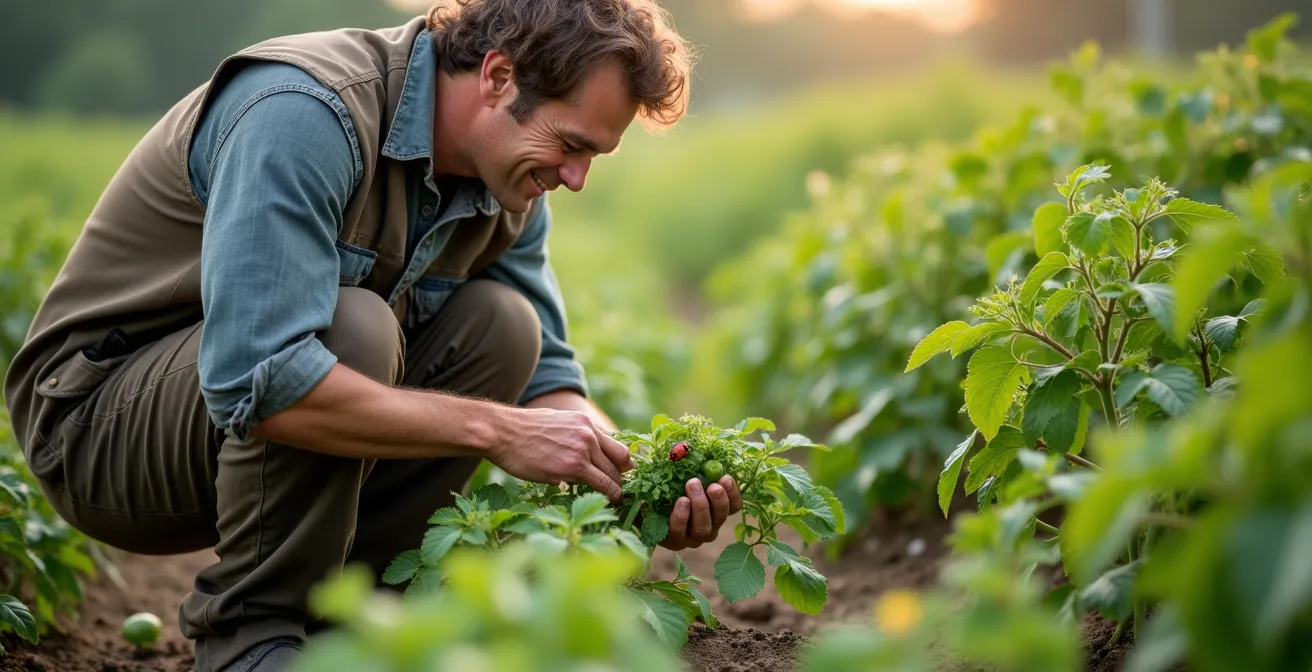
Here are three essential questions to guide your conversation:
- “What is your pest management strategy?” A farmer reliant on chemicals will give a short answer about what they spray. A regenerative farmer, however, will describe an integrated system. They’ll talk about attracting beneficial insects like ladybugs and lacewings, using crop diversity to confuse pests, and building healthy soil that grows stronger, more pest-resistant plants.
- “How do you build and maintain soil fertility?” This question cuts to the heart of regenerative agriculture. Listen for words like cover crops, compost, animal manure, and rotational grazing. These are the tools used to cycle nutrients naturally, increase water retention, and suppress weeds and pests without resorting to synthetic fertilizers and herbicides. Their focus is on feeding the soil, not just the plant.
- “What was your biggest pest or disease challenge last year, and how did you solve it?” This specific, experience-based question is incredibly revealing. It shows whether the farmer’s approach is reactive (e.g., “We had aphids, so we sprayed”) or preventive and systemic (e.g., “We had squash bugs, so this year we are improving air circulation and planting companion crops to deter them”).
Your 5-Point Farm Health Audit Checklist
- Points of contact: List all the ways the farm communicates its practices (website, market stand, social media). Is the message consistent?
- Collecte: Inventory their specific claims. Do they mention “cover crops,” “no-till,” “rotational grazing,” or just vague terms like “sustainable”?
- Coherence: Confront their claims with your observations. If they claim “no-spray,” are the fields full of life or strangely sterile?
- Mémorabilité/émotion: Assess the farmer’s dialogue. Are they passionate and transparent about their challenges and successes, or evasive?
- Plan d’intégration: Based on your audit, decide your level of trust. Prioritize buying from farmers who demonstrate a deep, holistic commitment to soil health.
This dialogue transforms you from a passive consumer into an engaged partner in the food system. The farmer’s answers become a far more reliable certification than any label.
Supermarket Organic or Local Conventional: Which Tastes Better?
The choice often feels like a paradox: a certified organic apple that has traveled 1,500 miles, or a conventionally grown apple from a local farm just 20 miles away. From a flavor and freshness perspective, the answer is almost always local. Food that is picked at peak ripeness and eaten within days simply tastes better. The sugars are more developed, the textures are crisper, and the nutrients are more intact. A supermarket organic tomato, bred for durability and picked while still green to survive a long journey, cannot compete with a local tomato ripened on the vine and picked yesterday.
However, the environmental and health calculus is more complex. The “organic” label guarantees no synthetic pesticides were used, a clear benefit for both the environment and your body. The “local conventional” farmer may use Integrated Pest Management (IPM), a strategy that aims to minimize chemical use but doesn’t eliminate it. As the Sustainability Directory’s editorial team notes, the choice presents a “complex environmental calculus” where the best option depends on many factors, including farming methods and transport efficiency.
The following table breaks down the key trade-offs, showing that neither label holds all the answers. The true “winner” depends on what you prioritize: guaranteed pesticide-free production or ultimate freshness and a lower carbon footprint from transportation.
| Factor | Certified Organic | Local Conventional |
|---|---|---|
| Pesticide Use | No synthetic pesticides allowed | May use IPM with minimal chemicals |
| Transportation | Can travel 1,500+ miles | Lower carbon footprint due to reduced transportation distances |
| Freshness | May be weeks old when purchased | Often picked within 24-48 hours |
| Soil Health | Benefits soil health and biodiversity | Varies by farm practices |
Ultimately, the ideal scenario is finding a local, regenerative organic farm, which offers the best of all worlds: peak freshness, a minimal carbon footprint, and a proven commitment to soil health. When that’s not possible, engaging the local farmer in a “soil dialogue” can help you assess their practices. A conventional farmer who is passionate about soil health and uses minimal interventions may be a far better choice than a distant, industrial organic operation.
Why Does Real Organic Chicken Cost Three Times More?
Sticker shock is a real phenomenon when comparing a standard supermarket chicken to one from a true pasture-raised organic farm. The difference isn’t just a few dollars; it can be a threefold increase or more. This price gap isn’t about gouging customers; it’s a reflection of the “economic honesty” behind what it truly costs to raise an animal in a way that respects its nature and heals the land. The industrial model has externalized costs—animal welfare, environmental pollution, and nutrient-poor food—to offer a deceptively cheap product.
A true pasture-raised operation internalizes these costs. For starters, the feed is a major expense. Certified organic, non-GMO feed can cost double or triple what conventional feed costs. But the expenses go far beyond the grain. As one case study shows, for a small farm raising 200 birds, the total cost can be $40 to $45 per bird to raise, process, and sell. This includes the labor of moving the chickens to fresh pasture daily, the infrastructure of mobile coops and electric netting, and the use of livestock guardian dogs for protection against predators—a natural alternative to confining birds in a barn.

These practices result in a healthier bird and more nutrient-dense meat, but they are labor- and resource-intensive. When you see a price tag of around $7.50 per pound for pasture-raised chicken, you’re not just paying for the meat. You are paying for:
- Soil Regeneration: The chickens’ manure fertilizes the pasture, building topsoil and sequestering carbon.
- Animal Welfare: The birds live outdoors, foraging for insects and plants, expressing their natural behaviors.
- Higher Nutrition: Meat from pastured animals is consistently shown to have a better fatty acid profile and higher levels of vitamins.
- A Living Wage for the Farmer: The price reflects the skilled labor required to manage a complex, ecosystem-focused operation.
That higher price is a transparent reflection of a food system that values quality, ethics, and ecological health. It’s the real cost of food that doesn’t ask the planet, the animal, or the farmer to pay the hidden price.
How to Use Soil Maps to Find the Healthiest Farms in Your Region?
Becoming a “farm detective” goes beyond conversations; it involves using powerful, free tools to do your own reconnaissance. Before you even visit a farm or market, you can learn a tremendous amount about its potential health by analyzing the very ground it sits on. Digital tools like soil maps and satellite imagery allow you to identify farms that are likely practicing regenerative agriculture.
The foundational tool for this is the USDA’s Web Soil Survey. This incredible resource provides detailed data on soil types across the country. You can use it to identify areas in your region with naturally fertile soil, giving you a starting point for where the best farms might be located. But the investigation doesn’t stop there. By cross-referencing these locations with satellite imagery from platforms like Google Earth, you can look for visual cues of a healthy “living system.”
During dry seasons, a farm that remains green while its neighbors are brown is a powerful indicator of healthy soil with high organic matter and excellent water retention. From an aerial view, you can spot the tell-tale patterns of rotational grazing—distinctive lines or patches in a pasture—or the diverse quilt of a multi-crop layout, both hallmarks of regenerative practices. This initial digital scouting helps you create a shortlist of farms worth a closer look. While this data is promising, it’s important to remember that only about 1.5% of farms in the United States are regenerative, so finding them requires dedicated investigation.
Once you have a list of promising farms, the next step is to find where they sell. The USDA’s National Farmers Market Directory is an invaluable resource for this, allowing you to locate markets and see which farms sell there directly. The final step is the on-the-ground visit, where you can confirm your digital findings by looking for signs like minimal tillage, active compost piles, and clear-running streams—all indicators of a farm that is truly healing the soil.
Why Many “Eco-Friendly” Labels Fail to Protect the Environment?
In a world desperate for sustainable solutions, “eco-friendly” labels have become powerful marketing tools. Unfortunately, many of them offer more of a mirage than a meaningful guarantee. The term “regenerative agriculture,” while rooted in powerful soil-healing principles, has become a prime target for greenwashing. Because it lacks a federally regulated definition like “organic,” corporations are free to adopt the language without adhering to the practices, creating “label blindness” for even the most well-intentioned consumers.
As the Equal Exchange Resource Center warns, “The challenge is that companies adopt language claiming regenerative without offering metrics to back up their statements.” This lack of transparency is a major red flag. A glaring example is the USDA’s own Regenerative Pilot Program, which, despite its name, allows the use of numerous petrochemical pesticides and herbicides that are strictly forbidden under the National Organic Program. This move was widely criticized as a greenwashing initiative that diverts resources from the proven, strictly-regulated organic transition process.
Case Study: USDA’s “Regenerative” Program as Greenwashing
Critics have pointed to the USDA’s $700 million Regenerative Pilot Program as a textbook case of greenwashing. The program was established under a banner of making America healthy, yet it permits the use of chemical pesticides prohibited by the USDA’s own National Organic Program. According to an analysis from Beyond Pesticides, this initiative effectively diverts critical resources that could be used to support farmers transitioning to certified organic methods. Instead, it lends the “regenerative” name to practices embraced by major food companies that continue to rely on weed killers and other synthetic inputs, undermining the integrity of the true regenerative movement and confusing consumers.
This illustrates the fundamental flaw of unregulated or poorly defined labels: they create a loophole for industrial agriculture to appear eco-friendly while changing very little about its extractive model. The “organic” label, for all its own flaws (such as allowing huge, soilless factory farms), at least has a clear, legally enforceable set of standards and a ban on a long list of synthetic chemicals. The vagueness of terms like “natural,” “sustainable,” and even “regenerative” in the corporate sphere means they often fail to protect the environment in any meaningful way.
Why Is Biodynamic Wine Different from Standard Organic Wine?
Within the world of eco-conscious beverages, the terms “organic” and “biodynamic” are often used interchangeably, but they represent two distinct philosophies. While both are vast improvements over conventional wine, biodynamics takes the principles of organic farming and elevates them into a holistic, spiritual, and self-sustaining system. Think of organic as a set of rules about what you *can’t* do (no synthetic pesticides, no GMOs), while biodynamic is a proactive philosophy about what you *must* do to create a vibrant, living farm.
An organic wine certification, regulated by the USDA, primarily focuses on the list of prohibited and allowed inputs. A wine can be labeled “100% Organic” if every ingredient is certified, or simply “Organic” if at least 95% of its ingredients are, with the remainder coming from a national list of approved substances. The focus is on avoiding contamination.
Biodynamic certification, managed globally by Demeter, includes all organic standards and then goes much further. It views the farm not as a simple field for growing grapes, but as a single, self-sustaining organism. This philosophy manifests in several unique practices:
- A Closed-Loop System: The farm is designed to produce its own fertility through compost, animal manure, and cover crops, minimizing the need for any outside inputs.
- Cosmic Rhythms: Planting, pruning, and harvesting are timed according to lunar and astrological calendars to work in harmony with natural cycles.
- Special Preparations: Unique herbal and mineral preparations are used to enhance the vitality of the soil and plants, such as “preparation 500,” which involves burying cow horns packed with manure to create a potent soil inoculant.
The table below highlights the fundamental differences in their approach, showing how biodynamics builds upon the organic foundation with a deeper focus on the farm as a living ecosystem.
| Aspect | Organic Wine | Biodynamic Wine |
|---|---|---|
| Certification | USDA regulated with inspections and oversight by accredited certifiers | Demeter certification plus organic standards |
| Philosophy | Focus on prohibited/allowed inputs | Farm as self-sustaining ecosystem |
| Practices | No synthetic pesticides or GMOs | Lunar calendars, horn preparations, closed-loop system |
| Soil Focus | No GMOs or harmful synthetic pesticides | Enhanced microbial life for terroir expression |
In essence, an organic wine is a product made without certain chemicals. A biodynamic wine is the expression of a healthy, living, and spiritually connected piece of land. This deep focus on microbial life and soil vitality is why many oenophiles believe biodynamic wines offer a more authentic and vibrant expression of their “terroir.”
Key Takeaways
- Labels like “Organic” and “Regenerative” can be misleading; true sustainability lies in the farmer’s practices, not the packaging.
- The real cost of ethically raised food is higher because it includes animal welfare, soil regeneration, and fair pay for farmers—costs externalized by industrial agriculture.
- Empower yourself as a “farm detective” by asking targeted questions about soil health and using digital tools to vet farms before you buy.
Which 3 Apps Are Essential for Finding Farm Sales on the Road?
Once you’ve committed to looking beyond the supermarket, the next challenge is finding these hidden-gem farms. Whether you’re at home or traveling, a new generation of mobile apps is making it easier than ever to connect directly with local producers. These tools act as digital farmers’ markets, putting a directory of fresh, local food right in your pocket. They are essential for any “farm detective” on a mission to shorten their food miles and build relationships with growers.
These platforms go beyond simple listings. Many offer interactive maps, user reviews, and details about what’s in season, transforming the search for local food from a chore into an adventure. They are especially valuable for travelers, like full-time RVers, who can find fresh farm eggs and produce wherever their journey takes them, without needing a “home base.” The growing popularity of these apps is reflected in their expansive networks; some platforms now list over 19,000 verified local farms, ranches, and market vendors.
Here are three of the most essential apps for finding farm-fresh food on the go:
- Farmish: This app excels at connecting neighbors to buy and sell homegrown food. It’s fantastic for finding everything from fruits and vegetables to meat, eggs, honey, and even plants. Its strength is its hyper-local, community-driven feel, making it easy to find small-scale producers who may not have a formal farm stand.
- Farmstand: With a beautiful, intuitive interface, Farmstand focuses on farmers’ markets. It displays over 8,700 markets across the country on interactive maps, with detailed information and community-sourced photos and tips, making it a breeze to find the best markets near you.
- LocalHarvest: This is one of the most comprehensive directories available. LocalHarvest maintains a massive database of farms, farmers’ markets, Community Supported Agriculture (CSA) programs, and even restaurants and grocery stores that prioritize local sourcing. Its robust listings make it a powerful one-stop-shop for planning your local food shopping.
By leveraging these apps, you are not just buying food; you are actively participating in a more resilient and transparent food system. You are casting a vote for a world where the connection between the eater and the grower is restored, and where the health of the soil is the ultimate measure of quality.
Frequently Asked Questions about Pesticide-Free Farming
What is your pest management strategy?
Farmers using regenerative methods will describe integrated approaches involving beneficial insects, crop diversity, and healthy soil rather than chemical sprays.
How do you build soil fertility?
Regenerative farmers use animal manure, cover crops, and rotational grazing to cycle nutrients, increase water retention, and curb weed and pest problems without chemicals
What was your biggest pest challenge last year and how did you solve it?
This open question reveals whether farmers take preventive, systemic approaches (improving soil health) or reactive approaches (applying pesticides).
What does ‘100% Organic’ mean on wine labels?
Every single ingredient (and even the processing aids) is certified organic
Can wines be labeled ‘organic’ with non-organic ingredients?
At least 95% of ingredients must be certified organic. The other 5% must come from USDA’s National List of Allowed Substances
How can consumers verify authentic organic claims?
Look for the USDA green-and-brown seal on products that are 95-100% organic. You might also see a certifier seal like CCOF Certified Organic – it’s an ‘inspected and approved’ handshake between you and the farm