Sustainable gastronomy
Traveling opens our palates to remarkable culinary experiences, yet every meal we choose carries an environmental and social footprint. Sustainable gastronomy transforms how we eat on the road—from selecting wine produced in harmony with nature to seeking out ancestral food traditions that have nourished communities for generations. This approach recognizes that the most memorable meals often align with ecological wisdom: produce harvested at peak ripeness, proteins sourced from regenerative farms, and dining formats that minimize waste.
The principles behind sustainable eating while traveling extend far beyond simply choosing organic labels. They encompass understanding regional food systems, respecting seasonal rhythms, building direct relationships with producers, and recognizing the complex ethics of global ingredient flows. Whether you’re navigating farmers’ markets in unfamiliar cities, decoding food certifications, or planning meals that honor both flavor and planetary health, these foundational concepts will reshape how you experience cuisine wherever you wander.
How Wine Culture Embraces Sustainability
Wine production sits at a fascinating intersection of agriculture, craftsmanship, and terroir—the unique environmental conditions that shape flavor. As travelers increasingly seek authentic regional wines, understanding sustainable viticulture enhances both appreciation and impact.
Natural, Organic, and Biodynamic Distinctions
The terminology surrounding sustainable wine can feel overwhelming, yet the differences matter significantly. Organic viticulture eliminates synthetic pesticides and fertilizers, relying instead on compost, cover crops, and biological pest control. Biodynamic farming takes this further, treating the vineyard as a self-sustaining ecosystem with planting calendars aligned to lunar cycles and preparations made from fermented herbs and minerals.
Natural wines represent a winemaking philosophy rather than a certification—minimal intervention in the cellar, often without added sulfites or filtration. These wines showcase pure terroir expression but require proper storage and serving temperatures to reveal their character. Think of temperature as the volume knob on a stereo: serve a delicate Gamay too warm, and the alcohol overwhelms; too cold, and the fruit notes vanish entirely.
Regional Varieties and Environmental Adaptation
Certain grape varieties thrive in specific climates with minimal resources. Pinot Noir demands cooler regions with well-drained soils and struggles in hot climates requiring excessive irrigation, while Gamay flourishes in granite-rich terroirs with lower water needs. Choosing wines from grapes suited to their environment supports viticulture that works with nature rather than against it.
Building a sustainable wine cellar while traveling might seem impractical, yet the concept translates beautifully: purchase bottles directly from small producers, understand optimal storage conditions to prevent spoilage, and appreciate regional diversity rather than chasing international trophy labels shipped across continents.
Why Food Heritage Matters for the Planet
Traditional foodways evolved over centuries to maximize local resources and minimize waste. Preserving these practices offers both cultural richness and environmental blueprints for sustainable eating.
Protected Designations and Regional Identity
Labels like PDO (Protected Designation of Origin) and PGI (Protected Geographical Indication) do more than guarantee authenticity—they preserve agricultural biodiversity and traditional production methods. A true Parmigiano-Reggiano requires specific cow breeds, designated pastures, and aging protocols that connect flavor to place. These systems maintain landscapes, support rural economies, and offer transparency increasingly rare in globalized food chains.
Peasant dishes—cassoulet, ribollita, pot-au-feu—emerged from necessity, transforming humble ingredients and tough cuts into nourishment through slow cooking. Their recipes inherently minimize waste, using bones for stock, day-old bread for texture, and seasonal vegetables at their most abundant (and affordable). Understanding these histories deepens appreciation when you encounter them in traditional restaurants.
Traditional Dining Formats and Their Values
The distinctions between restaurants, brasseries, and bistros reflect different approaches to service, sourcing, and sustainability. Bistros traditionally offered simple, market-driven menus that changed daily based on what farmers delivered—an early farm-to-table model. Requesting modifications in these settings doesn’t just breach etiquette; it disrupts carefully planned systems designed to use every ingredient purchased.
Seasonal availability of regional specialties follows natural rhythms: asparagus in spring, tomatoes in summer, game in autumn. Seeking these dishes out of season either means greenhouses consuming enormous energy or air-freighted imports—both antithetical to sustainable gastronomy.
Understanding Global Food Ethics While Traveling
Our increasingly connected food system allows year-round access to global ingredients, yet this convenience carries hidden costs worth examining as conscious travelers.
The True Cost of Air-Freighted Ingredients
Air freight generates approximately 50 times more greenhouse gas emissions per kilogram than sea transport. Delicate berries, fresh herbs, and certain seafood often travel by plane to reach distant markets within hours. While a mango in Norway or asparagus in December might seem cosmopolitan, the environmental toll is substantial. Comparing nutritional density of local versus imported foods reveals another dimension: produce harvested for long-distance shipping is often picked underripe, compromising both flavor and nutrient content.
The explosive global demand for quinoa and avocados demonstrates how food trends create complex ripple effects. In regions where these became staples over millennia, sudden export market growth has inflated prices beyond local affordability, converted diverse agricultural land to monocultures, and strained water resources. Ethical engagement with global cuisines means understanding these dynamics and making informed choices.
Fusion Cuisine and Cultural Respect
Fusion cuisine walks a delicate line between creative innovation and cultural appropriation. The most sustainable approach honors culinary traditions while adapting to local ingredients—much as immigrant communities have always done. When seeking authentic ethnic restaurants abroad, look for establishments that source appropriately: a Thai restaurant in Stockholm might sustainably use local root vegetables while importing essential aromatics like galangal in smaller quantities.
Direct Sourcing Systems for Conscious Travelers
Bypassing conventional retail channels connects you with producers, often improving both quality and sustainability while supporting local economies.
Markets vs. Supermarkets: More Than Price
The cost structure of supermarkets includes extensive middlemen, packaging, refrigeration, and waste margins. Farmers’ markets eliminate several layers, often resulting in fresher produce at competitive prices while allowing direct conversation about growing practices. This transparency proves invaluable for understanding what “local” truly means—a term supermarkets increasingly exploit with misleading “local” sections featuring products transported hundreds of miles.
Mobile apps increasingly map farm shops, allowing travelers to locate direct-purchase opportunities even in unfamiliar regions. Some areas offer Community Supported Agriculture (CSA) programs—known as AMAP in French-speaking regions—where even tourists can sometimes purchase short-term shares, receiving weekly boxes of seasonal produce while supporting diversified farms.
Planning Meals Around Available Ingredients
Sustainable gastronomy inverts conventional meal planning: instead of deciding on recipes then shopping for ingredients, you discover what’s fresh and abundant, then create meals accordingly. This approach naturally aligns with seasons, reduces food miles, and often costs less since you’re purchasing ingredients at peak supply.
Minimizing Food Waste Through Smart Planning
Food waste represents squandered resources—the water, energy, and labor invested in production. Travelers can significantly reduce their impact through mindful practices.
Portion Calculation and Menu Design
Designing meal plans that minimize waste begins with precise portion estimation. Research suggests we routinely overestimate needed quantities by 20-30%, leading to spoilage. For group meals, offering fewer dishes in adequate quantities proves more sustainable than excessive variety, which inevitably creates waste as guests take small portions of numerous options.
The buffet versus plated service debate centers partly on waste. Buffets allow personal choice but typically generate 30-40% more waste than plated meals. When selecting accommodations or dining experiences, this factor matters.
Transforming Scraps into Resources
Creative uses for vegetable scraps reveal sustainable gastronomy’s ingenuity. Techniques include:
- Simmering vegetable peelings, herb stems, and aromatics into flavorful stocks
- Dehydrating citrus peels for zest or tea infusions
- Fermenting vegetable trimmings into pickles or kimchi
- Composting unavoidable organic waste when facilities exist
Even in temporary accommodations, simple practices like saving bread for panzanella salad or using wilting greens in soups demonstrate the mindset shift sustainable gastronomy encourages.
Eating With the Seasons, Not Against Them
Aligning consumption with natural growing cycles represents perhaps the most fundamental principle of sustainable gastronomy, yet modern food systems obscure these rhythms.
Energy Costs of Year-Round Availability
The misconception of perpetual availability comes at steep environmental cost. Heated greenhouses in northern climates can consume 10-20 times more energy per kilogram of produce than seasonal field cultivation. Tomatoes grown under lights during winter carry an enormous carbon footprint compared to preserving summer’s harvest.
Taste differences by season are equally significant. A strawberry ripened under June sunshine bears little resemblance to the hard, flavorless specimens available year-round, shipped from distant industrial operations. Seasonal eating inherently delivers superior flavor because you’re consuming ingredients at their biological peak.
Preservation Techniques for Peak Harvest
Canning and preserving at peak season allows you to capture abundance for leaner months. Traditional techniques include:
- Water bath canning for high-acid foods like tomatoes and fruits
- Pressure canning for low-acid vegetables and stocks
- Fermentation for vegetables, transforming preservation into probiotic enhancement
- Freezing blanched vegetables or fruit purées
While travelers may not preserve foods themselves, choosing restaurants that practice seasonal preservation—house-canned tomatoes in winter, frozen local berries—supports these sustainable practices. Adjusting your diet to embrace winter vegetables like roots, squashes, and hearty greens aligns your palate with natural abundance.
Selecting Quality Produce for Nutrition and Taste
The ability to assess ingredient quality directly impacts both meal satisfaction and nutritional value, especially when shopping in unfamiliar markets.
Visual Indicators of Freshness
Visual cues for quality transcend language barriers when traveling. Look for vibrant color intensity, firm texture without soft spots, and aromatic presence—fresh herbs and ripe fruit should smell distinctly fragrant. Leafy greens should show no yellowing or wilting, while root vegetables should feel heavy for their size, indicating moisture retention.
Price fluctuations by season signal natural abundance: when zucchini floods summer markets at low prices, that’s your cue it’s peak season and optimal quality. Conversely, expensive out-of-season produce often reflects the true cost of forcing nature’s calendar.
Storage and Cooking for Maximum Retention
Common storage mistakes spoil food prematurely and destroy nutrients. Tomatoes and stone fruits lose flavor in refrigeration, while leafy greens require cool humidity. Understanding these needs prevents waste from spoilage.
Nutrient retention during cooking varies by method. Water-soluble vitamins like C and B-complex leach into cooking water, making steaming and roasting superior to boiling for nutrient preservation. Quick, high-heat cooking often retains more vitamins than prolonged simmering, though slow cooking serves other purposes in breaking down tough fibers and developing complex flavors.
Building Trust in Your Food Sources
Labels provide limited information, making direct relationships with producers increasingly valuable for those seeking genuinely sustainable food.
Beyond Labels: Questions for Farmers
Navigating food certifications reveals that certification costs create barriers for small farms practicing sustainable methods who cannot afford expensive audits. Many excellent producers farm organically or regeneratively without official certification. Questions to ask when meeting farmers include:
- What soil-building practices do you use?
- How do you manage pests without synthetic chemicals?
- Do your animals have pasture access?
- What do you feed livestock?
- How do you handle crop diversity and rotation?
Taste comparisons between industrial organic (large-scale certified operations) and small diversified farms often reveal quality differences that certifications don’t capture. Industrial organic might check regulatory boxes while still practicing monoculture and relying on permitted but environmentally questionable inputs.
Understanding Price Premiums
Price premium justification becomes clear when examining true production costs. Regenerative farms rebuild soil, support biodiversity, and often pay workers fairly—costs conventional agriculture externalizes onto the environment and society. Finding regenerative farms nearby increasingly relies on online directories, word-of-mouth recommendations, and willingness to venture beyond conventional retail.
For travelers, supporting these systems might mean visiting a farmers’ market before cooking in accommodation kitchens, choosing restaurants transparent about sourcing, or purchasing directly from producers to enjoy during your journey. Each choice reinforces food systems that nourish both people and planet.
Sustainable gastronomy transforms travel from passive consumption into active participation in food systems that honor tradition, respect ecological limits, and deliver genuine flavor. The practices explored here—from seasonal eating to direct sourcing, from waste reduction to building producer relationships—form an interconnected web. As you deepen your understanding of any one element, you’ll naturally discover connections to others, creating a comprehensive approach to eating well while traveling responsibly.
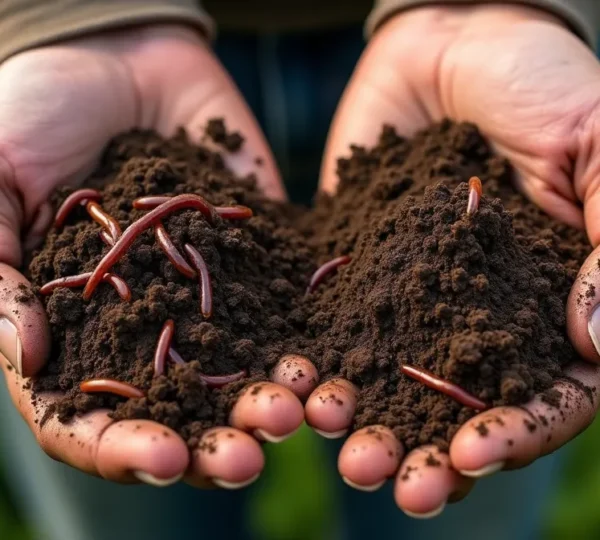
Organic or Regenerative: Which Label Actually Heals the Soil?
The healthiest food comes from the healthiest soil, a quality that no single label on a package can guarantee. Many “eco-friendly” certifications have loopholes that permit environmentally damaging practices, a form of greenwashing. The true measure of a farm’s health…
Read more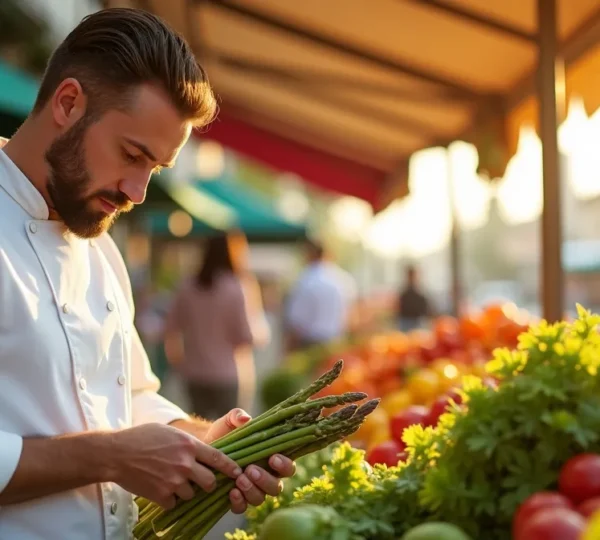
How to Identify Peak Ripeness in Market Vegetables Like a Chef?
In summary: Selecting ripe vegetables is a science of reading sensory signals, not just a matter of looking at color. Key indicators of freshness include structural integrity (firmness), moisture at the cut ends, and intense, natural aroma. Proper storage and…
Read more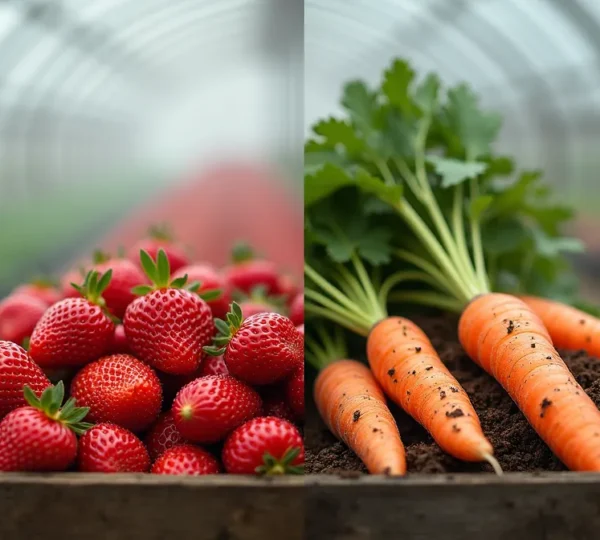
Why Eating Strawberries in Winter Destroys Your Carbon Budget
Buying out-of-season produce isn’t a harmless treat; it’s a direct subscription to a high-energy, high-carbon system designed to deceive your senses. A single hothouse tomato can demand ten times more energy than its sun-grown equivalent, a hidden cost not reflected…
Read more
How to Design a Zero-Waste Menu for a Large Family Reunion?
In summary: Shift from avoiding waste to maximizing ingredient value through systemic menu design. Calculate quantities with precision and plan for byproduct “valorization” to turn scraps into gourmet features. Choose a service style and menu structure that inherently minimizes over-serving…
Read more
How to Eat 100% Local on Vacation Without Blowing Your Budget?
In summary: Contrary to popular belief, buying food directly from farmers is often cheaper than buying “organic” or even conventional produce at the supermarket. Use specific digital tools and clever tactics like inquiring about one-off CSA shares to find unpublished…
Read more
Why Do Imported Superfoods Have a Higher Carbon Footprint Than Local Staples?
The “health halo” around exotic superfoods masks a staggering environmental cost that goes far beyond simple food miles. Air-freighted produce, common for perishable superfoods, emits up to 50 times more CO2 than sea transport. The “virtual water” needed to grow…
Read more
How to Distinguish Authentic Regional Dishes from Tourist Traps
To find authentic food, you must look beyond superficial red flags and instead learn to read a region’s entire ‘food ecosystem’. Authenticity is not a single dish but a system connecting seasonal produce, local markets, and specific restaurant types (like…
Read more
Beyond the Label: How to Truly Identify Organic and Biodynamic Wines on Any Menu
Spotting a sustainable wine isn’t about finding a logo; it’s about recognizing the tangible results of holistic farming in your glass. Biodynamics creates measurably healthier soil and more resilient vines, moving beyond simply prohibiting chemicals. Low-intervention “flaws” like cloudiness or…
Read more