True responsible travel goes beyond “Leave No Trace” to tackle the systemic paradoxes of modern tourism.
- Well-intentioned actions, from donating to geotagging, can strain local infrastructure and accelerate environmental decay faster than management can react.
- Effective conservation often means engaging with complex, imperfect systems like permit lotteries and targeted funding rather than simple avoidance.
Recommendation: Shift from a tourist’s consumption mindset to a guest’s mindset of reciprocity, critical support, and understanding the deeper impacts of your presence.
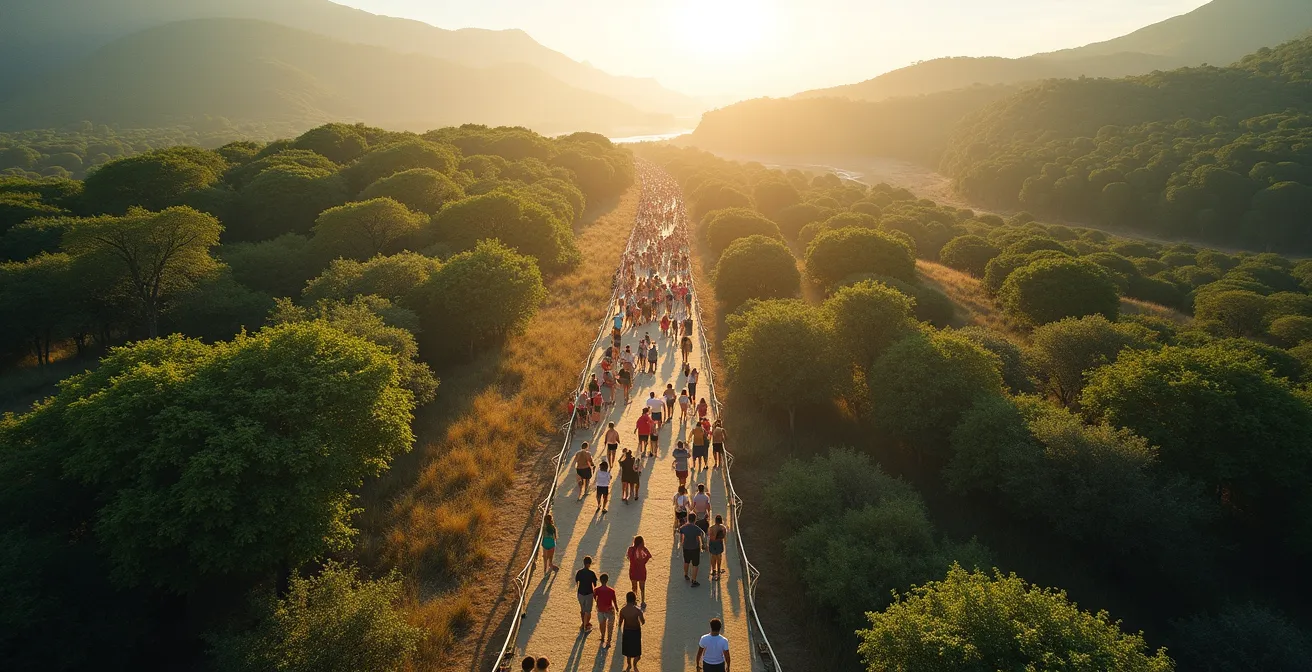
You see the photo, you book the flight, you make the hike. You arrive at the viewpoint, ready for that moment of solitary communion with nature, only to find a queue for a photo-op and a landscape straining under the weight of its own popularity. This is the central conflict of the modern, conscientious traveler: how do we appreciate the world’s natural wonders without participating in their destruction? It’s the phenomenon of “loving a place to death,” and it has become the defining challenge for our planet’s most beautiful eco-spots.
The common advice, while well-meaning, often feels like a superficial fix. We’re told to follow Leave No Trace principles, avoid geotagging our photos, and travel in the off-season. These are all valid actions, but they address the symptoms, not the underlying disease. They fail to capture the complex, interconnected systems that turn a hidden gem into an overwhelmed hotspot, sometimes in a matter of months. The problem is not just about individual behavior; it’s about the very structure of modern travel.
But what if the key wasn’t just a longer checklist of “don’ts,” but a deeper understanding of the paradoxes at play? What if the fairest way to manage a crowd is an impersonal lottery? What if your financial donation is more impactful than your offer to volunteer? The path to becoming a truly responsible traveler lies not in finding simple answers, but in learning to ask better, more critical questions about our role within these fragile ecosystems.
This guide delves into these difficult questions. We will explore the complex mechanics of modern conservation, from the controversial fairness of permit lotteries and the unseen damage of a single Instagram post, to the most effective ways to support the places we love. The goal is to move beyond guilt and into a more informed, impactful, and ultimately more rewarding way of experiencing the natural world.
Summary: Unpacking the Paradox of Responsible Travel in Over-loved Places
- Why Are Permit Lotteries the Fairest Way to Limit Crowds?
- The Instagram Mistake That Destroys Secret Spots in Weeks
- Digging Trails or Donating Money: Which Helps the Park More?
- How to Donate to a Destination’s Conservation Fund Effectively?
- When do Parks Close for “Ecological Rest”?
- When to Reserve Your Entry to Restricted Natural Sites to Guarantee Access?
- Why Do Water Systems Fail in Tourist Towns During August?
- How to Move from “Tourist” to “Guest” in Indigenous Territories?
Why Are Permit Lotteries the Fairest Way to Limit Crowds?
The idea of a lottery deciding your vacation can feel frustrating and arbitrary. Yet, in the face of overwhelming visitor pressure, permit lotteries are increasingly seen as the most equitable tool for implementing managed scarcity. When demand massively outstrips a site’s ecological carrying capacity, a first-come, first-served system rewards those with the fastest internet or the most flexible schedules. A lottery, in theory, gives everyone an equal shot. The raw numbers show the scale of the challenge: for the iconic Half Dome hike, only 30% of applicants won the pre-season lottery in 2024, demonstrating how many people must be turned away to protect the experience and the environment.
These systems create a buffer, preventing the degradation that comes from overuse—eroded trails, stressed wildlife, and diminished wilderness quality. By capping numbers, parks can maintain infrastructure, ensure safety, and preserve the very sense of solitude that attracts visitors in the first place. It’s a pragmatic solution to a problem of passion, a way to ensure the place you love isn’t loved to death.
However, this approach is not without its critics, who point to the commercialization of access. When a lottery entry requires a non-refundable application fee, it introduces a transactional element that can feel jarring. As one entrepreneur cynically noted when discussing the system:
That’s a customer without having to provide a service. They don’t even have to give you a hamburger.
– Brandon Price, Entrepreneur from St. George, Utah
This highlights a central paradox: to save nature from market forces (unlimited tourism), we must sometimes implement market-like mechanisms (paid lotteries). For the responsible traveler, understanding this trade-off is the first step in appreciating why a “lost” lottery is actually a win for conservation.
The Instagram Mistake That Destroys Secret Spots in Weeks
It starts with a breathtaking photo: a hidden waterfall, a field of wildflowers, a perfectly arched sea stack. Then comes the caption, the hashtag, and the fatal mistake: the geotag. In the age of social media, a geotag is more than a location marker; it’s a digital beacon that can summon an unsustainable flash mob, triggering a rapid cycle of discovery, popularization, and degradation. The engine behind this phenomenon is simple digital psychology; research has revealed that posts with a location see up to 79% more engagement. This incentive structure rewards the very behavior that puts fragile places at risk.
This isn’t a theoretical problem. The digital footprint quickly translates into physical ones, often overwhelming a location’s infrastructural lag—the gap between its sudden fame and its ability to handle visitors. Small trails become muddy trenches, delicate flora is trampled, and local communities are left to manage the waste and traffic. The speed is what’s most alarming; a place that was known only to locals for generations can be overrun in a single season.

The visual allure that powers social media becomes the very instrument of a location’s decline, turning a place of natural beauty into a backdrop for a digital identity. The desire to capture and share beauty inadvertently leads to its commodification and, ultimately, its ruin.
Case Study: The Geotagging of Horseshoe Bend
The transformation of Horseshoe Bend in Arizona is a stark cautionary tale. For decades, it was a quiet viewpoint known to few. Then, around 2015, geotagged photos went viral on Instagram. The result was a deluge. Visitor numbers exploded, climbing to over a million per year. The area, completely unprepared, was soon plagued with litter, human waste, and trail erosion. Authorities had to scramble to build parking lots, railings, and formal trails to manage the crowds drawn by a digital pin on a map, forever changing the wild character of the landscape.
Digging Trails or Donating Money: Which Helps the Park More?
The urge to give back to a place you love is a noble one. For many, this translates into a desire to roll up their sleeves and volunteer—building trails, cleaning up litter, or removing invasive species. This hands-on approach feels direct, tangible, and deeply rewarding. However, it raises a critical question for the thoughtful traveler: is your time or your money the more valuable contribution? The answer is complex and reveals the challenge of performative conservation, where well-intentioned actions might not align with a destination’s most pressing needs.
Volunteering can be incredibly valuable, especially for labor-intensive projects where manpower is the primary bottleneck. However, managing volunteers requires significant organizational capacity—staff time for training, supervision, and logistics. A one-day “voluntourism” project might look good in photos but can sometimes cost an organization more in resources than it provides in value. In many cases, a financial donation is far more effective. Money is fungible and can be directed precisely where it’s needed most, whether that’s funding “unsexy” but essential maintenance, purchasing a critical piece of equipment, or paying the salaries of local experts.
The economic impact of tourism is undeniable. For instance, tourism at the Great Barrier Reef contributes AUD $6 billion to the Australian economy annually. This highlights the financial power visitors wield. A small donation, scaled across thousands of visitors, can create a sustainable funding stream for conservation that far outweighs the impact of intermittent volunteer work. Deciding between the two requires an honest assessment of both your skills and the organization’s true needs.
- Assess the type of need: Is it capital-intensive (money is better) or labor-intensive (volunteering is viable)?
- Consider your professional skills: Can you offer specialized expertise like grant writing, marketing, or data analysis that is more valuable than general labor?
- Evaluate the project type: High-profile “glamour” projects often attract plenty of volunteers, while crucial but dull maintenance desperately needs funding.
- Check the organization’s capacity: Does a small, local NGO have the staff to manage a group of volunteers, or would a donation allow them to hire a local professional?
- Think long-term impact: A one-time volunteer day provides a short-term boost, while a recurring donation provides the sustained support needed for long-term planning.
How to Donate to a Destination’s Conservation Fund Effectively?
Once you’ve decided that a financial contribution is the best way to support a destination, the next challenge arises: how do you ensure your money makes a real difference? The world of charitable giving is littered with inefficiencies and good intentions that don’t translate into on-the-ground results. To move beyond simply feeling good about a donation to actually *doing* good, a traveler must adopt a mindset of due diligence. It’s about ensuring your investment supports local communities and directly addresses the conservation needs of the place, rather than getting absorbed by administrative overhead or international headquarters.
The key is to support organizations that are deeply rooted in the local community. These groups have the contextual knowledge, the trust of the residents, and a vested interest in the long-term health of the ecosystem. They understand the nuances of the local political and social landscape and are better positioned to create lasting change. Before donating, a few pointed questions can help you vet a conservation fund and verify its local impact and transparency. This is where you can apply critical thinking to make your contribution count.

By taking these extra steps, you transform a simple donation into a strategic investment in the destination’s future. It’s a powerful way to ensure the financial benefits of tourism are funneled directly back into protecting the natural assets that draw visitors in the first place, creating a virtuous cycle of regenerative travel.
Your Checklist for Vetting a Conservation Fund
- Vet the financials: Ask what percentage of donations goes to administrative overhead versus on-the-ground projects. Look for a ratio where the vast majority supports direct action.
- Demand proof of impact: Request a recent impact report with measurable outcomes. Vague promises are a red flag; look for specific data on hectares protected, species recovered, or community members employed.
- Verify local leadership: Check if the organization’s board of directors and senior staff include members of the local and/or Indigenous community. This ensures decisions are made by those with the most at stake.
- Follow the money: Confirm whether funds are kept and managed locally or sent to an international headquarters. Supporting local financial autonomy is crucial for community empowerment.
- Confirm transparency: Does the organization provide regular, public updates on its projects and finances? A lack of transparency can hide a lack of real impact.
When do Parks Close for “Ecological Rest”?
The most drastic measure in the conservation toolkit is the full closure of a site. The decision to shut down a popular, income-generating natural attraction is never taken lightly. It represents a frank admission that all other management strategies have failed and that the ecosystem has been pushed past its breaking point. These closures for “ecological rest” are the environmental equivalent of placing a patient in a medically induced coma—a radical intervention designed to halt degradation and create the necessary space for nature to begin the slow, arduous process of healing itself.
These periods of rest allow fragile habitats to recover from the constant pressure of human footfalls. It gives trampled vegetation a chance to regrow, eroded soil to stabilize, and stressed wildlife to return to natural behaviors without the disturbance of human presence. While painful for tourism operators and would-be visitors in the short term, these closures are a powerful investment in the long-term viability of an ecological treasure. They are a testament to a shift in priority, where the health of the environment is unequivocally placed above the immediate economic or recreational demands of humans.
The results can be astonishingly positive, providing some of the most compelling evidence for the impact of overtourism and the resilience of nature when given a chance. A recent survey from the Marine National Park Operation Center found 92 blacktip reef sharks in Maya Bay in June 2024, a species that had all but vanished before the closure.
Case Study: The Rebirth of Maya Bay, Thailand
Made famous by the 2000 film “The The Beach,” Thailand’s Maya Bay was the poster child for being loved to death. By 2018, up to 5,000 tourists per day had destroyed 90% of its coral. The government took the unprecedented step of closing the bay indefinitely. The results have been a beacon of hope. Shark populations, which had dropped to zero, have rebounded significantly. While coral recovery is much slower—growing from just 8% living coral to around 20-30% after several years—the closure has proven that even severely damaged ecosystems can begin to heal if given a complete reprieve from human pressure. The bay has since reopened with a strict cap of 300 visitors per hour and a ban on swimming, a model of managed access born from hard-won lessons.
When to Reserve Your Entry to Restricted Natural Sites to Guarantee Access?
As more natural sites adopt systems of managed scarcity like lotteries and quotas, the spontaneous road trip is being replaced by the need for meticulous advance planning. For a responsible traveler, understanding the timelines and mechanisms for securing a reservation is no longer just a good idea—it’s an essential part of the travel process. Showing up without a permit doesn’t just mean you’ll be disappointed; it means you’ve become part of the problem, adding to the congestion and pressure at the park gates. Guaranteeing access requires treating reservation windows with the same seriousness as booking a flight.
Each park and trail system has its own unique, and often convoluted, process. Some use pre-season lotteries held months in advance, while others release permits on a rolling basis. Some hold back a percentage of permits for last-minute, in-person draws, creating a sliver of hope for the less organized. Navigating this patchwork requires research. The key is to identify your must-visit restricted sites long before your trip and create a calendar of application deadlines. Being early, being persistent, and having alternative plans are the cornerstones of successfully accessing today’s most sought-after natural experiences.
This table outlines some of the lottery windows for popular U.S. National Park sites, illustrating the need for advance planning. Success rates can be low, but understanding the system increases your chances.
| Park/Trail | Application Window | Success Rate/Tips |
|---|---|---|
| Enchantments (WA) | February lottery | Eighmile/Caroline route is least competitive |
| Half Dome (Yosemite) | March 1-31 pre-season | 30% success rate in 2024 |
| Angels Landing (Zion) | Quarterly: Jan, Apr, Jul, Oct | Roughly 1 in 7 chance of winning |
| Mount Rainier | Early access lottery | Mid-week starts are less competitive |
Even within these systems, there are often second chances. For those who fail in the initial lottery, it’s crucial to know the specific rules for subsequent releases. As one expert source on Yosemite permits points out, persistence pays off:
Only 60% of the permits are issued through the lottery, the rest is released at 7 AM PT, 2 weeks ahead of your trip start date. It’s your best chance to get a permit.
– Outdoor Status, Yosemite Lottery Analysis
Why Do Water Systems Fail in Tourist Towns During August?
A crowded trail is an obvious sign of overtourism, but some of the most severe impacts are invisible to the average visitor. The strain on essential public infrastructure, particularly water and sanitation systems, is a critical consequence of infrastructural lag. Small towns and rural communities surrounding popular natural areas are often equipped to handle their resident population, not a massive seasonal influx that can cause their numbers to swell ten- or even a hundred-fold. August, the peak of the summer travel season in the Northern Hemisphere, is when these systems are pushed to the breaking point.
The math is simple: more people mean more showers, more flushed toilets, and more laundry. A water treatment plant designed for a town of 2,000 cannot cope with 20,000 people. Aquifers are depleted, water pressure drops, and in extreme cases, utilities are forced to implement rationing or truck in water, all while residents watch their taps run dry. The scale of modern tourism is immense; in 2024, for example, Spain hit new tourism records with 94 million international visitors, placing an enormous cumulative burden on local resources across the country.
This isn’t just an inconvenience; it’s a fundamental conflict that pits the economic benefits of tourism against the basic habitability of a place for its permanent residents. For the visitor, a long shower after a hike is a simple pleasure. For the community, that same shower, multiplied by thousands, can represent a looming crisis. It’s a stark reminder that as travelers, we are temporary residents in a complex ecosystem of infrastructure we often take for granted.
Case Study: Infrastructure Overwhelm on the Isle of Skye
The Isle of Skye in Scotland has become a victim of its own dramatic beauty, amplified by social media. During the summer of 2024, the island’s limited road network was so clogged with tourist vehicles that it created a state of gridlock. The problem went far beyond simple traffic jams. Locals reported being unable to get to work, to shops, or even to critical medical appointments because the roads were impassable from morning until night. This case illustrates how visitor numbers can overwhelm not just the natural site itself—like the popular Fairy Pools—but the fundamental infrastructure that sustains community life.
Key Takeaways
- The core challenge for responsible travelers is not a lack of good intentions, but navigating the complex, often paradoxical systems of modern tourism.
- Effective conservation requires moving beyond individual actions (like “Leave No Trace”) to critically supporting systemic solutions like permit systems and targeted funding.
- The ultimate goal is a mental shift from being a “tourist” who consumes a place to a “guest” who engages with it respectfully and reciprocally.
How to Move from “Tourist” to “Guest” in Indigenous Territories?
Perhaps the most profound shift a responsible traveler can make is moving from the mindset of a “tourist” to that of a “guest.” This is never more critical than when visiting Indigenous territories. A tourist is a consumer, arriving with a set of expectations and rights. A guest, by contrast, is an invited party, arriving with a sense of humility, respect, and responsibility. In sovereign Indigenous lands, you are not in a public park or a commercial resort; you are on someone’s ancestral homeland, a place governed by rules, customs, and a history that long predates any tourist map.
Adopting the ‘guest’ mindset means recognizing that access is a privilege, not a right. It involves actively seeking to understand and respect local protocols, even when no formal permit system exists. It means ensuring that the money you spend directly benefits the Indigenous community, supporting Indigenous-owned businesses rather than outside operators who may engage in “Indigenous-washing”—using cultural motifs for profit without giving back to the community. It’s a relational, not a transactional, approach to travel.
This shift requires active listening, a willingness to be corrected, and the humility to accept that you are a witness to a culture, not a customer buying an experience. The following guidelines can help navigate this complex but deeply rewarding transition.
- Recognize sovereignty: Acknowledge that you are on sovereign land, subject to their rules and customs, not yours.
- Seek permission: Even where no formal permit system exists, inquire about the proper protocol for visiting sensitive areas.
- Support directly: Ensure your tourism dollars go to Indigenous-owned businesses, guides, and artisans.
- Avoid ‘Indigenous-washing’: Learn to identify and avoid tour operators or hotels that use Indigenous culture as a marketing tool without genuine partnership or benefit to the community.
- Give back: Look for formal and informal ways to contribute, whether through designated land-use fees, purchasing authentic crafts, or simply being a respectful and low-impact presence.
- Listen more than you speak: Be a good witness to the stories and knowledge shared with you, without demanding or expecting access.
This approach transforms travel from a self-serving pursuit into an act of solidarity and mutual respect. As leaders in thoughtful tourism recognize, visitors are often eager to participate in this deeper form of engagement.
Visitors want to help and get involved because they, too, recognize the challenges faced by gateway communities to national parks. They recognize that in order to preserve these special places for future generations, we must act now and change our behavior, even if ever so slightly.
– Kate Sollitt, Jackson Hole Travel & Tourism Board
By critically examining our impact, questioning our habits, and engaging with these complex paradoxes, we can begin to change our relationship with the places we love—ensuring they survive not just for future generations of travelers, but for the communities who call them home. The next step is to take these reflections and integrate them into the planning of your very next journey.