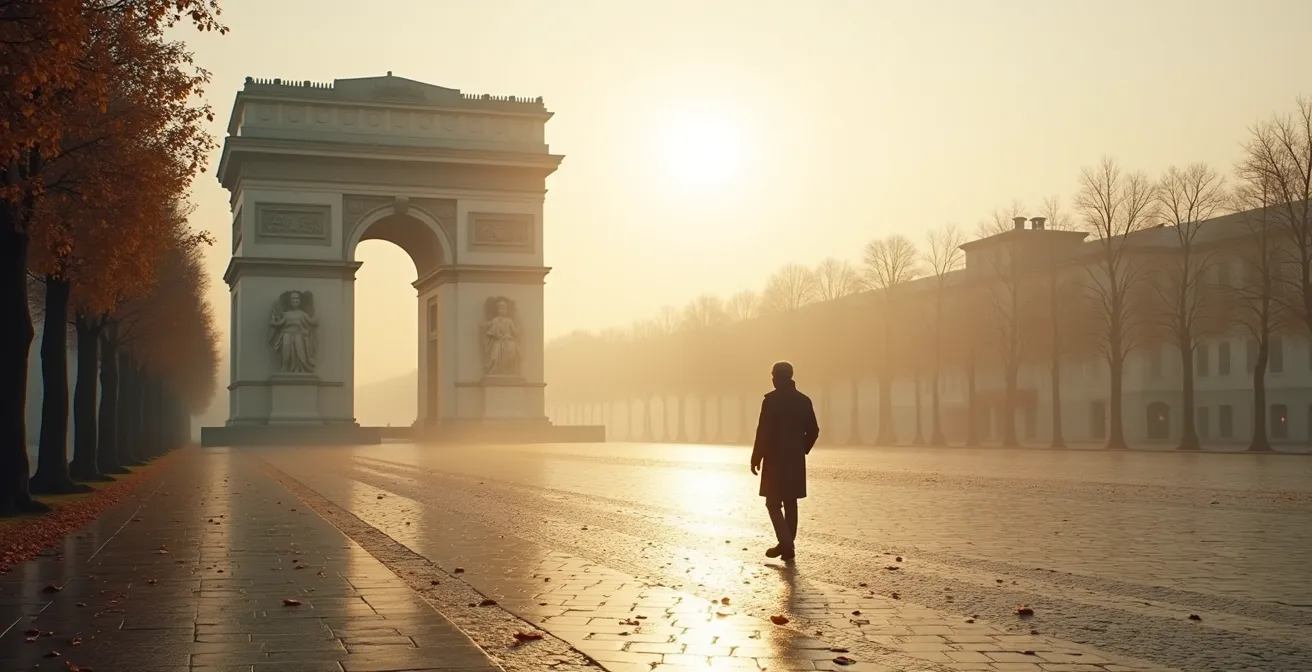
Traveling in November is the ultimate strategic move to sidestep the pitfalls of peak season and unlock a more authentic, sustainable travel experience.
- You actively reduce environmental strain on destinations while saving significantly on flights and accommodation.
- You trade long daylight hours for unique seasonal events and crowd-free access to iconic landmarks.
Recommendation: Stop fighting the summer crowds and start planning a smarter, more rewarding trip during a destination’s true rhythm.
The classic image of a European summer vacation is often a mix of idyllic landscapes and chaotic reality: jostling for a photo, waiting in long lines under a scorching sun, and paying premium prices for a crowded experience. We’re told the solution is simple: travel in the “off-season.” But this advice often misses the point. Choosing to travel in November isn’t just a passive way to avoid the summer crush; it’s an active, strategic decision that unlocks a fundamentally different, and often superior, travel experience.
This isn’t merely about finding cheaper flights or emptier museums. It’s about shifting your perspective from being a consumer of a destination to a participant in its natural rhythm. It involves understanding the systemic pressures that peak tourism places on local infrastructure and making a conscious choice to alleviate them. By doing so, you gain access to a layer of authenticity that is physically impossible to find in July, from local harvest festivals to the simple pleasure of seeing a landmark without a wall of selfie sticks.
This guide moves beyond the generic advice. We will explore the tangible benefits of a November trip, from contributing to the recovery of local water systems to the practicalities of packing for a Mediterranean winter. We’ll analyze the value trade-offs, reveal how to find the best local spots that remain open, and show you how to time your visits for true solitude. This is your playbook for a smarter, more meaningful, and more rewarding journey.
This article provides a comprehensive framework for planning strategic off-season travel. The following summary outlines the key pillars of this approach, from sustainability and savings to finding authentic local experiences.
Summary: The Strategic Advantage of Off-Season Travel
- Why Do Water Systems Fail in Tourist Towns During August?
- How to Pack for the Mediterranean Winter to Stay Warm and Dry?
- Shoulder Season or Deep Winter: Which Offers the Best Value for Money?
- The Planning Mistake That Leads to Closed Restaurants in Winter
- When to Visit Off-Peak to Catch Authentic Local Festivals?
- Luberon or Verdon: Where to Find the Most Authentic Lavender Experience?
- Sunrise or Sunset: Which Time Offers Solitude at Popular Landmarks?
- How to Visit the Calanques of Cassis Without Contributing to Overcrowding?
Why Do Water Systems Fail in Tourist Towns During August?
The most significant impact of choosing November over August is one you’ll never see: easing the immense systemic pressure on local resources. In many Mediterranean destinations, summer tourism pushes water consumption to its absolute limit. The infrastructure, often designed for a much smaller year-round population, simply cannot cope with the influx of millions of visitors during the hottest, driest months. This leads to water shortages, restrictions for locals, and long-term damage to fragile ecosystems and aquifers.
Traveling in November fundamentally changes this dynamic. Your visit coincides with the start of the rainy season, a period when aquifers naturally recharge. The demand you place on the system is a drop in a now-filling bucket, rather than the last straw on a parched landscape. In fact, research shows a staggering 80% reduction in water stress in some tourist areas during November compared to the August peak. By simply shifting your travel dates, you move from being part of the problem of over-consumption to part of the solution for sustainable, year-round tourism.
Your choice actively supports destinations in their recovery phase. Many hotels and businesses use the quieter months to implement and refine water conservation programs, work that is difficult to undertake during the non-stop rush of summer. By visiting in November, you are casting a vote for a more balanced and sustainable tourism model that respects the environmental limits of a place.
How to Pack for the Mediterranean Winter to Stay Warm and Dry?
One of the biggest hesitations about November travel is the weather. While you won’t be packing a bikini, the Mediterranean winter is far from a frozen affair. The key is not to pack for deep cold, but for variability. Your strategy should be built around a smart layering system that prepares you for crisp sunny mornings, potential midday showers, and cooler evenings. Forget bulky winter coats; think versatile, high-quality pieces.
Your packing list should be built on three core layers. Start with a base layer of merino wool, which is excellent for regulating temperature and wicking moisture. Next, a fleece or lightweight down vest acts as your primary insulation. Finally, a high-quality, packable waterproof and windproof shell is non-negotiable. This outer layer is your shield against unexpected rain and wind, ensuring you stay dry and comfortable while exploring coastal trails or ancient ruins.

This system, as illustrated by the essential gear above, is complemented by waterproof footwear, warm socks, a hat, gloves, and a scarf. These items take up minimal space but make a world of difference. As a traveler who visited the Amalfi Coast in late October shared, this approach pays off. They enjoyed pleasant weather and secured a room with an incredible view for under $150 a night—a price unimaginable in July. Your reward for smart packing is not just comfort, but also incredible value and access.
Shoulder Season or Deep Winter: Which Offers the Best Value for Money?
Once you’ve embraced off-season travel, the next strategic question is timing: do you choose the shoulder season of November or the deep winter of January and February? Both offer significant savings compared to summer, but the value-tradeoff is different for each. November often represents the sweet spot, balancing major cost reductions with a better overall travel experience.
Financially, the savings are compelling. For instance, a recent pricing analysis reveals that travelers can save over $500 on flights from major US cities in November. While deep winter might offer even steeper discounts on flights, this often comes at the cost of significantly reduced daylight hours and a higher chance of major attractions being closed for annual maintenance. November, by contrast, typically sees most sites still operating on a full or slightly reduced schedule.
The best way to visualize this trade-off is through a direct comparison. The following table breaks down the key factors to consider when choosing between the two periods, based on general patterns in Mediterranean Europe.
| Factor | Shoulder Season (Nov) | Deep Winter (Jan-Feb) |
|---|---|---|
| Flight Savings | 23% average reduction | 50% reduction possible |
| Daylight Hours | 8-10 hours | 6-8 hours |
| Open Attractions | 90% operational | 60-70% operational |
| Weather Comfort | Mild, occasional rain | Cold, potential storms |
Ultimately, the choice depends on your priorities. If your goal is the absolute lowest cost and you don’t mind shorter days and more closures, deep winter is a viable option. However, for most travelers seeking a balance of great value, comfortable exploration, and broad accessibility, November delivers the superior strategic advantage.
The Planning Mistake That Leads to Closed Restaurants in Winter
The most common frustration for off-season travelers is arriving in a picturesque coastal town only to find that the highest-rated restaurants are closed until spring. This isn’t a sign of a “dead” destination; it’s a feature of its seasonal infrastructure. Many establishments catering exclusively to tourists take a well-deserved break. The strategic traveler doesn’t see this as a problem, but as an opportunity to find where the locals eat.
The critical mistake is relying on generic tools like Google Maps or TripAdvisor, which are often not updated for seasonal closures. As one Projects Abroad travel expert wisely cautions, you must proactively “check opening dates.” The key is to shift your research to more dynamic, real-time sources. Social media, particularly Instagram, becomes your most powerful tool. Following local food bloggers or checking a restaurant’s own page provides up-to-the-minute information on opening hours and seasonal menus.
To avoid disappointment and discover hidden gems, you need a different search strategy. Instead of focusing on the main tourist square, look for establishments in residential neighborhoods. These places cater to a year-round clientele and offer a more authentic—and often more delicious—taste of the local cuisine. Your hotel or host can also be an invaluable resource for current, reliable recommendations.
Your Action Plan: Finding Great Food Off-Season
- Follow local food bloggers on Instagram for real-time updates and hidden gems.
- Check restaurant social media pages directly for current hours, as Google Maps can be outdated.
- Look for restaurants in residential neighborhoods away from the main tourist centers.
- Contact your hotel or accommodation for their current local dining recommendations before you arrive.
- Use local language keywords (e.g., “trattoria quartiere,” “bistrot de quartier”) when searching online for neighborhood establishments.
By adopting this approach, finding an open restaurant becomes a rewarding treasure hunt rather than a frustrating chore, leading you to experiences you would have missed in the summer.
When to Visit Off-Peak to Catch Authentic Local Festivals?
While summer is known for large-scale music and arts festivals aimed at tourists, the off-season is when you find authenticity by design. November, in particular, is a time of harvest and celebration across the Mediterranean. These are not events staged for visitors; they are integral parts of the destination’s rhythm, offering a genuine window into local culture. By traveling in November, you trade crowded beach parties for the rich aromas and communal spirit of a truffle or olive festival.
A perfect example is the Vaucluse region of Provence. As the summer lavender crowds disappear, the focus shifts to two other treasures: truffles and olives. In fact, up to 80 percent of France’s black truffles originate here, and November is prime time. A visit to the Friday market in Carpentras becomes a spectacular cultural immersion, where you can witness the intense, high-stakes trade of this “black diamond.” This is also the peak of the olive harvest, a much more accessible and equally authentic experience, with mills buzzing and new oils available for tasting.
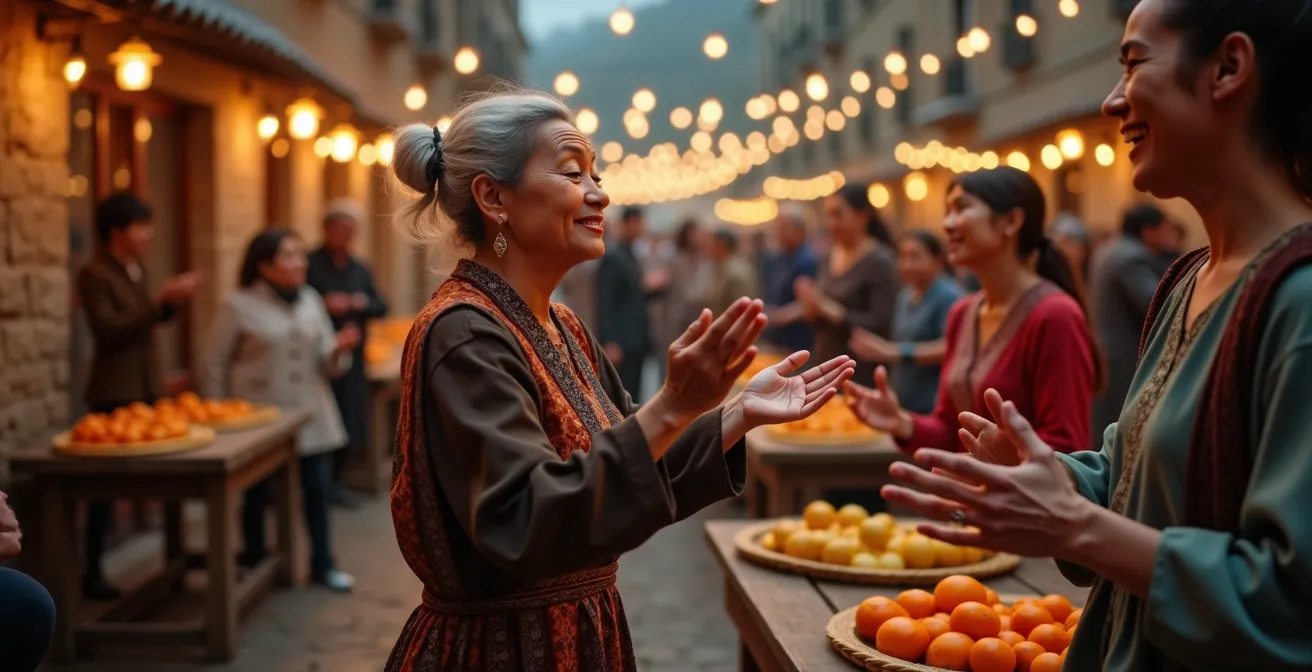
These events are about community. They are moments when locals gather to celebrate the fruits of their labor, share food, and connect with their heritage. As a visitor, you are not just a spectator but a welcome guest. You have the space and time to talk with producers, taste products at their absolute freshest, and participate in a tradition that has existed for centuries. This is the kind of deep, memorable experience that is simply unavailable when you are one of thousands in the peak of July.
Luberon or Verdon: Where to Find the Most Authentic Lavender Experience?
The image of Provence in summer is a sea of purple lavender fields swarmed with tourists. But what if the most authentic lavender experience happens when the flowers are long gone? For the strategic traveler, November offers a unique opportunity to connect with the heart of the industry: the distillation process. Instead of just seeing the plant, you get to smell, taste, and understand the final product.
While the lavender fields of the Luberon and Verdon are dormant, the distilleries and local workshops come alive. According to local agricultural calendars, the period from roughly mid-October to mid-November is a peak time for processing the harvested lavender into essential oils and other products. This is your chance to meet the artisans, see the alembics at work, and learn about the nuances that differentiate one oil from another. The air is filled with an intense, herbal fragrance, a far cry from the delicate scent of a summer field.
This experience mirrors the quiet authenticity found in other destinations during the off-season. One traveler recalled visiting Santorini in mid-November as tourism was slowing down, finding a peacefulness and direct connection with locals that was deeply memorable. The same principle applies here. You are not competing for attention. You can have long conversations with producers, get personal tours, and appreciate the craft behind the famous flower. This is a sensory and educational experience that provides a much deeper understanding of Provence’s iconic plant than a simple photo ever could.
Sunrise or Sunset: Which Time Offers Solitude at Popular Landmarks?
Visiting a world-famous landmark in November already guarantees fewer people, but for true solitude, timing is everything. The strategic choice between sunrise and sunset isn’t just about the light; it’s about understanding crowd flow and maximizing your chances for a quiet, contemplative experience. In the shorter days of November, both times offer unique advantages, especially for photographers.
Sunrise is almost always the winning bet for solitude. Most tour groups and casual visitors are not early risers, especially in the cooler months. By arriving 30 minutes before the official sunrise, you can often have an entire site, like the Roman Forum or the Acropolis, almost entirely to yourself. The light is often magical, and there’s a profound sense of peace in watching a historic place wake up. Furthermore, seasonal light analysis confirms that the lower angle of the sun in November through February creates extended “golden hours,” giving you a longer window of beautiful, soft light for photography.
Sunset is also a fantastic option, though it can be slightly more popular. The key is to wait out the initial rush. Many visitors leave just after the sun dips below the horizon, missing the spectacular afterglow that often follows. For a successful solitude strategy, consider these tactics:
- Arrive 30 minutes before official sunrise for the highest probability of complete solitude.
- Visit during a light drizzle or on a foggy morning for incredibly atmospheric photos with virtually no one else around.
- Always choose weekday mornings over weekends for the fewest local and international visitors.
- For sunset, target the 3-4 PM window in November, as this is often when organized tour groups have already departed for the day.
By using time as your tool, you can transform a visit to a popular landmark from a crowd management exercise into a personal and unforgettable moment.
Key Takeaways
- Traveling in November directly alleviates environmental strain on destinations, particularly on stressed water systems.
- Significant financial savings on flights and hotels are a major benefit, but the true value lies in the improved experience.
- The off-season provides access to authentic local events, like harvest festivals, that are unavailable during the summer tourist peak.
How to Visit the Calanques of Cassis Without Contributing to Overcrowding?
The Calanques of Cassis, with their stunning turquoise waters and limestone cliffs, are a prime example of a natural wonder suffering from its own popularity. In summer, the trails are packed and the environment is under severe strain. Visiting in November is the single most effective way to experience this fragile beauty responsibly, transforming your hike from a crowded procession into a serene communion with nature.
With fewer crowds, you’ll enjoy a more relaxed atmosphere, with comfortable daytime temperatures and a mix of sunshine, a few showers, and clear skies.
– Ker & Downey Travel Experts, Off-Season Travel Guide
As travel experts note, the off-season provides the ideal conditions for hiking. The cooler temperatures make the strenuous climbs more manageable, and the landscape, free from the summer haze, offers crystal-clear views. This experience is echoed in other iconic coastal hiking destinations. For example, hikers on the Amalfi Coast’s “Path of the Gods” during the shoulder season report having one of Europe’s best trails almost to themselves. The same principle applies to the Calanques. You can stop to admire the view without being hurried, listen to the sound of the waves instead of chatter, and truly appreciate the scale and majesty of the landscape.
More importantly, your presence has a minimal impact. You are not contributing to trail erosion at its peak, nor are you straining the limited parking and services in the nearby town of Cassis. You are experiencing the park as it is meant to be seen: wild, peaceful, and breathtaking. This is the ultimate goal of strategic travel—finding that perfect intersection where your desire for an amazing experience aligns perfectly with the well-being of the destination.
To fully integrate this strategic mindset, the next step is to apply these principles to your own travel planning, starting with a re-evaluation of when and why you travel.